The 8 p*ARTS EduProtocol is extremely versatile and can be used to help students learn from each other’s projects. The sample below served as evidence that one of my 10th-grade World History students had listened to another student’s podcast on WWI spies.

The 8 p*ARTS EduProtocol came from elementary ELA lessons designed to help students learn the 8 parts of speech. It is easily adaptable and has been used to help history students analyze art, primary sources, speeches, government policies, individuals, and events. As with most EduProtocols, the teacher is only limited by their own imagination when using the 8p*ARTS. There is even a DBQ version, which I have included, but not used myself.

Here’s an example of a student synthesis that needs more effort and detail before it can be deemed proficient. Details are sparse in the who, when, notice, and wonder columns. Similarly, this response does not compare three people, places, or events in Patton’s life to other historical periods that we have studied. At the very least, I would have liked to have seen Patton compared to fellow WWII Generals like Bradley, Eisenhower, Marshall, and MacArthur.

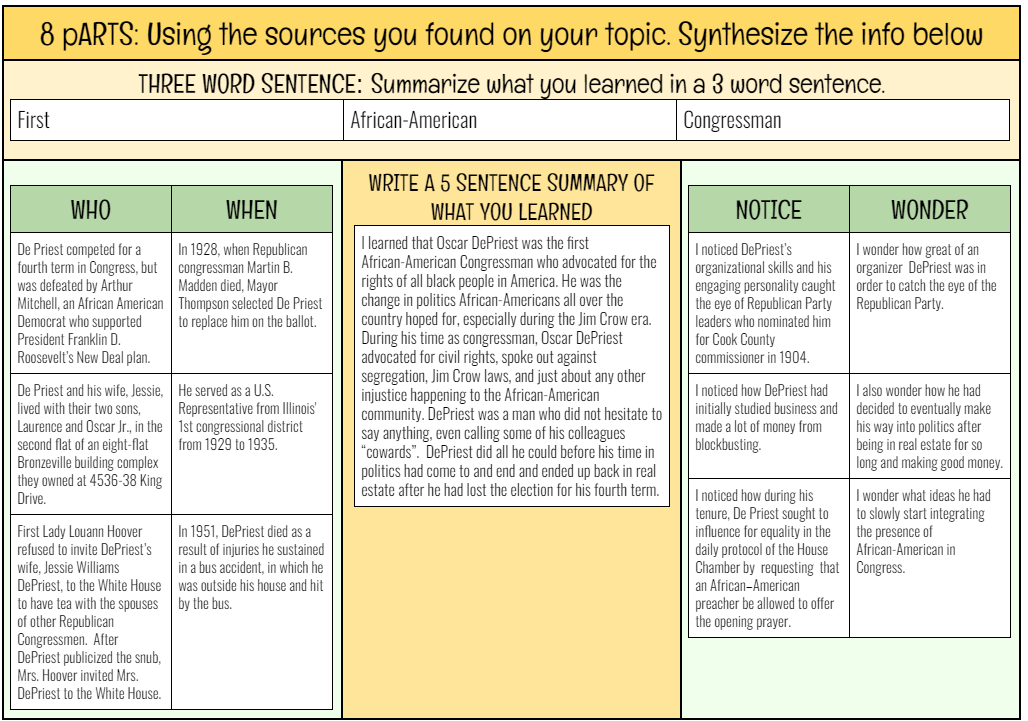
Here’s a stronger example on Oscar DePriest. This student does well with the noticing category, but I could have used more information to understand blockbusting and how DePriest made money from it.
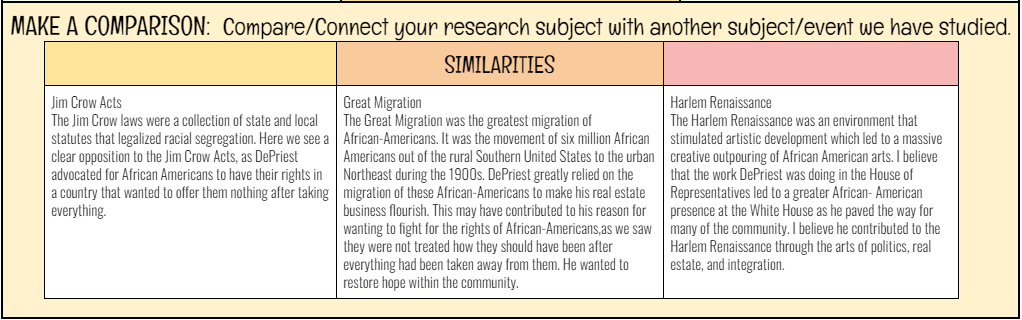
This student really put substantial effort into making comparisons. They were able to use their historical knowledge to link The Jim Crow Era, The Great Migration, and The Harlem Renaissance. They are on their way to an essay.
I know my students need more practice with 8 p*ARTS. I have noticed that using it as a critical friend where students review each other’s projects and report summaries and findings helps me provide an authentic audience for project-based learning. What EduProtocols do you use to hold students accountable for learning content from each other?

I am interested in learning how other History teachers use the 8pARTS EduProtocol to improve student writing. Angela Zorn shared some great ideas on our show last month. To learn how EduProtocols can help you increase the amount of writing your students do while decreasing your prep and grading time, pick up our book The EduProtocol Field Guide: Social Studies Edition. If you already have the book, please consider posting a review on Amazon and sharing your students’ work on Twitter using the #EduProtocols hashtag.

 HistoryRewriter