Revision Memo Examples

There was great variation among the few revision memos that were turned in on time. The purpose of this post is to demonstrate how I distinguish between a good memo and one that needs improvement.

Well Below Standard
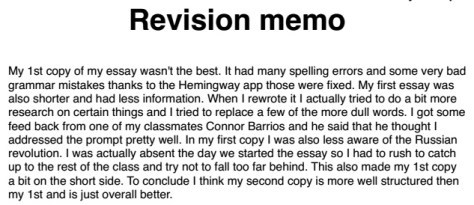
Poor

This did not come close to the specified 1-2 page length requirement. Further, it lacks any concrete details that would suggest this person even wrote an essay in the first place. Be specific. Quote from first draft. Quote from second draft. Explain improvements. Meet page length requirements.

Below Standard
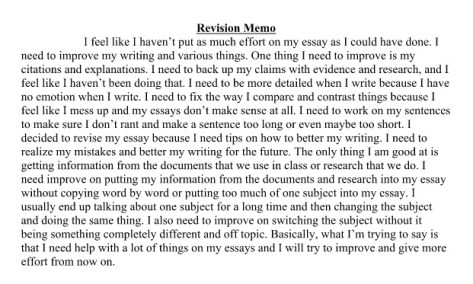
Below Average

This student has not used the appropriate format, nor did they share the memo via Google Docs/Drive, so they could see my comments. Since this essay has no specific quotes, I don’t believe this student wrote a first draft, let alone spent time thinking about how to bring their writing up to grade level standards. More specifics. More quotes. Less of the author’s opinion.

Approaching Standard
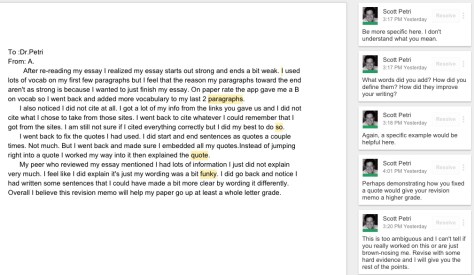
Feedback

This one comes closer to the page length requirements. Although they did not use the correct format, the memo is easy to read and contains some specifics about vocabulary, citations, and quotes. Remember, the more details you provide, the more insight you provide as to what excellent writing means to you. If I can only guess at what you mean by “fixing things” or “funky wording” than you have not done your job. I do not think you know how to take the advice of a peer or a robo-reader and improve your writing.

Meets Standard
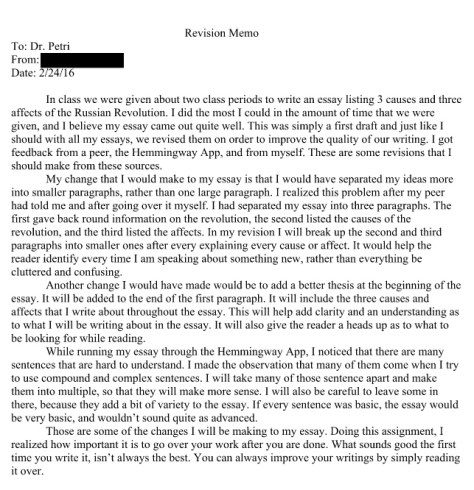
Good

Yay! Very specific, concrete details here. This student has given himself a To Do list of things to fix. He reflects more on the advice from the Hemmingway App than his peer review. I’d like to see something about both, because that tells me you are really interested in making your writing understandable to a reader. You should always write for a greater audience than just your teacher.

Exceeds Standard
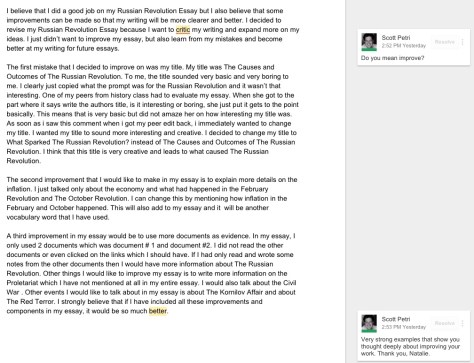
Great

I hope these examples clarify the expectations I have for revision memos. The students who turned one in and got full credit do not have to write a revision memo for the Treaty of Versailles essay. The bad news is for the 80% of my students that didn’t turn in a revision memo is that they now owe me two. Get in the habit of writing down due dates, working diligently every day, and turning assignments in on time. It will make your upper division course work so much easier.


Rarely Assessed Standards

My UCLA Social Studies Methods professor Dr. Emma Hipolito is simply god’s gift to History teachers. I can honestly say that I probably would have quit teaching within my first two years if it weren’t for Emma’s nurturing and kindness. She gave me my first chance to present my work to academics. In short, she helped me find my strengths. Anyone who went through UCLA’s Center X teaching credential program can attest to how dedicated she is to the success of her students. Dr. Hipolito finished her dissertation Social Studies Teachers and The Common Core: A Study of Instructional Practices last year. It is a fantastic read and deserves a wider audience. My biggest takeaway is that Emma has quantified how the teaching of speaking and listening skills is severely neglected in most classrooms.

speaking.jpeg

Hippolito (2015) found a majority of Social Studies teachers struggled to explain how they helped students develop speaking and listening skills. While these teachers regularly reported using small and whole-group discussions, their students were rarely assessed on their participation. Only 15% of teachers surveyed spoke confidently about their speaking & listening instruction.

This mixed methods study surveyed 217 California Social Studies teachers and conducted interviews with 20 High School teachers in order to assess how teachers are shifting their instructional practices in response to the CCSS standards. The survey data resulted in three key findings.

First, teachers – particularly those working in low-income schools − are concerned about the academic preparedness of students to engage in the Common Core. Nearly two-thirds of all teacher participants agreed or strongly agreed that students “are not academically prepared to engage in these types of activities.” However, a statistically significant 85% of the teachers in 101 low-SES schools agreed or strongly agreed with this statement, as compared with 48% of teachers in affluent communities.

A second finding was that high school social studies teachers are implementing some of the practices associated with the CCSS. These include the use of primary sources, the consideration of the origins and purpose of a source as an aspect of reading in history/social studies, and the use of critical thinking question to promote reasoning. However, teachers less frequently focused on critical reading practices that examined perspective, bias, and analysis of multiple sources on a similar topic. Relatedly, the development of speaking and listening skills is an area that is currently neglected in classrooms in California.

A third finding is that many social studies teachers in California report that neither they nor their colleagues are prepared to teach the CCSS. Only 30.8% of all survey respondents reported that they were “very” prepared to teach the Standards to students. Despite over 60% of teachers participating in four or more days of professional development, only 15% reported that the CCSS were “very” integrated into the practices of teachers in their departments.

Three other findings emerged from the interviews: (1) Teachers believe that a CCSS’s skill-based approach means less coverage and more in-depth work with fewer historical topics. (2) Interviewees at low-income schools had more tools and strategies to support literacy development than did teachers at high-SES schools. (3) Educators want more time to plan, more time to work in content-alike groupings, and more instructional resources provided for them in order to implement the CCSS.

I am interested in learning how schools and districts are re-shaping their professional development offerings in response to CCSS. I have yet to find any well-articulated courses on how to teach speaking and listening to adolescents. Have you found any gems I should be familiar with? If so, please add them in the comments section. Congratulations to Dr. Hipolito. I hope you influence a few thousand more Social Studies teachers.

Getting Students To Ask Questions

Qs

Researchers understand that student questions can improve instruction and increase achievement, however, students rarely ask their own questions in school. When they do, they ask more memory questions involving knowledge recall than all other question types combined. Asking open-ended questions and research questions can be difficult for students because they don’t always have a large enough knowledge base on a subject to see relationships and big picture issues. My classroom experience has shown that if I use small groups to get students to generate their own questions about a topic, many groups rely on one or two participants and the other students are content to be passive observers. Similarly, when I try to have whole-class, student-led discussions only 38% to 60% of my students participate. This year, I have used Zaption so students view a short, instructional video and then are asked questions that demonstrate their understanding of the content. Zaption Tours are also helpful for helping students develop their own questions, driving independent research projects, and tapping into student motivation. Further, Zaption presents this data in tables or discussion board threads for easy teacher analysis. Discussion data also be download into Excel spreadsheets for further analysis.

Open?

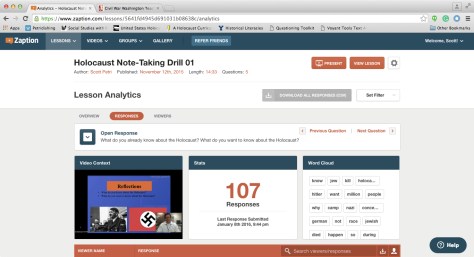
Prior to beginning this unit on the WWII, I asked students two open-ended questions: What do you already know about the Holocaust? What do you want to know about the Holocaust? The Zaption Tour was viewed 287 times and 107 students replied to the question. To make it an easier reading experience, I edited spelling mistakes and typos, but did not edit the “heart” of the student question. I tried to eliminate similar questions.  My next steps will be grouping the questions into themes for additional reflection and analysis. At the very least, these questions indicate that students have thought deeply about the Holocaust and are eager to learn more about it.

  1. I want to know if the Holocaust was necessary and if it was good for the people back then.
  2. I would just like to be more knowledgeable about the Holocaust.
  3. What I’d like to know about the Holocaust was?  Who came up with idea?  What kind of movies there are to watch about the Holocaust?
  4. I want to learn if any groups or people tried to rebel over this power and try to support and help Jews.
  5. I would like to know why Jews didn’t fight back or resist because it seem as if the Germans just killed the Jews with ease.
  6. What I want to know is who put a stop to all Hitler’s terror and how did people just let him do that?
  7. What I would like to know is where did Hitler get all his ideas about a master race?
  8. The thing that I want to know about the Holocaust is why did Hitler believe that Germans were superior than any other race?
  9. I would want to learn how did Hitler persuade Germany’s citizens to use the Jews as scapegoats for their country problems?
  10. I think what I want to know about the Holocaust is why Hitler hated the Jews in the first place?
  11. I would like to know why the Nazis targeted the Jews first? Also what made the Nazis hate the Jews so much and how did they make all of Germany hate them as well?
  12. I would like to know how Hitler convinced Germans to let this happen and why the US didn’t intervene earlier?
  13. I want to know what Hitler thought he was going to get out of this genocide?  I want to know why the people in Germany were following Hitler even though they knew it was wrong?
  14. I want to know why Hitler thought he was going to get away with it?
  15. Why did Hitler feel the need to exterminate the Jews when his own mother was Jewish and he wasn’t an Aryan himself?
  16. Hitler hated the Jews… but why?
  17. I want to know why the US didn’t help.
  18. I would like to know who else was involved with the Holocaust other than Adolf Hitler.
  19. I would like to know why the other countries let this happen to innocent Jewish and other people.
  20. What I would like to learn about the Holocaust is how the public felt about it and how Americans reacted to it?
  21. I want to learn what the Jews did and how they acted in the camps.
  22. I would like to know more about what caused the Holocaust to start.
  23. I would like to know more in depth stories of some of the Jews who survived the Holocaust.
  24. I would like to learn about conspiracy theories and the psychology of why Hitler wanted to kill these people. Was it a mental illness, or was he simply racist?
  25. I would like to learn what went on inside the concentration camps.
  26. I want to know the stories about the Holocaust.
  27. Something I would really like to know about the holocaust is why Hitler wanted to get rid of an entire race, I understand that he detested Jews but why would he go for something like this?
  28. I’d like to know the in-depth stories of the Jews who survived the concentration camps.
  29. I know about the beginning, middle, and D-Day. I want to know about the ending of the war.
  30. I would want to know about how the German people reacted to the concentration camps.
  31. I would like to know why Hitler wanted more land
  32. What I want to know is how it really started and how it ended.
  33. What I want to know is how many survivors were there in total?
  34. I would like to know why Hitler hated them so much and how were people able to survive and I want to learn how it affected others besides the Jewish race.
  35. I would like to know why this event in history happened and why no one took any act on it.
  36. I want to learn more about what really caused everything, how it happened, during the process, just everything, people’s feelings, and etc. Even if it takes 15 video lectures and big projects. 🙂
  37. I’d like to know why kill the Jews if they did nothing to you?
  38. I really want to know why Hitler did it? Why does he hate Jews so much and why were people going along with it?
  39. I want to know why Hitler killed this many Jews and what did he accomplish in killing them?
  40. I want to know how some people around the camps felt, if they felt bad or not about the situation, I don’t know. I heard that some Jews would fight back like setting buildings on fire. I’d like to know more stuff like that.
  41. What I would want to know about the Holocaust is how close does the movie “The Boy In The Stripped Pajamas” come to teaching us the truth about the Holocaust?
  42. I would like to know what had started the hatred. Was it an experience Hitler had or what?
  43. I’d like to know more about peoples’ personal experiences and obviously I’d like to know more and more about this topic. This is a topic that I could love to learn a lot about.
  44. I would like to see inside the mind of the man who ran the terrible atrocity of human action, the Holocaust.
  45. What caused Hitler to decide to kill and torture Jewish people?
  46. I know that a lot of people died I want to know who started it and why
  47. What I’d like to know is why many states or countries tried nothing what so ever to help and why they just let 6 million lives be lost?
  48. I would like to know what would go on with the Germans who disagreed with the Nazis? Were there rebellions and anti-Nazi campaigns?
  49. Was the U.S using spies and if yes what would they do and what were some major accomplishments for them.
  50. I would like to learn new things like how did Hitler die, or why would other countries ignore something so important?
  51. I want to know what Hitler thought he was going to get out of this when it was all over. I want to know why he did it. I want to know way beyond what the book says.
  52. I would like to learn more about things that people or students hardly know. That would be helpful.
  53. What I would like to know about the Holocaust is more about people’s reactions to life in the concentration camps and how people managed to get out. Did they recover and have good times later in life?

Independent Reading Assignment

WWI

Over the next month, my students will be working on a WWI Independent Reading Assignment. They will choose their novel or non-fiction book from this GoodReads list. They need to make sure the book is available through the Los Angeles Public Library or the Los Angeles County Library and place a hold as soon as possible and have the book sent to the closest library to their house. Once they get the book, they need to submit a short explanation of why they picked it and when they started reading it. There is a great deal of data on the importance of reading and of being part of a reading community. This is the culture our Ninth Grade Academy is trying to build.

Double Entry Journal

The purpose of double-entry journal (DEJ) is to give students an opportunity to express their thoughts and become more involved with their readings. Students will divide their pages into two with a vertical line down the center. On the left side, they will write the page numbers, the dates they read, and short quotes or events from their book. In the right column, they write personal responses to the quotes on the left. These reflections can include their own opinions, disagreements, interpretations, events in their lives that the quote reminds them of, guesses about the meaning of new words, and connections to the textbook and/or video lectures. DEJs allow students to pick out the parts they think are important, and to ask the questions they have, instead of doing exercises that the teacher made up. Approaching the reading this way will help to improve comprehension and vocabulary. These journals will be assessed on a weekly basis rotating (per 1) January 22, (per 2) January 25 and so on.

double-entry-journal

Independent Project

Each student will be required to demonstrate they have read and understood the book with a project. They will work with the teacher to define the dimensions, develop the project, and create a rubric for grading it. Earlier in the year, students brainstormed how they could customize writing projects. The projects should help students demonstrate knowledge of California History-Social Science standards: 10.5 Students analyze the causes and course of the First World War.
1) Analyze the arguments for entering into war presented by leaders from all sides of the Great War and the role of political and economic rivalries, ethnic and ideological conflicts, domestic discontent and disorder, and propaganda and nationalism in mobilizing civilian population in support of “total war.”
2) Examine the principal theaters of battle, major turning points, and the importance of geographic factors in military decisions and outcomes (e.g., topography, waterways, distance, climate). 3) Explain how the Russian Revolution and the entry of the United States affected the course and outcome of the war. 4) Understand the nature of the war and its human costs (military and civilian) on all sides of the conflict, including how colonial peoples contributed to the war effort.
5) Discuss human rights violations and genocide, including the Ottoman government’s actions against Armenian citizens.

#TeachWriting Coaching Student Writers

Corbin Moore and I taught an online class called Improving Historical Reading and Writing over the summer. We learned that one of the major barriers to non-ELA teachers assigning writing in their classes is simply that they don’t feel comfortable providing feedback on that writing. They are also concerned about increasing their workload. Our experiences as classroom teachers have led us to include more writing in our daily practices. We hope this chat encourages other teachers to do the same.

Q1 With the recent emphasis on increasing writing in all subjects, how has your job as a teacher changed?
Goal-setting strategies are terrific. Here is a longer paper Scott wrote about using goal-setting strategies as formative assessment.
Shorter, more frequent, focused skill-building writing tasks show great promise in increasing positive attitudes toward writing. They can be graded quickly or used for peer review.
Q2 What is your definition of effective feedback?
This John Hattie article demonstrates that feedback has a strong effect on student learning. Unfortunately, this is not always positive.
Turnitin has done some extensive research on feedback and discovered a gap between teacher and student perceptions about what constitutes effective feedback.
Q3 What strategies/tools have you found valuable in providing feedback and/or peer review?
Google Docs
Rubrics/Criteria Charts
Q4 How is coaching student writers different from teaching writing? What are the advantages to coaching versus teaching writing?
Q5  What are the best writing tools, strategies, and frameworks for teaching writing and coaching students through the writing process?
Q6 What would happen if you stopped evaluating writing and switched to coaching?
Q7 How can teaching speaking and listening skills help improve student writing?
Extra Credit

Final Exam Results

In the past, the rigor of a semester-end final exams fluctuated wildly at our school. This has a great deal to do with the District schedule, which does not allow teachers sufficient time to grade exams. As a result, final exams have either become multiple choice exams or less meaningful activities with little to no academic value. This year, our Ninth Grade Academy tried to be more consistent with our finals. My exam was weighted at 15% of a student’s overall grade. The District mandated that all World History students write to the same prompt: compare & contrast capitalism and socialism.

Students were given some background knowledge on the evolution of capitalism and socialism in a handout featuring excerpts from Karl Marx, Frederich Engels, and Adam Smith. I provided a Zaption presentation to the whole class where students could answer questions that were embedded into a 14 minute Capitalism & Socialism Crash Course video number 33. Students were given digital devices and asked to answer questions. After the video, students retained the devices and played an online game of Kahoot, where they were asked to demonstrate their understanding of the differences between capitalism and socialism with 10 different scenarios. Students were also given compare/contrast sentence stems and one hour to answer the prompt. During the writing process, students were asked to underline claims and put parentheses (around any explanations, or evidence that supported the claims).

The purpose of this final exam was to measure student effort. Following some great advice to have students write more and grade less. I charted word length, the number of claims, and the number of explanations and divided them into thirds, assigning each third a progressive amount of points, (i.e. 100, 95, 90, 89, 85, 80, 79, 75, 70). Grading was done class by class, but I have included all 164 of my ninth grade students below to help inform parents as to how their child is faring in regards to their peers.

Slide17Slide18Slide19

This assignment allowed me to give students a rigorous writing task, evaluate their efforts, and help students who had lost points by missing previous deadlines earn enough points to boost their grades.

Slide20

When we return to school after Winter Break, students will have the opportunity to engage in a process of peer review and revise their essays for additional points.

To Cool To Try

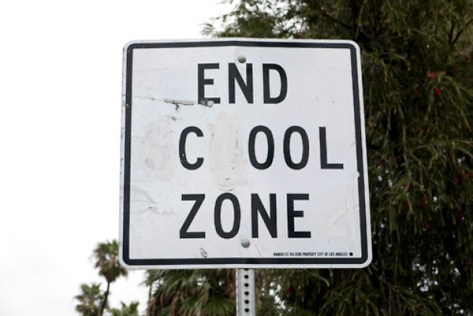
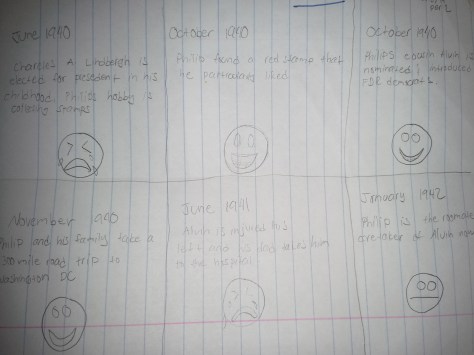
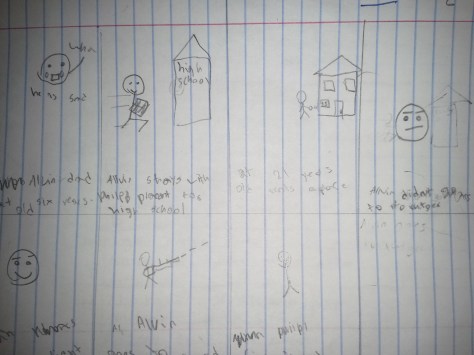
A primary focus in my class this year has been teaching ninth graders to make deadlines and turn in their assignments on time. The main reason students fail my course is simply they do not turn work in on time, if at all. For example, our study of the Holocaust devoted 30 days to reading The Plot Against America. As a culminating task students created a character evolution timeline, which tracked one character through ten events in the story. The results were knowledgeable, creative and imaginative. Unfortunately, this assignment only had a 51% completion rate, which in turn had a negative impact on 49% of student grades.

End Cool Zone

For their next assignments, students were required to view three survivor testimonies, annotate their notes, then turn each testimony into a poem, piece of art, or an essay that tells the survivor’s story forward. The majority of students did not address the contest’s prompt when creating their work. These projects were graded on student effort, students who read the contest rules and followed the directions were awarded 95 points, those who missed one element got 85 points and those who missed two or more elements got 75 points. Late work was awarded 60 points.

Sixty percent of students turned in poems and received the following grades: 69 Fs (40% incompletion rate), 3 Ds, 24 Cs, 27 Bs, and 48 As. For poems, 89 students turned in video notes, which were worth 50 points and 81 students did not (48% incompletion rate).

Sixty-five percent of students turned in Art entries and received 59 Fs (35% incompletion rate), 2 Ds, 34 Cs, 30 Bs, and 46 As.  Only 88 students chose to turn in their video notes, 83 students (48% incompletion rate) did not turn in the required notes on a Holocaust survivor’s testimony.

Lastly, fifty-eight percent of students turned in Essay entries: 72 Fs (42% incompletion rate), 3 Ds, 18 Cs, 31 Bs, and 46 As. Only 55 students turned in notes from the survivor’s video testimony, while 77 (58% incompletion rate) students did not.

Considering the information above, it is not surprising that in the final grade distribution only 10% were As, 25% were Bs, 27% were Cs, 17% were Ds and 21% were Fs. What is surprising is how these grades cluster period by period. Most comprehensive high schools “track” students with Honors & AP programs. Thus, it is not surprising that the highest percentages of As and Bs occurred in Honors classes. What is particularly dispiriting in looking at the “regular” classes is that two of them contain majorities (66% & 51%) of students who are now ineligible for admission to a University of California.  Further, research from the MRDC indicates that more than 40% of ninth grade students fail to promote to the tenth grade on time and fewer than 20% of those students recover from failure and graduate from high school.

Ninth Grade Academies are designed to support the transition to high school by creating interdisciplinary teacher teams that have students and planning times in common. These teachers work to coordinate their courses to better meet their students’ needs. I wonder if my colleagues have similar work completion and course passage rates. How can our NGA better prepare students to complete their assignments and make deadlines instead of making excuses?


Final Grade Distribution by %

  A B C D F
P1 26 40 11 17 6
P2 11 46 32 11 0
P4 3 9 22 28 38
P5 9 9 31 11 40
P6 3 20 37 20 20
 

My overall course passage rate was 79%, which means my course failure rate was 21%. Overall, this isn’t bad, however, my lowest achieving class periods have course failure rates of 62% and 60% respectively. I suspect that these students have been “tracked” and the culture they have developed of not caring about grades is greater than one teacher can overcome. Nevertheless, in the Spring semester, I will double my efforts to engage these students.

Character Timeline Feedback

In an earlier post, I described a character evolution timeline project that I assigned my students to measure their level of effort in spending more than 30 days reading The Plot Against America by Philip Roth. These projects were graded on effort and earned either 95, 85, or 75 points. Late work was given 59 points.

Exemplary Effort – First Place Entries

2015-12-13 13.16.46

This entry was well-thought out with thoughtful analysis of the quotes

2015-12-13 11.57.24 This entry had nice art production values, but the author did not explain what the quotes meant.
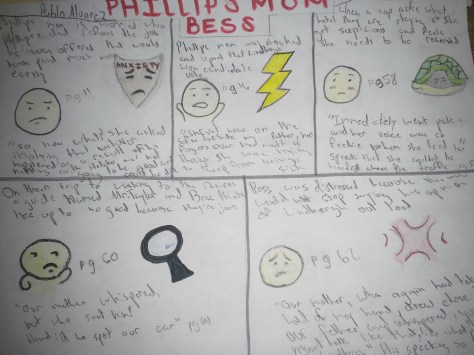
Excellent Work – Second Place Efforts.

2015-12-13 12.21.04

There is a substantial amount of text being analyzed on this entry. It looks like this author spent a fair amount of time thinking about the novel before beginning this project.

2015-12-13 12.34.35

This entry spent too much time coloring the art and not enough time explaining what the quotes meant. I like that the page numbers were cited. This author did more than ten events.

2015-12-13 12.01.57

This entry devoted a lot of space to the emoticons. I’d like to see more analysis of the text, but the layout and content make this a solid second-tier effort.

Need to see more effort – The Bottom Third

2015-12-13 12.11.47

This entry does not look like the author spent much time thinking about the book, or selecting quotes. There was no attempt to explain what the quotes meant.
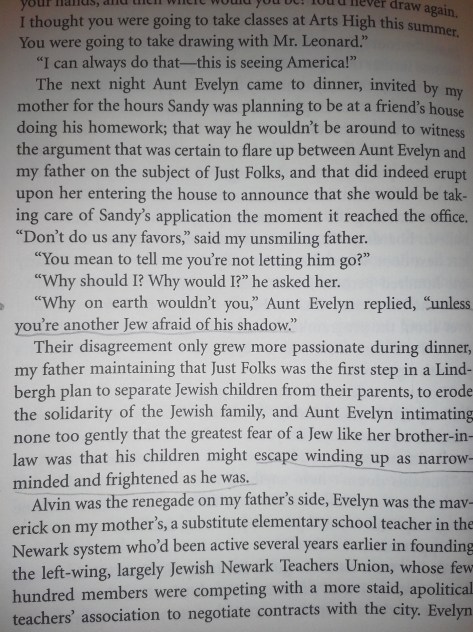
2015-12-13 12.52.24

I understand that  my students are taking five other classes and have homework and projects in each of them, however, these last two entries do not represent high school work.

Final Numbers

Out of 173 students, 31 got As (18%), 19 got Bs (11%), 37 got Cs (21%), and 85 students (49%) did not turn in timelines. Eight students received zeros for copying each other’s work. It is better to get a low grade for poor work than to lose all of the points for cheating. I expect more effort on your semester-end Holocaust projects.

Checking For Understanding

This year, Zaption has become my go-to tool as I check for understanding in my World History classes. I have learned (the hard way) that waiting for the end of unit DBQ to really “listen” to what students have learned in your class is setting yourself up for failure. After students have taken the test and written the essay, they have no motivation to go back and review the material no matter how wrong they were. So this year, I have embedded questions in my video lectures and shortened my writing assignments so that I can quickly assess student understanding and promptly correct any misunderstandings.

Exhibit A

Too Late

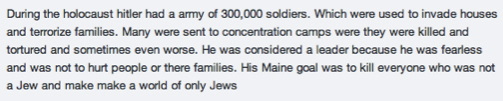
When this gem appeared on my Edmodo discussion board, It was too late for me to help this student. They had not listened to any of my lectures and they had misunderstood what they read in the book. Their fundamental lack of WWII knowledge was at once horrifying and hilarious.

Zaption tours allow a teacher to ask students multiple-choice, true-false, open-ended, and/or discussion board-style questions during a video lecture. The answers to these questions provide teachers with insight as to student critical thinking skills and the level of effort they are putting into their study. In one video lecture, I explain that “Genocide” and “Holocaust” are not the same thing. “Holocaust” is a word of Greek origin meaning “sacrifice by fire.” Genocide was an element of the Holocaust, but the Holocaust was the systematic, bureaucratic, state-sponsored persecution and murder of approximately six million Jews by the Nazis. Thirty seconds later, I ask the students to explain these differences in an open-ended question.

This student understands.

Holocaust is a word of Grecian origin, meaning “Sacrifice by Fire”. Genocide is the deliberate attempt to wipe out an entire ethnic, nationality, or religious group.

This student does not understand.

The difference between holocaust and genocide is holocaust is a word of the greek origin meaning sacrifice by fire and genocide is an element of the holocaust but yet the holocaust involved much more than  genocide.

This student’s careless use of the term “democratic movement” makes me red flag him for a private conversation during class the next day.

A genocide is only a small part of the holocaust while the holocaust itself is a democratic movement by a racist opinion that the german’s are a superior race and that the jews are a weak and useless race.

Zaption also provides a host of other analytics that are useful for determining who watched the videos, how long did they watch them, and how many questions did they get right. Right now the open-ended questions are my favorite.

Useful Dashboards

Tour Analytics

Analytics 2

Looking at Individual Student Performance

Responses

What have you learned from the data in your Zaption analytics? Please share your experiences and ideas in the comments section.

Character Evolution Timeline

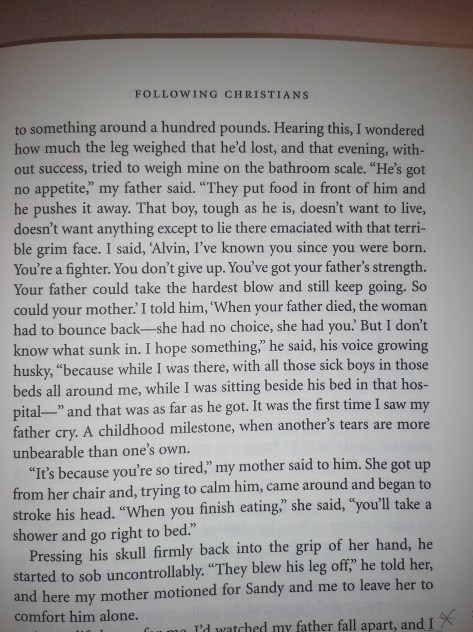
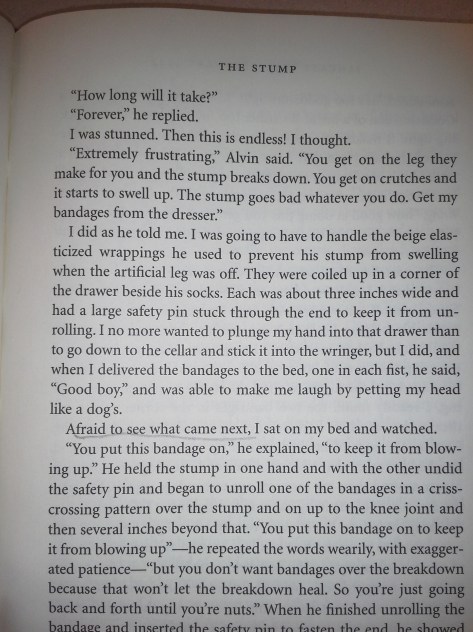
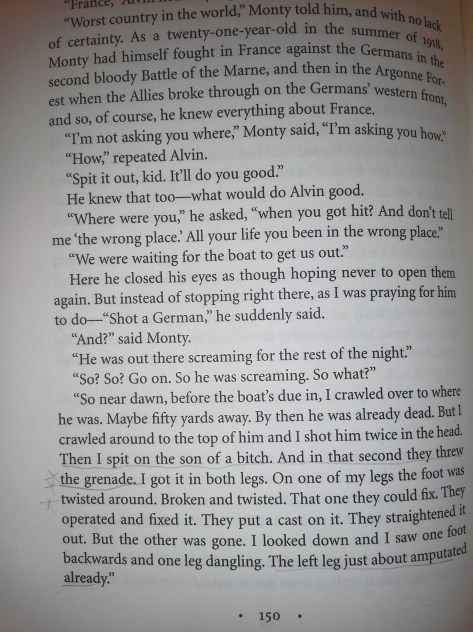
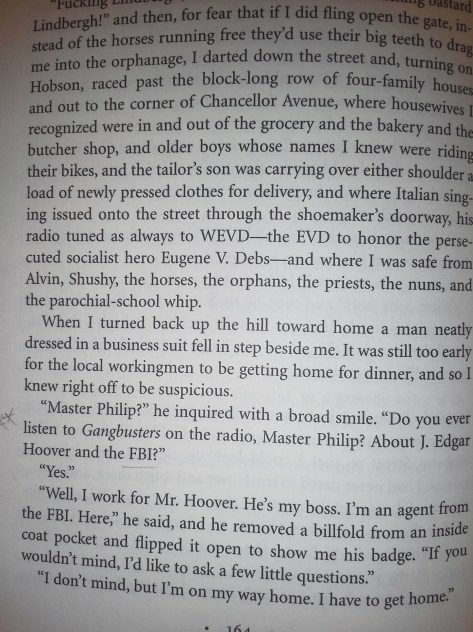
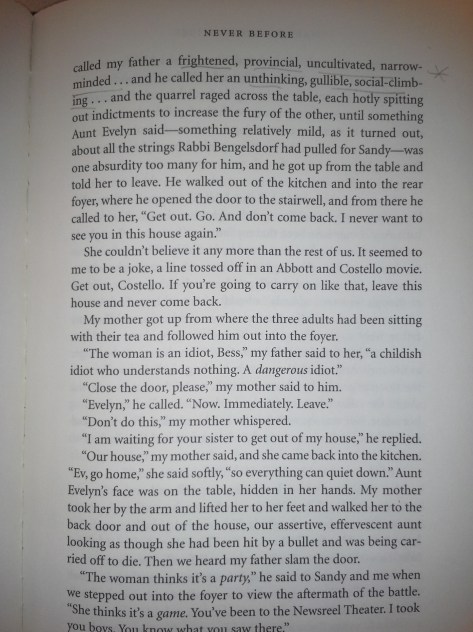
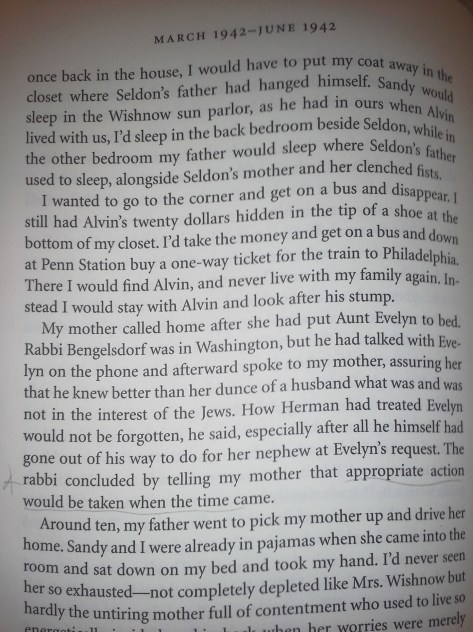
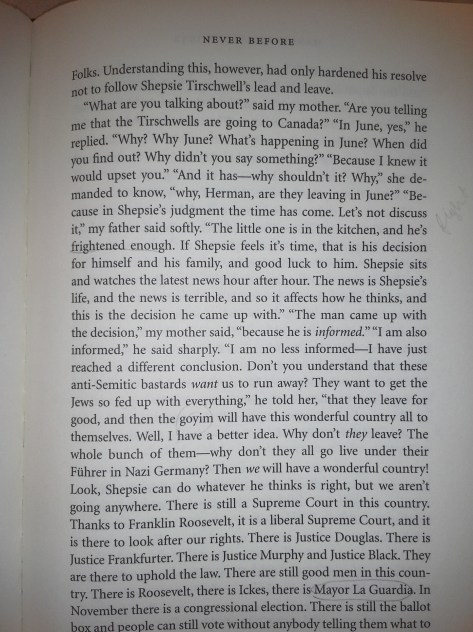
A character evolution timeline (see sample chapter on Narrative Writing & CCSS by Olson, Scarcella, & Matuchniak) requires a reader to follow one character through a story, select textual evidence to make a claim as to what a character is feeling, and then support that claim with evidence from the text. This activity gives students practice making inferences and identifying bias in a text. The 14 photos below are of different characters from The Plot Against America.

2015-12-04 10.14.442015-12-04 10.15.522015-12-04 10.16.512015-12-04 10.18.342015-12-04 10.24.122015-12-04 10.51.582015-12-04 10.53.342015-12-04 10.54.472015-12-04 10.56.162015-12-04 10.57.402015-12-04 10.58.052015-12-04 10.59.042015-12-04 11.02.54Students need to identify the character, use an emoticon or symbol to characterize the character’s emotional state and then explain the character’s feelings with a quote from the story. This activity is to help students develop skills in sourcing documents and making predictions as to a person’s motivation and an author’s intent.

CCSS.ELA-LITERACY.RL.9-10.1
Cite strong and thorough textual evidence to support analysis of what the text says explicitly as well as inferences drawn from the text.

CCSS.ELA-LITERACY.RL.9-10.2
Determine a theme or central idea of a text and analyze in detail its development over the course of the text, including how it emerges and is shaped and refined by specific details; provide an objective summary of the text.
CCSS.ELA-LITERACY.RL.9-10.3
Analyze how complex characters (e.g., those with multiple or conflicting motivations) develop over the course of a text, interact with other characters, and advance the plot or develop the theme.
CCSS.ELA-LITERACY.RH.9-10.1
Cite specific textual evidence to support analysis of primary and secondary sources, attending to such features as the date and origin of the information.
CCSS.ELA-LITERACY.RH.9-10.2
Determine the central ideas or information of a primary or secondary source; provide an accurate summary of how key events or ideas develop over the course of the text.
CCSS.ELA-LITERACY.RH.9-10.3
Analyze in detail a series of events described in a text; determine whether earlier events caused later ones or simply preceded them.

Helping History Teachers Become Writing Teachers