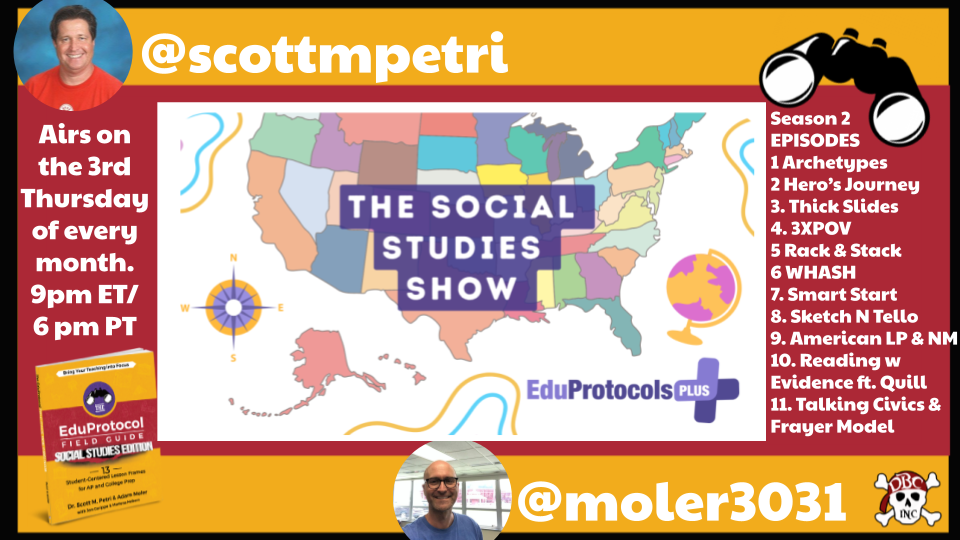
This month on The Social Studies Show Adam and I will talk about “How to Talk Bridgey” – a report that shares lessons for using civic terms without alienating segments of your audience. The guide summarizes five years of research on civic language and can help teachers facilitate more productive classroom dialogue.
Do your students know the coded and loaded words that influencers weaponize to push their buttons? We will use the Frayer Model to understand the signals that different civic terms send. Then we will discuss techniques for building meaningful dialogue and brainstorm strategies for prioritizing connecting over dunking in civil conversations.
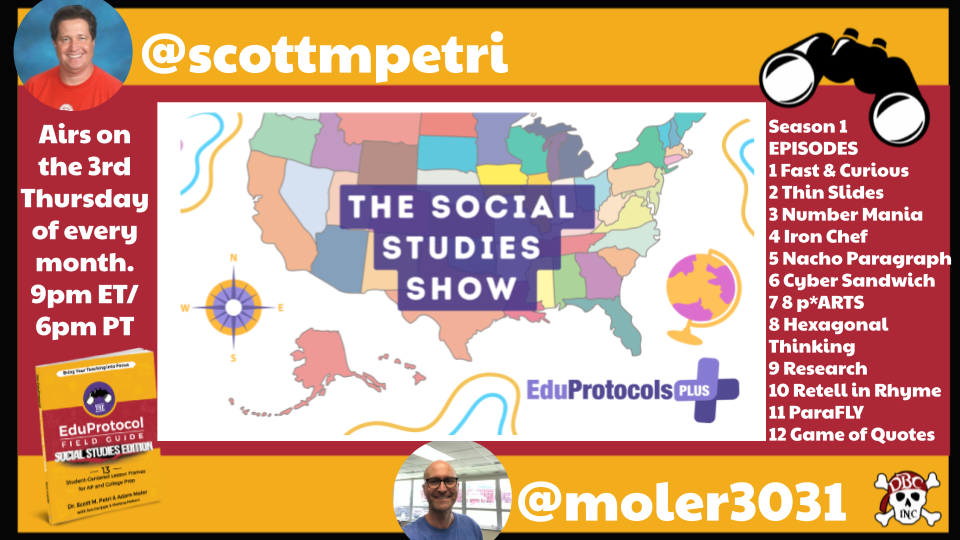
Join us on Thursday, December 19, 2024 at 9 pm ET/6PT as we wrap up our second season on EduProtocols Plus. We promise some tasty virtual eggnog. If you are a new member and want to binge on the show over the Winter Break, don’t forget these episodes from Season One.
Please join us on April 18, 2024, at 6 PT/9ET on The Social Studies Show when we talk about writing instruction with Josie Wozniak, the host of the ELA EduProtocols show and creator of the 3XPOV & 3XGENRE EduProtocols. Bring some student work examples, and your favorite templates, and be ready to learn a new writing strategy with some friendly teachers. We look forward to seeing you on EduProtocols Plus.
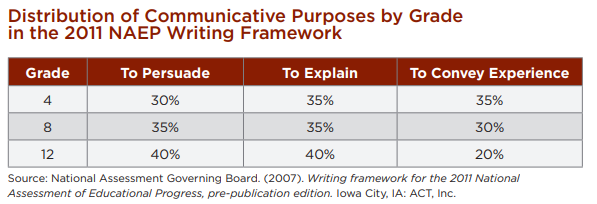
As we head into testing season, many Social Studies teachers start to second guess the amount of instructional time they have devoted to writing instruction. Has it been enough? Has it been too much? What is the appropriate balance between teaching writing skills and Social Studies content? The writing framework for the NAEP offers the following advice:
When students are asked to write about what they are reading, their comprehension of what they have read goes up 24 percentile points (Gabriel, 2023, p. 61). Social Studies teachers typically rotate writing tasks around narrative, explanatory, and persuasive text types, however, students benefit from perspective-taking when they interpret primary and secondary sources. The 3XPOV or 2XPOV EduProtocol gives students practice writing with different points of view and then engages them in a small group discussion over what elements in the writing are most aligned with individual perspectives.
If you missed the first season of the Social Studies Show, all 12 episodes are available at any time for members of EduProtocols Plus. You can listen to the EduProtocols podcast for free.
The ParafLY EduProtocol (Chapter 6) helps students paraphrase complex text and simplify it to show a clear understanding of the subject. This post features examples of a 10th-grade World History class practicing interpreting literary criticism. This was a part of a large, interdisciplinary project that required the collaboration of an ELA teacher, a History teacher, and a Spanish teacher. The students used their knowledge from all three classes to write children’s books on historical figures from the Mexican Revolution. The books are archived here.
As part of this project, I asked students to write their narratives at a sixth-grade reading level. They used the Hemingway App to check their text and revise it until they hit the target. For practice, I gave them some post-graduate literary criticism from Yisela Maria Padilla of the novel they were reading in class. Students had 15 minutes to paraphrase the original 360-word paragraph, which was written at the post-graduate or 16th grade level. I collected their work via Pear Deck and color-coded it as A=Green, B=Yellow, C=Red. Everyone who made an effort got the points. NOTE: This is not the way to smart start ParaFLY! Always use a low-cognitive lift when starting a new EP. Here are three student responses and the feedback I provided to the whole class.
On the left-hand side of the slide below is the original text and on the right-hand side is my paraphrased attempt. Numerous studies demonstrate that student self-assessment is a major factor in academic improvement. Asking students to identify strengths and weaknesses in their own work yields powerful insights. Increased metacognition and problem-solving with advanced social studies concepts and academic vocabulary leads to deeper learning.
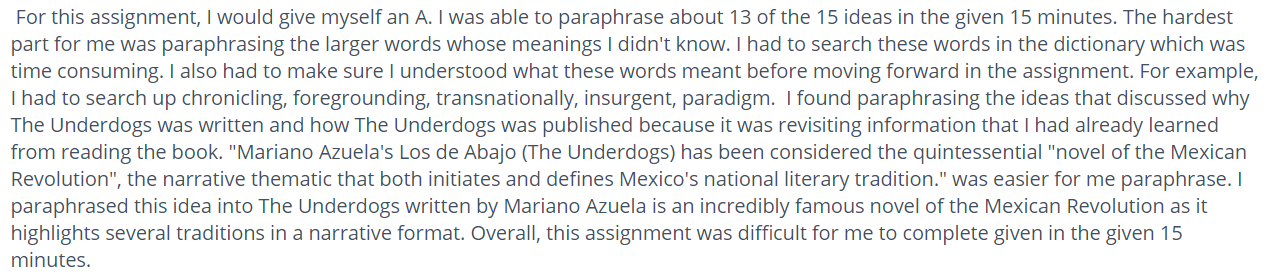
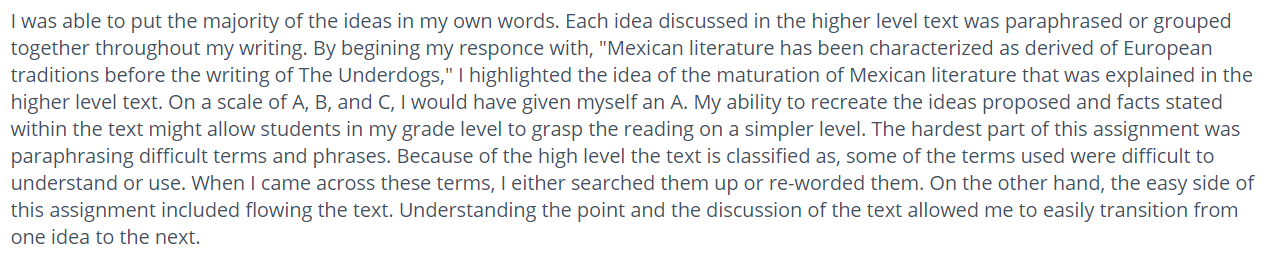
The next day, I asked students to evaluate their work after reading my sample. They posted to a discussion board answering the following questions: Add up how many of the ideas you were able to put into your own words. On a scale of A, B, & C, what would you have given yourself on this assignment? What was the hardest part? What did you find easy? Two student responses are followed by their paraphrasing samples below.
Student A
The Underdogs written by Mariano Azuela is an incredibly famous novel of the Mexican Revolution as it highlights several traditions in a narrative format. Mexican Literature became reinvented by The Underdogs since its appearance in 1915. Literature that was once filled with European tradition now contains Mexican events, culture, tradition, and history. The Underdogs has a hyper national status and was published by Los de abajo’s. This publication left the novel open to not just becoming popular in areas surrounding where the Mexican Revolution occurred (such as Mexico) but to also become popular and reach all around the world. Mariano Azuela documents when he joined Pancho Villa’s men in 1914 in an effort to write a novel that is from the peasants perspective of the revolution. As Azuela writes about several defeats and then he flees to El Paso, Texas where he finishes his novel and publishes it in a small newspaper (El Paso Spanish-lanugage newspaper). During this time Mariano is starving and poor and ironically published his book on the US-Mexico borderlands. According to Juan Pablo Dabove, the Underdogs is a “nation-state identity paradigm.” This simply means that the story has hidden meanings. It involves several pertinent events and people of the revolution with different protagonists and antagonists.
Student B
Mexican literature had been characterized as derived of European traditions before the writing of The Underdogs. When Azuela released his novel, Mexican literature was changed as we know it. He documented his time as member of a band of Pancho Villa’s men, writing a novel about war and everyone behind it. Villa used the names of important historical figures included in the revolution, but added characters in addition to present ones in attempt to add dimension to his novel. When the Villistas began suffering defeats, Azuela fled across the border to El Paso, Texas, where he finished his novel. The initial release of his novel was not brought much attention to, leaving Azuela penniless. As more publishers were drawn into the attention of the novel, it was celebrated. The success was celebrated for many reasons including the modernization and newfound interpretations of Mexican literature. This modernization was seen through the centralization of the Mexican government and post revolutionary antics, which ultimately allowed political and literary advancements. Despite the self-actualization displayed throughout The Underdogs, the ideas Azuela engaged were sometimes characterized as backward and violent.
Gallery walks are a great way to debrief student self-assessments. Repeated exposure to high-quality reflections helps students improve their metacognitive skills. Pair-share peer reviews can also be helpful.
After receiving whole-class feedback and self-assessing with an exemplar, it is important for students to do another rep immediately. This time, I asked them to select a passage from their research, record the grade level, and then document that they could bring it down to the sixth-grade level. Some were more successful than others.
The ParaFLY can be a challenging EduProtocol to provide feedback on especially if you use the jigsaw method and give every student or group different chunks of text. When using this EP, it is important to do a low-cog smart start and make your students feel proud of their first few reps. Otherwise, they will conclude that they aren’t good at paraphrasing and give up on this essential academic writing skill. These students had used ParaFLY more than a dozen times prior to this and were unafraid to tackle challenging text. I was very pleased with their efforts. They confirmed what Jon Corippo says in his EduProtocol seminars, “More reps mean more confidence!”
Coming up on November 16, 2023, Adam and Scott welcome Dave Burgess, the best-selling author of Teach Like A Pirate to The Social Studies Show on EduProtocols Plus. They will discuss Dave’s journey from Social Studies teacher to a major force in educational publishing and learn what led Dave to publish the EduProtocols series.
This month’s episode will feature the ParaFLY EduProtocol. Paraphrasing is an advanced literacy skill where students express the meaning of a text in their own words, in order to gain greater clarity. Come meet our big daddy pirate and learn how to simplify paraphrasing with EduProtocols.
Paraphrasing is closely related to summarizing, which has a .79 effect size, or two grade levels of achievement according to John Hattie. We will provide some tips and tricks for smart starting the ParaFLY, as well as provide some examples of student work from both of our classrooms. If you already have a copy of our book The EduProtocol Field Guide: Social Studies Edition, you can read Chapter 6 for a sneak preview. We look forward to seeing you on EduProtocols Plus.
The Frayer model helps students build a deeper understanding of social studies topics, vocabulary words, and concepts. The flexible four-quadrant format makes it easy to quickly adapt Frayer lessons for whatever students are learning about in your class.
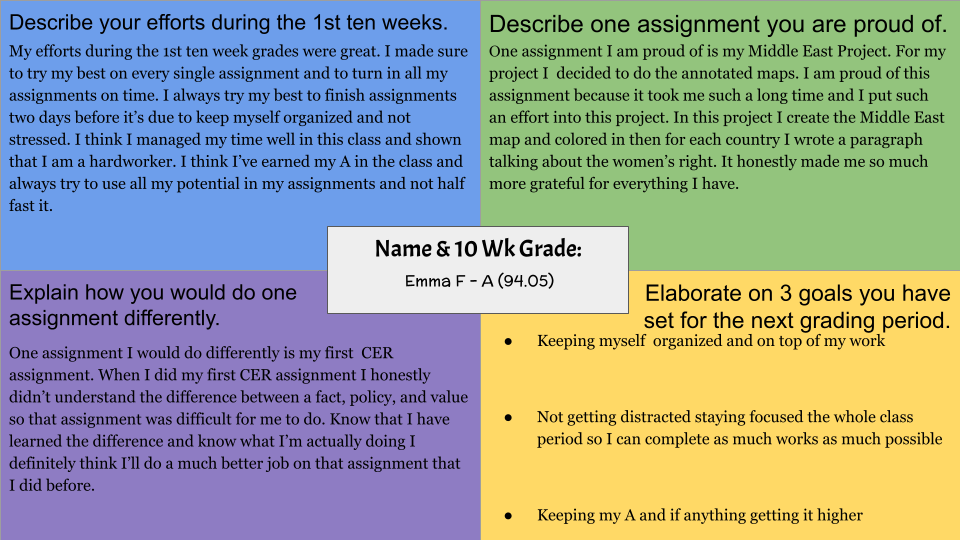
In the past, I have used the Frayer model so that students could evaluate the successes and failures of the individual figures we are studying. Here are some examples with WWII Spies. My students have used the Frayer model to compare similarities and differences between other exciting topics like — economists. I like to use this template when asking students to identify stages in the Hero’s Journey or when characterizing a historical figure as a particular Archetype. I have even used it to get students to reflect on their work habits and grade in my class.
Recently, I modified a Frayer deck for students to use to write interview questions that they could ask a Holocaust survivor. I told them that I was looking to see evidence that they had learned significant details from our video lectures. I asked the students to use these Bloom’s question starters. Specifically, I wanted them to think deeply and write at least four questions for each stage with a total of twenty-four questions. After they finished, they presented them to a thought partner. Each team identified and highlighted the three best questions, which they posed to Rose Schindler, whose testimony was recorded by Story File. Here’s an example.
Many of my students spoke about this assignment during their student-led conferences. I was impressed with the thoughtfulness of their questions and the depth of knowledge they reported gaining from this project. Thank you, Dorothy Frayer. May your model live forever! To see more examples of the Frayer Model in Social Studies, pick up our book.
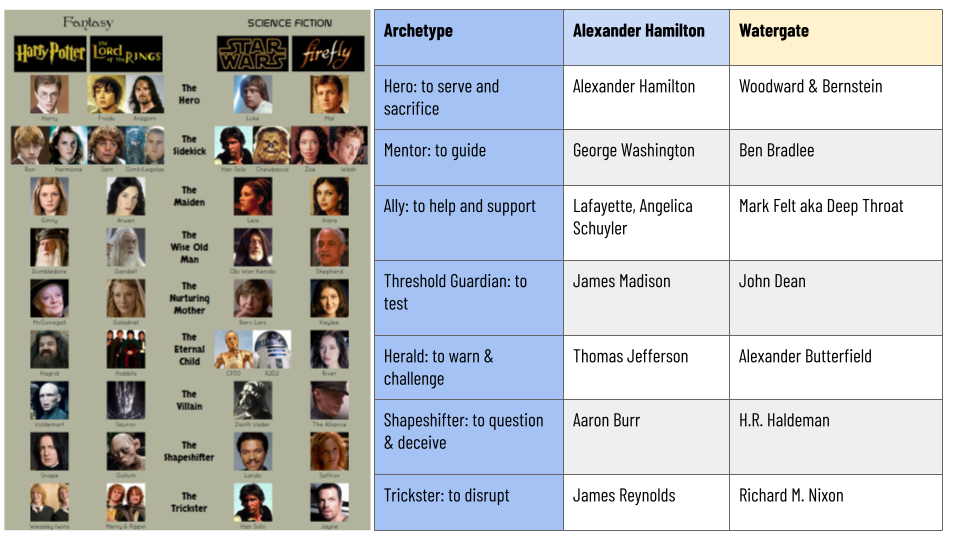
Are you looking for an advanced critical-thinking activity that helps students practice transferring funds of knowledge from one subject to another? The Archetype Four Square EduProtocol can help students use what they already know about mythic structure to deepen their analysis skills and make additional connections with other figures they have studied in history.
The College Board has reported that one of the most challenging tasks on their exams is making connections between historical figures and periods. When students view historical figures as human beings with common struggles, they connect those narratives to their experiences and lock the historical details into their deeper memory.
History is full of archetypal characters and situations. Almost every revolution and presidential scandal contain what Carl Jung, the founder of analytic psychology called archetypes or commonly repeating personality types that help simplify human behavior patterns. With practice, you can teach your students to recognize these story-telling techniques to make meaningful connections when studying complex phenomena. George Washington gave advice to Alexander Hamilton in a mentor role similar to how Ben Bradlee, the editor of the Washington Post, encouraged his reporters Bob Woodward & Carl Bernstein to keep digging deeper into the Watergate scandal.
I have found the lenses of The Hero’s Journey and Archetypes to be helpful in jumpstarting classroom conversations. My students worked in small groups to identify which character fits into which archetype. Then they gathered textual evidence to support their claims. Here is an example where a student is struggling to identify an archetype. This description of Alexander needs to be clearly defined. Is he an ally, shapeshifter, or trickster? This student is too vague and does not supply sufficient evidence from the text or the movie.
I have found the Nacho Paragraph EduProtocol well-tuned for helping students elaborate or clarify their rationale. This example shows how three students labeled the same character with different archetypes. To go deeper, I asked them to select one and elaborate with additional evidence. They were only given ten minutes to complete this task.
Archetypes teach students that some claims are easier to support than others. Also, there can be more than one right answer. Your students will dive back into the text and find historical details to bolster their points. Isn’t that what we want? Teachers can model how to strengthen these writing samples with direct instruction and think-aloud explanations as to why one sample is stronger than another. Students can learn to make more connections by reading each other’s responses and voting on which is the most convincing.
Sample A
Sample B
Sample C
To learn how EduProtocols can help you increase the amount of writing your students do while decreasing your prep and grading time, pick up our book The EduProtocol Field Guide: Social Studies Edition. If you already have the book, please consider posting a review on Amazon and sharing your students’ work on Twitter using the #EduProtocols hashtag.
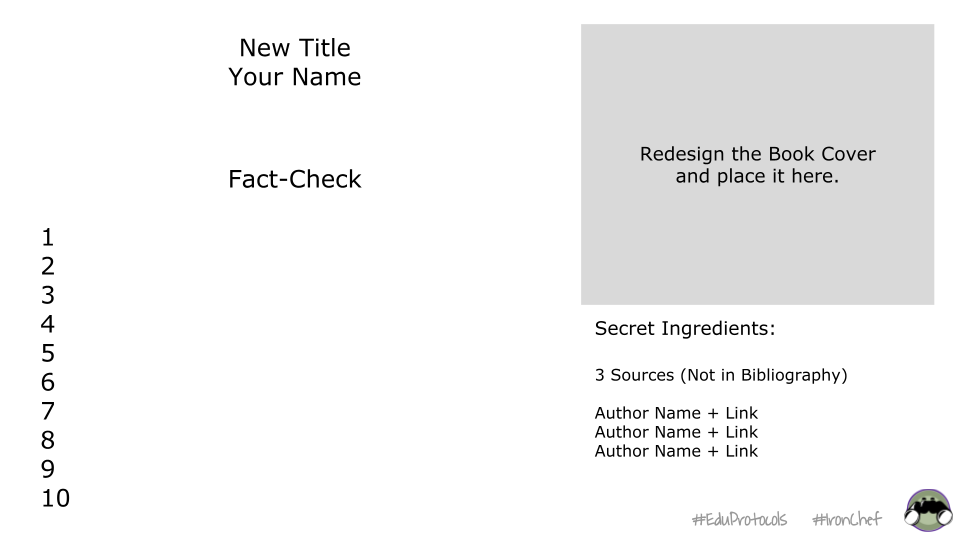
Do your students know how to perform lateral reading? Even college students struggle with this skill. I have long used the Iron Chef EduProtocol as a jigsaw tool, but lately, I have been experimenting by using it as a fact-checking tool. This helps students identify claims, find sources that can corroborate or refute them, and add citations that legitimize their academic writing.
First, I used this video lesson from Retro Report to help them understand how professional fact-checkers work. There is a great companion website with additional lessons here.
My students often create content that I use the following year. This creates an authentic audience for my projects and makes the kids focus on producing high-quality products. Here are some children’s books my students did on historical figures in the 1920s & 1930s. I used a spreadsheet to assign a separate book to each student. They have one class period to build an Iron Chef and fact-check as much as they can. Presentations are staggered at the beginning and end of class to avoid boredom. Here is a link to the book.
The first student retitled the book and pulled ten quotes that she thought she could corroborate. She provided three sources that she could use for this fact-checking activity in the secret ingredients section of the slide. Lastly, she included parenthetical citations for each fact she was able to verify.
This second student was able to pull ten items to fact-check. She provided links to three sources, but she was unable to verify or refute the items she selected with parenthetical citations. This suggests that I should lower the fact-checking requirements. How many lateral reading reps do students need before they reflexively verify the information the media shoots at them?
Moving forward, I would extend this activity by having students view presentations that document at least three facts that they can use to then write a complex thesis statement and supporting paragraph. I might even make them read the paragraph on Flip. That way, each student has one paragraph that summarizes the 28 important people, places, and events from the 1920s & 30s. Earlier this year, my students did podcasts on WWI Spies. I created an easier fact-checking activity for students to verify historical details in their podcasts. Here’s a student sample. Which version would you feel comfortable using in your class? If you have additional questions on the Iron Chef EduProtocol, check out our book.
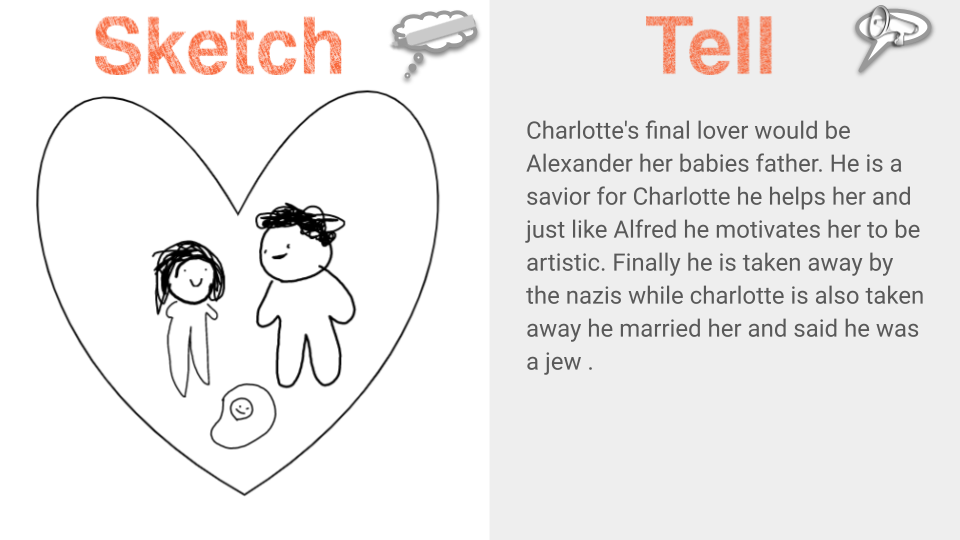
What happens when you smash three EDUProtocols into one? You get an alternative assessment that gets your students talking about the book they are reading in your class. The Hero’s Journey and Jungian Archetypes are popular frameworks for analyzing books, films, and historical events. This activity merged them with a Sketch and Tell.
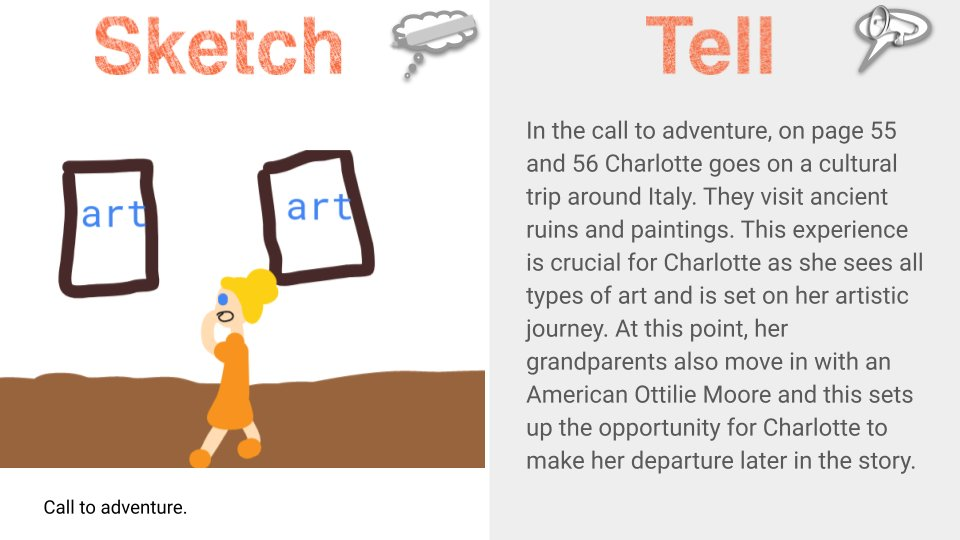
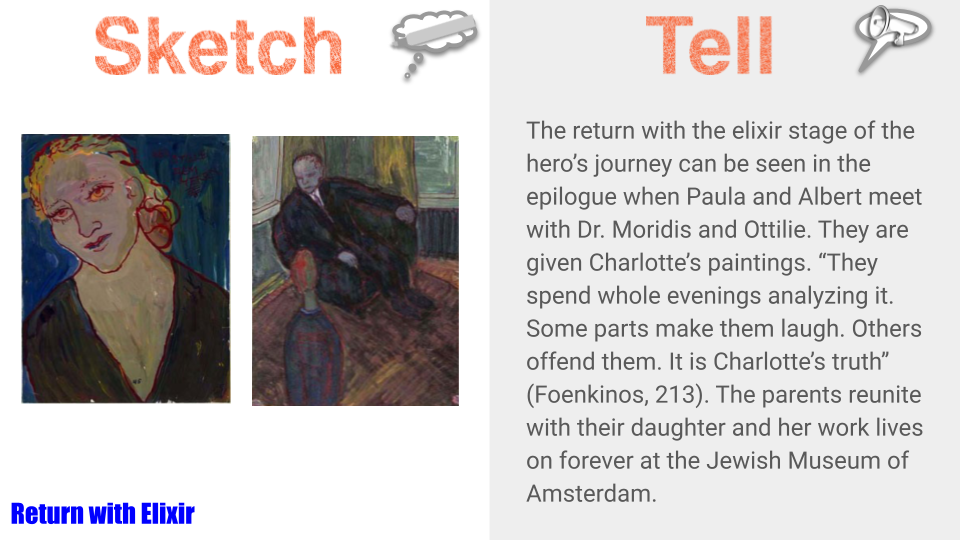
My students read this book and used the HJ & Archetype framework to take notes as they watched the movie. Then they worked in small groups to arrive at a consensus identifying people and events that represented the stages in the Hero’s Journey and archetypes commonly seen in historical narratives. You can see their attempts here.
While I was TWA — teaching (while) walking around — during first period, I observed many students struggling to use textual evidence and cite page numbers. I was able to reinforce that expectation with my second-period students and the quality got better. I have used the Hero’s Journey and Archetype Four Square EDUProtocols separately in the past and I was thrilled with how the addition of Sketch and Tell allowed students to collaborate and be creative while maintaining a focus on their reasoning skills.
In most classrooms, the students doing the talking are the students doing the learning, however post-pandemic, I have struggled to facilitate decent academic conversations in my classes. Too many students do not want to take chances on original ideas in front of their peers. Presentations are dreadful and small group discussions trail off, wither, and die before including any academic content. This trifecta of an EduProtocol smash built student confidence in applying historical knowledge within an academic framework. The requirement of creating consensus within a small group was the secret sauce or pièce de résistance that kept the conversations going.
It is important to teach students that it is okay to hold deep, contradictory, and complex thoughts in their heads. Real life is seldom black and white. Rewarding conversations teach us to appreciate the many shades of gray involved in historical interpretation. These three students each viewed Alfred differently. Despite this, they were each able to provide evidence and a line of reasoning to support their claim.
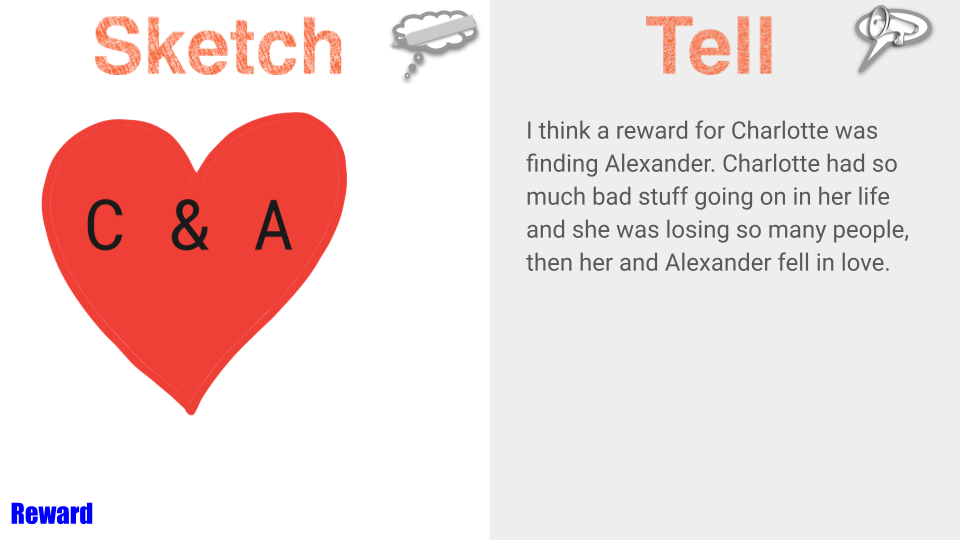
I’m happy to report that for their second rep, my students were able to identify the missing steps of the reward, road back, resurrection, and return with the elixir. Their analysis skills were tested and they passed. This was a low-stress, high-impact activity where students got to flex their critical thinking skills and practice using academic language in small group discussions. I will be smashing these EduProtocols again.
To learn more about using The Hero’s Journey, Archetype Four Square, and Sketch and Tell EduProtocols pick up our book The EduProtocol Field Guide: Social Studies Edition. If you are one of our 2,500+ happy customers, please consider posting a review on Amazon. Also, continue to share your student work with us on Twitter using the #EduProtocols hashtag. Lastly, don’t miss our Social Studies Show on the third Thursday of every month.
Corroboration is a discipline-specific skill in Social Studies, but it can be used in all subjects to teach students how to analyze or explain data from multiple sources. This post will smash a corroboration activity with Nacho Paragraph using an I do-We do-You-do format to improve student writing with EduProtocols.
For this activity, I asked my 10th-grade World History students to pull some facts from the movie Marie Antoinette by Sofia Coppola and compare them to the facts that are presented in their textbook. My students can typically make 5-10 corroborations in one class period. The more complicated next step is showing them how to select multiple facts to create a line of reasoning.
I selected the above as a mentor text and modeled a think-aloud strategy with it where I showed students how to elaborate on the fact pattern and add page numbers with in-text citations. There were two learning objectives: 1) Students will learn how to create in-text citations for authors & academic sources. 2) Students will strengthen their line of reasoning by using evidence from multiple sources.
Not bad, but you don’t want to say “they” in academic writing. You should clearly be citing your sources in MLA or APA format and it should be an academic source. Let’s try – try again. Instead of saying “source one” and “the movie”, let’s give them some more formal attribution.
Much better. Notice how the in-text citations position the writer as an expert. By creating a fact pattern about King Louis using multiple sources, this author has established themselves as ready for the academic writing demanded by AP or other college-level classes. If your students struggle to craft academic or even grade-level writing, EduProtocols can save those who suffer when paraphrasing, citing their sources, or completing a paragraph. Your students won’t rely on ChatGPT if you rotate ParaFLY, Nacho Paragraph, and 3XCER into your regular instruction. You can give your students more writing practice with less prep and grading time on your part.
Do your students turn their backs to their audience and read every word off of their slides when it is time to present? If the answer is yes, then Thin Slides are the way to solve this problem.
Thin Slides are a creative EduProtocol that limit students to one image and one word or phrase and then ask them to speak for one minute. Repeated reps with Thin Slides have helped my students be more creative whether they are designing museum exhibits, children’s books, or giving Ignite Talks.
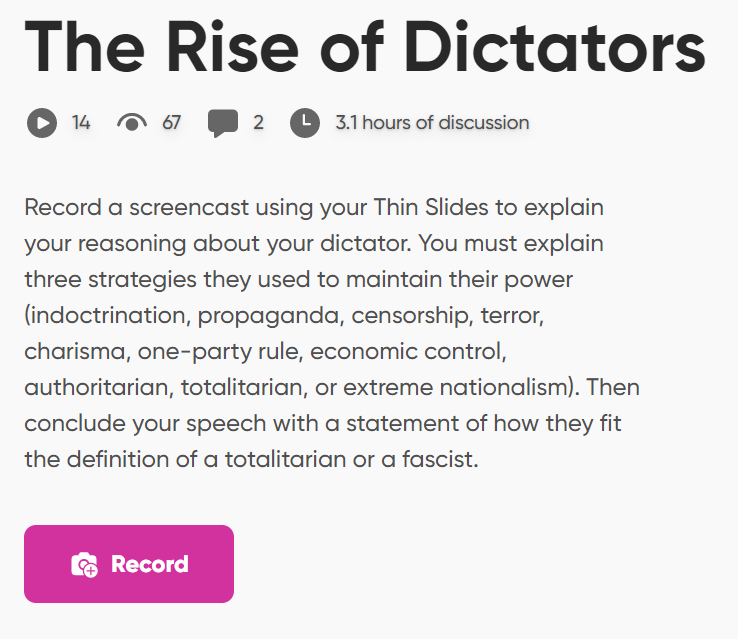
This assignment asked students to select three vocabulary words from a list of nine and use them to create a line of reasoning. Then they closed by making a definitive statement. Thin Slides make it easy to see and hear whether or not your students get it.
Join me, Adam Moler, and our special guests on the third Thursday of every month for The Social Studies Show on Eduprotocols Plus. We talk about implementation issues and why we love being History teachers. It’s always a great time.






















 HistoryRewriter