Tag Archives: Iron Chef

Fact-Checking with Iron Chef

Do your students know how to perform lateral reading? Even college students struggle with this skill. I have long used the Iron Chef EduProtocol as a jigsaw tool, but lately, I have been experimenting by using it as a fact-checking tool. This helps students identify claims, find sources that can corroborate or refute them, and add citations that legitimize their academic writing.
First, I used this video lesson from Retro Report to help them understand how professional fact-checkers work. There is a great companion website with additional lessons here.

My students often create content that I use the following year. This creates an authentic audience for my projects and makes the kids focus on producing high-quality products. Here are some children’s books my students did on historical figures in the 1920s & 1930s. I used a spreadsheet to assign a separate book to each student. They have one class period to build an Iron Chef and fact-check as much as they can. Presentations are staggered at the beginning and end of class to avoid boredom. Here is a link to the book.

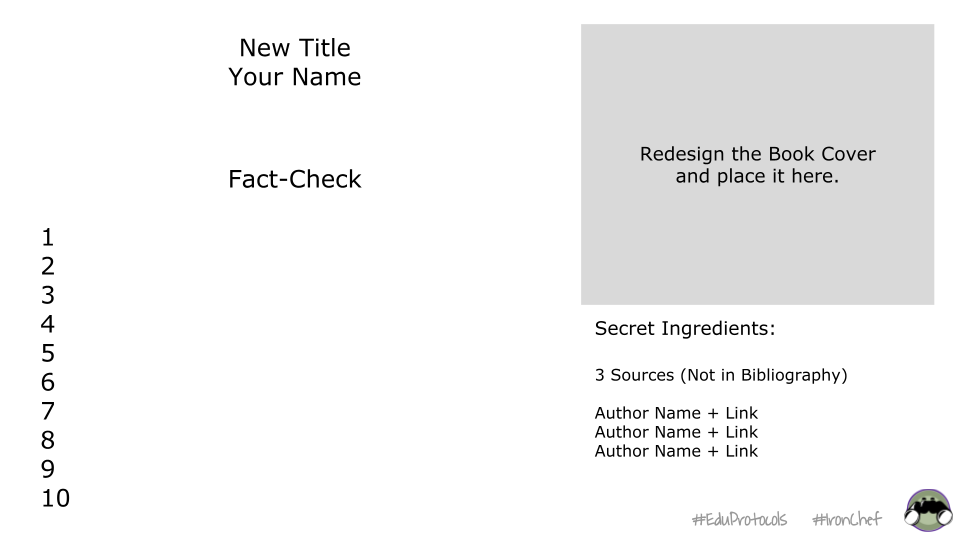
The first student retitled the book and pulled ten quotes that she thought she could corroborate. She provided three sources that she could use for this fact-checking activity in the secret ingredients section of the slide. Lastly, she included parenthetical citations for each fact she was able to verify.

This second student was able to pull ten items to fact-check. She provided links to three sources, but she was unable to verify or refute the items she selected with parenthetical citations. This suggests that I should lower the fact-checking requirements. How many lateral reading reps do students need before they reflexively verify the information the media shoots at them?

Moving forward, I would extend this activity by having students view presentations that document at least three facts that they can use to then write a complex thesis statement and supporting paragraph. I might even make them read the paragraph on Flip. That way, each student has one paragraph that summarizes the 28 important people, places, and events from the 1920s & 30s. Earlier this year, my students did podcasts on WWI Spies. I created an easier fact-checking activity for students to verify historical details in their podcasts. Here’s a student sample. Which version would you feel comfortable using in your class? If you have additional questions on the Iron Chef EduProtocol, check out our book.

Mix Iron Chef Into Reading and Writing

Students in my 11th grade US History class typically read four non-fiction books in addition to their History textbook. I have noticed that their note-taking skills, attention to detail, and recall of historical figures in the text need to improve. As students advance through upper-division work text complexity increases, yet the amount of reading instruction decreases. This can result in real problems in college where professors expect their students to do three hours of reading in the subject-area for every hour they spend in class. This post will describe an instructional sequence that helps students focus on the historical characters in a nonfiction reading using an Iron Chef protocol, a Who Am I? narrative writing technique, and a video response system that improves student speaking and listening skills.

Iron Chef

Eduprotocol authors Marlena Hebern and Jon Corippo developed this tool to help students flex quick research reps in 15 minutes or less. For this pre-reading activity, I listed the historical figures in The Professor and the Madman and assigned them via number on my class roster. Students research the individual, note key details and page number(s) they appeared on in the book, and for the secret ingredient add what we should know/remember about this person. The slide below is an example of what a student can create in less than one class period. Students build their own study guide that they can refer back to and add to as they read.

Iron Chef Pics

Who Am I? A First Person Protocol

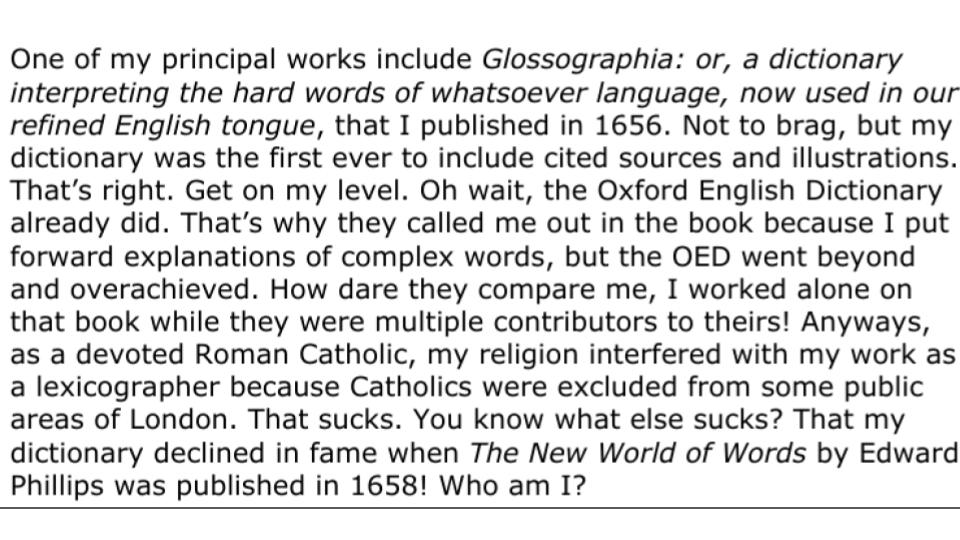
The next step is to have students turn their slide research into a first person narrative. Even if students mostly copied information from Wikipedia into their Iron Chef slide, now they have to do the literary heavy lifting of converting it from the third person into the first person. This student has done an excellent job with a minor historical figure from The Professor and the Madman and has even slipped her own confident personality into her script. I can’t wait to see what she does with her video.

Iron Chef Pics (1)

Flipgrid – Engage Your Students in Speaking and Listening

The last step involves using Flipgrid, a free video-response platform that helps students learn via their own videos. For this assignment, the students have to speak for one minute giving the viewer clues as to the historical figure’s identify. As the grid populates with videos, students can view them, take notes, and learn who is who before they take a quiz made up of ten randomly selected videos.Screenshot 2019-09-21 at 5.17.58 PM

This video shows how students can be creative and have fun when engaged in this instructional sequence. Flipgrid tracks the analytics for each grid, which allowed me to see that my students viewed each others videos a total of 2,764 times prior to the quiz. That adds up to 43 hours of study time on the characters in a book they haven’t read yet. What do you think will happen when they encounter each character in the text?

Big Takeaways

What I like about this instructional sequence is that each day builds on what students created the day before. If they didn’t try very hard with the research they put into their Iron Chef slide, then they will struggle to write a Who Am I? speech. If they didn’t put some effort and creativity into their script, then they will have trouble making an interesting video. If they didn’t review their classmates’ videos, then they probably won’t do very well on the quiz.

Teaching students to show up and work hard every day is the most important work we can do as teachers. I have used this instructional sequence to help my students learn about Historical Eras, Enlightenment Philosophes, and people in the Civil Rights Movement. These activities have increased effort and engagement in my classes. Feel free to remix them for your class and subject matter. All I ask is that you leave a comment or tag me in a tweet @scottmpetri and let me know how they work for you.