Scott Petri has taught social studies for five years at the middle school level and six years at the high school level. He has also served as a coordinator and small school principal in the Los Angeles Unified School District. He holds a Doctorate in Educational Leadership and a Masters in Educational Administration from California State University Northridge, and a B.A. in Political Science from the University of San Diego.
Matt Miller makes many provocative statements in his latest book AI For Educators. One of the first comes from Dr. Kai-Fu Lee who claims that “We {societies} overestimate what technologies can do in five years. We underestimate what they will be able to do in twenty years” (Miller, 2023, p. 7). This made me want to go back and judge every major innovation in the last century.
Later in the book, Miller offers another juicy quote that resonated with me. Sherry Turkle states “We expect more from technology and less from each other” (p. 111). Wow! What a truism. As a classroom teacher, I constantly see students who would rather spend time on their phones instead of interacting with each other. My job is to create activities that require them to interact and engage in tasks that make them read, speak, listen, and write about what they’ve learned. My AP Research students are seniors in high school and their single worst habit is their inability to pick up the phone, call someone, and ask for help. I wonder how AI can facilitate this, or will AI make social isolation worse before it gets better?
Interestingly, the College Board and the International Baccalaureate programs have very different views of on using AI in education. This makes me wonder who will change their views first? How will these programs look in 10 years?
Overall, your reaction to this book will depend on whether you are an optimist or a pessimist. If you believe AI will inspire students to be more creative and advanced with their critical thinking, you are going to dive in, explore, and share the responsible use of AI with your students. If you think the glass is half empty, you are going to try to police AI, shield your students from it, and run away from it. You will probably become more and more disillusioned with education and maybe even wind up leaving the field.
Miller acknowledges AI has biases built in (p. 18). Educators are going to need to be hyper-aware of these flaws and specifically plan lessons that address diversity, inclusion and equity, not to mention SEL concerns. If you are looking for a starting place to learn about the implications of using AI in education, this is an excellent one. If you want to learn more before purchasing the book, view this YouTube discussion Miller hosted.
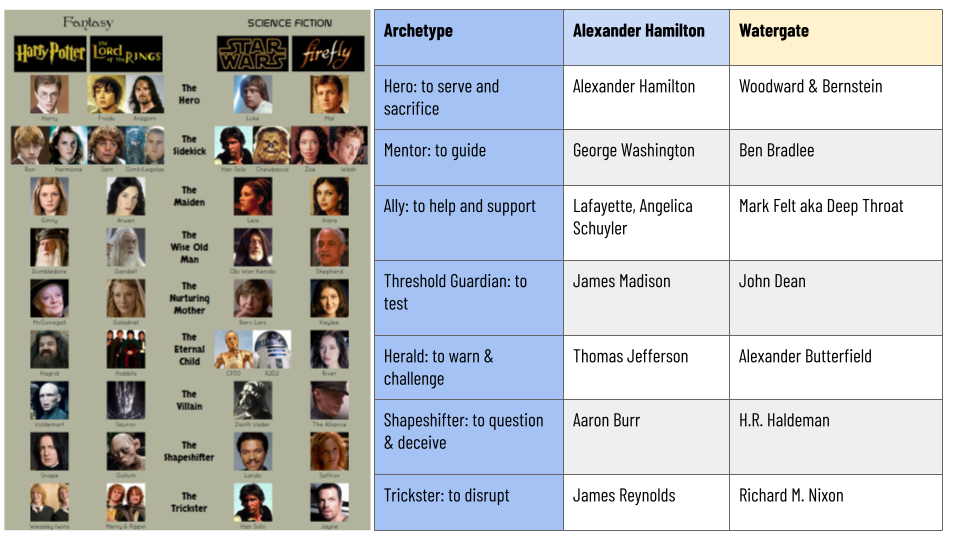
Are you looking for an advanced critical-thinking activity that helps students practice transferring funds of knowledge from one subject to another? The Archetype Four Square EduProtocol can help students use what they already know about mythic structure to deepen their analysis skills and make additional connections with other figures they have studied in history.
The College Board has reported that one of the most challenging tasks on their exams is making connections between historical figures and periods. When students view historical figures as human beings with common struggles, they connect those narratives to their experiences and lock the historical details into their deeper memory.
History is full of archetypal characters and situations. Almost every revolution and presidential scandal contain what Carl Jung, the founder of analytic psychology called archetypes or commonly repeating personality types that help simplify human behavior patterns. With practice, you can teach your students to recognize these story-telling techniques to make meaningful connections when studying complex phenomena. George Washington gave advice to Alexander Hamilton in a mentor role similar to how Ben Bradlee, the editor of the Washington Post, encouraged his reporters Bob Woodward & Carl Bernstein to keep digging deeper into the Watergate scandal.
I have found the lenses of The Hero’s Journey and Archetypes to be helpful in jumpstarting classroom conversations. My students worked in small groups to identify which character fits into which archetype. Then they gathered textual evidence to support their claims. Here is an example where a student is struggling to identify an archetype. This description of Alexander needs to be clearly defined. Is he an ally, shapeshifter, or trickster? This student is too vague and does not supply sufficient evidence from the text or the movie.
I have found the Nacho Paragraph EduProtocol well-tuned for helping students elaborate or clarify their rationale. This example shows how three students labeled the same character with different archetypes. To go deeper, I asked them to select one and elaborate with additional evidence. They were only given ten minutes to complete this task.
Archetypes teach students that some claims are easier to support than others. Also, there can be more than one right answer. Your students will dive back into the text and find historical details to bolster their points. Isn’t that what we want? Teachers can model how to strengthen these writing samples with direct instruction and think-aloud explanations as to why one sample is stronger than another. Students can learn to make more connections by reading each other’s responses and voting on which is the most convincing.
Sample A
Sample B
Sample C
To learn how EduProtocols can help you increase the amount of writing your students do while decreasing your prep and grading time, pick up our book The EduProtocol Field Guide: Social Studies Edition. If you already have the book, please consider posting a review on Amazon and sharing your students’ work on Twitter using the #EduProtocols hashtag.
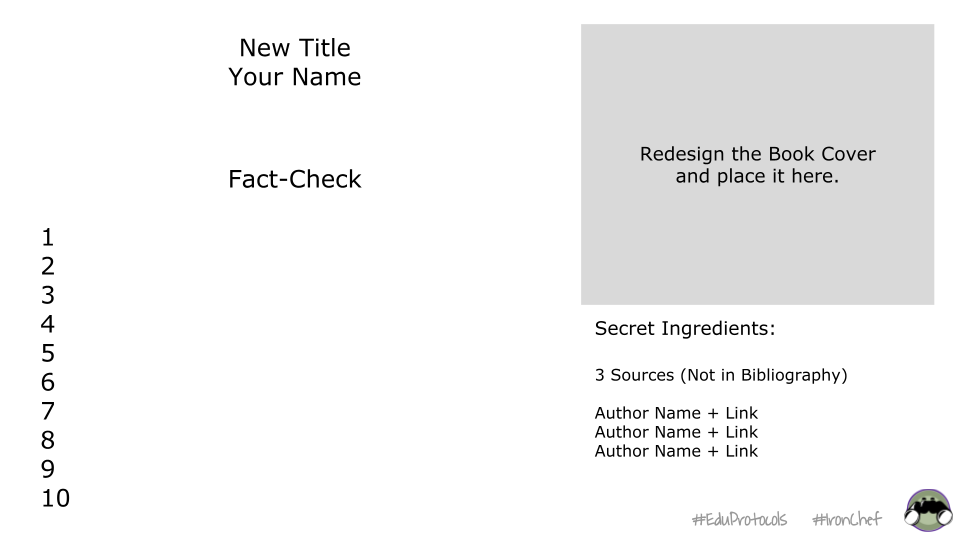
Do your students know how to perform lateral reading? Even college students struggle with this skill. I have long used the Iron Chef EduProtocol as a jigsaw tool, but lately, I have been experimenting by using it as a fact-checking tool. This helps students identify claims, find sources that can corroborate or refute them, and add citations that legitimize their academic writing.
First, I used this video lesson from Retro Report to help them understand how professional fact-checkers work. There is a great companion website with additional lessons here.
My students often create content that I use the following year. This creates an authentic audience for my projects and makes the kids focus on producing high-quality products. Here are some children’s books my students did on historical figures in the 1920s & 1930s. I used a spreadsheet to assign a separate book to each student. They have one class period to build an Iron Chef and fact-check as much as they can. Presentations are staggered at the beginning and end of class to avoid boredom. Here is a link to the book.
The first student retitled the book and pulled ten quotes that she thought she could corroborate. She provided three sources that she could use for this fact-checking activity in the secret ingredients section of the slide. Lastly, she included parenthetical citations for each fact she was able to verify.
This second student was able to pull ten items to fact-check. She provided links to three sources, but she was unable to verify or refute the items she selected with parenthetical citations. This suggests that I should lower the fact-checking requirements. How many lateral reading reps do students need before they reflexively verify the information the media shoots at them?
Moving forward, I would extend this activity by having students view presentations that document at least three facts that they can use to then write a complex thesis statement and supporting paragraph. I might even make them read the paragraph on Flip. That way, each student has one paragraph that summarizes the 28 important people, places, and events from the 1920s & 30s. Earlier this year, my students did podcasts on WWI Spies. I created an easier fact-checking activity for students to verify historical details in their podcasts. Here’s a student sample. Which version would you feel comfortable using in your class? If you have additional questions on the Iron Chef EduProtocol, check out our book.
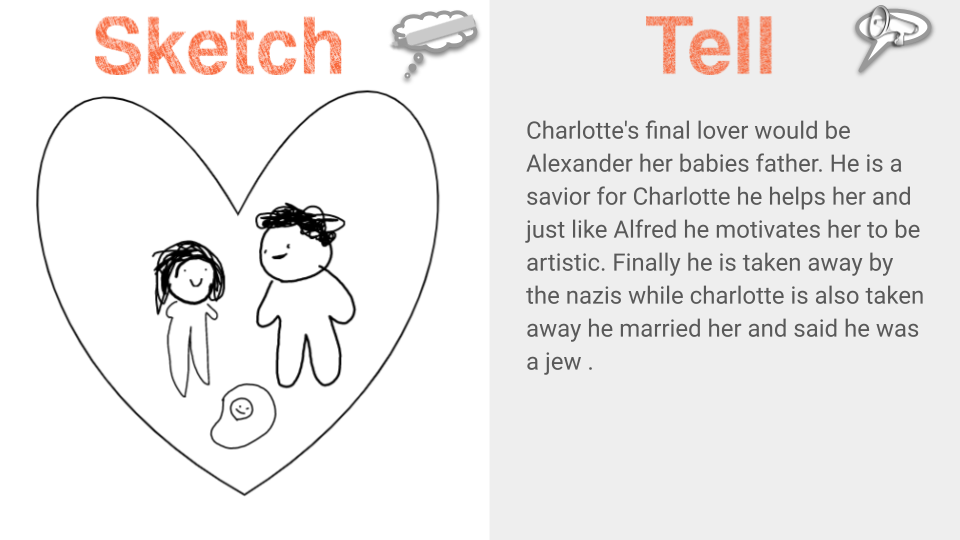
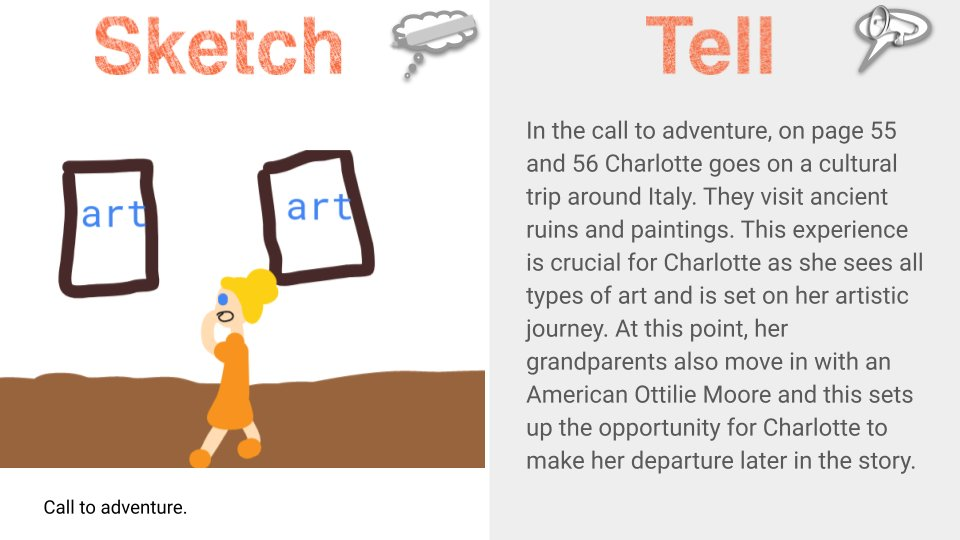
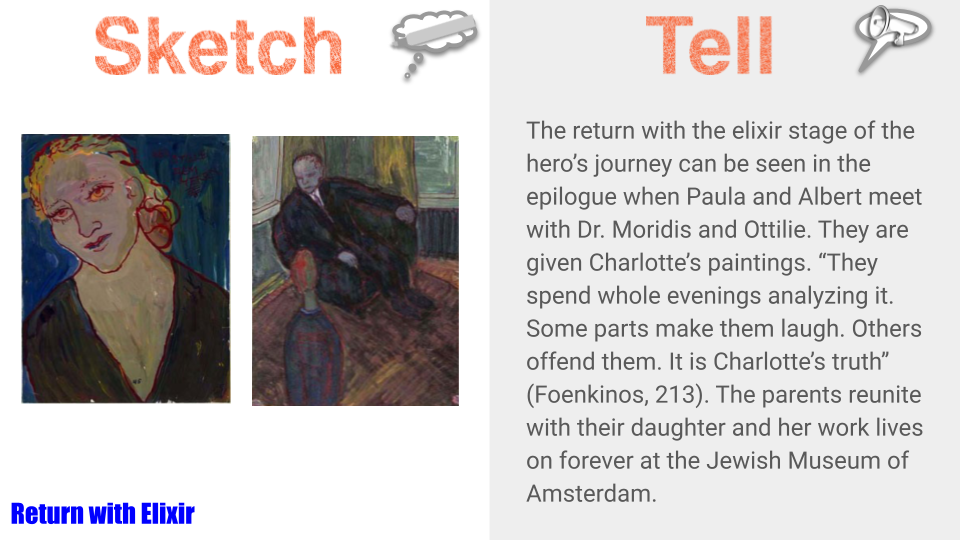
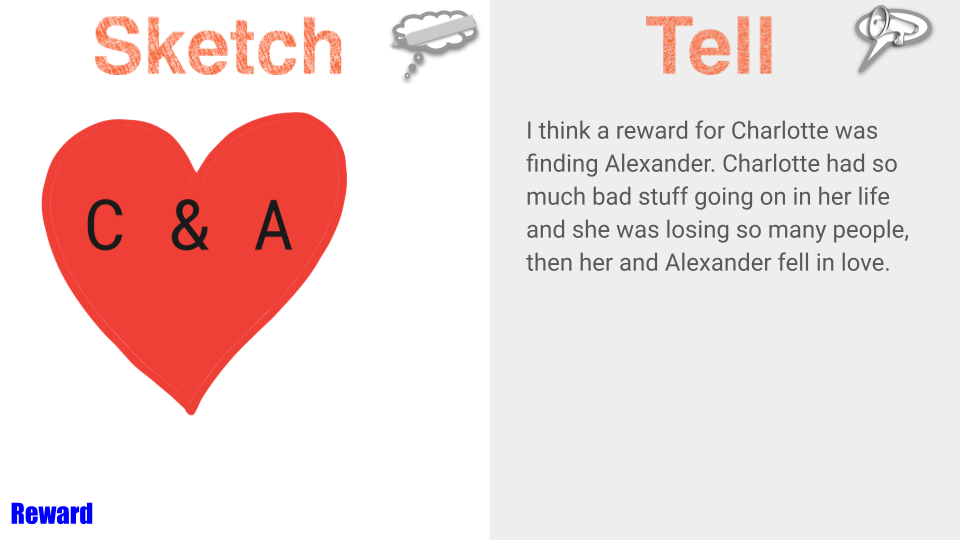
What happens when you smash three EDUProtocols into one? You get an alternative assessment that gets your students talking about the book they are reading in your class. The Hero’s Journey and Jungian Archetypes are popular frameworks for analyzing books, films, and historical events. This activity merged them with a Sketch and Tell.
My students read this book and used the HJ & Archetype framework to take notes as they watched the movie. Then they worked in small groups to arrive at a consensus identifying people and events that represented the stages in the Hero’s Journey and archetypes commonly seen in historical narratives. You can see their attempts here.
While I was TWA — teaching (while) walking around — during first period, I observed many students struggling to use textual evidence and cite page numbers. I was able to reinforce that expectation with my second-period students and the quality got better. I have used the Hero’s Journey and Archetype Four Square EDUProtocols separately in the past and I was thrilled with how the addition of Sketch and Tell allowed students to collaborate and be creative while maintaining a focus on their reasoning skills.
In most classrooms, the students doing the talking are the students doing the learning, however post-pandemic, I have struggled to facilitate decent academic conversations in my classes. Too many students do not want to take chances on original ideas in front of their peers. Presentations are dreadful and small group discussions trail off, wither, and die before including any academic content. This trifecta of an EduProtocol smash built student confidence in applying historical knowledge within an academic framework. The requirement of creating consensus within a small group was the secret sauce or pièce de résistance that kept the conversations going.
It is important to teach students that it is okay to hold deep, contradictory, and complex thoughts in their heads. Real life is seldom black and white. Rewarding conversations teach us to appreciate the many shades of gray involved in historical interpretation. These three students each viewed Alfred differently. Despite this, they were each able to provide evidence and a line of reasoning to support their claim.
I’m happy to report that for their second rep, my students were able to identify the missing steps of the reward, road back, resurrection, and return with the elixir. Their analysis skills were tested and they passed. This was a low-stress, high-impact activity where students got to flex their critical thinking skills and practice using academic language in small group discussions. I will be smashing these EduProtocols again.
To learn more about using The Hero’s Journey, Archetype Four Square, and Sketch and Tell EduProtocols pick up our book The EduProtocol Field Guide: Social Studies Edition. If you are one of our 2,500+ happy customers, please consider posting a review on Amazon. Also, continue to share your student work with us on Twitter using the #EduProtocols hashtag. Lastly, don’t miss our Social Studies Show on the third Thursday of every month.
This month on The Social Studies Show on EduProtocols Plus, Adam and I will be talking about one of our favorite EduProtocols — the Number Mania lesson frame. Our show takes place on the third Thursday of every month at 6 pm Pacific time. On March 16, 2023, we will be broadcasting live from Spring CUE (and Adam’s basement).
I see teachers sharing Number Mania on social media frequently. I worry that too many use it as a one-and-done lesson. Good infographics need an audience and some analysis. Two of my favorite extension activities with this EduProtocol are the self-assessment and the GIST statement. This student used the Panama Canal lesson I did for the CLIC project. The next day, they were given this debriefing document and asked to reflect on how they did. After they have completed a gallery walk, students are usually pretty critical of themselves. Asking them what they would do differently helps them prepare for the next project with confidence.
If your students are tired of debriefing and reflecting, then I suggest you teach them the GIST strategy. Simply ask them to select the five most important facts from their Number Mania and write one sentence for each fact. If the resulting paragraph tells the reader the five Ws and one H (who, what, when, where, why & how) — then they have created an infographic that captured the main idea of the reading. A more advanced synthesis task is pictured below.
We look forward to seeing you on EduProtocols Plus to learn how you have used Number Mania to replace boring lectures and give your students practice with numeracy and digital literacy.
If you need more examples of how to use Number Mania in the Social Studies classroom, rush on over to Amazon and put our book in your cart. It’s full of ideas for using Number Mania as formative or summative assessments.
Corroboration is a discipline-specific skill in Social Studies, but it can be used in all subjects to teach students how to analyze or explain data from multiple sources. This post will smash a corroboration activity with Nacho Paragraph using an I do-We do-You-do format to improve student writing with EduProtocols.
For this activity, I asked my 10th-grade World History students to pull some facts from the movie Marie Antoinette by Sofia Coppola and compare them to the facts that are presented in their textbook. My students can typically make 5-10 corroborations in one class period. The more complicated next step is showing them how to select multiple facts to create a line of reasoning.
I selected the above as a mentor text and modeled a think-aloud strategy with it where I showed students how to elaborate on the fact pattern and add page numbers with in-text citations. There were two learning objectives: 1) Students will learn how to create in-text citations for authors & academic sources. 2) Students will strengthen their line of reasoning by using evidence from multiple sources.
Not bad, but you don’t want to say “they” in academic writing. You should clearly be citing your sources in MLA or APA format and it should be an academic source. Let’s try – try again. Instead of saying “source one” and “the movie”, let’s give them some more formal attribution.
Much better. Notice how the in-text citations position the writer as an expert. By creating a fact pattern about King Louis using multiple sources, this author has established themselves as ready for the academic writing demanded by AP or other college-level classes. If your students struggle to craft academic or even grade-level writing, EduProtocols can save those who suffer when paraphrasing, citing their sources, or completing a paragraph. Your students won’t rely on ChatGPT if you rotate ParaFLY, Nacho Paragraph, and 3XCER into your regular instruction. You can give your students more writing practice with less prep and grading time on your part.
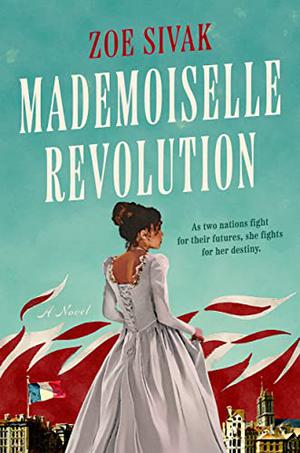
With themes of bisexuality and biracial justice, Zoe Sivak’s 2022 dual story of the Haitian and French Revolutions will surely be banned from public schools in Florida and Texas. As the father of two argumentative teenage daughters, this is exactly the book I want them to read as they wrestle with questions of white privilege, economic and racial justice, and reconciling the precarious balance between terror and freedom.
I devoured this book in two days and found myself thoroughly engaged with the imagined conversations between the heroine and Robespierre as the book speeds to the Incorruptible’s inevitable end. This review will not contain spoilers. Suffice it to say, I am a fan of how Spivak navigates her heroine through the female political clubs of French society, noodling with her fellow nobles, yet jibing with the Jacobins, and manipulating the Montagnard’s partisan sympathy for the sansculottes.
Meeting Olympe de Gouges moves Sylvie from a passive observer to a participant in partisan politics. She asks, “How can I not [participate]? We invite that risk into our lives every moment we pray for the mercy of men who hardly think of us at all” (316). Do all history teachers dream of texts where the main characters quote Rousseau in their arguments? This book delivers in capturing the intellect of the Enlightenment in French salons.
Although I wouldn’t recommend this book for middle schoolers, high schoolish budding feminists will love the delightful plot twists that transform Sylvie from a vain and vapid woman of privilege into a formidable, female freedom fighter who curses out Robespierre, “You betrayed us! You became obsessed with terror — this precious fuel to revolution… Terror is a crueler tyrant than some spendthrift queen or hapless king could ever be. It’s a monarch I wouldn’t wish on anyone. Yet you wore terror like a crown” (Spivak, 2022, pp. 394-395).
In the past, I have had my students read Marie Antoinette: The Journey by Antonia Fraser and Pure by Andrew Miller to better understand the factions, motivations, and nuances surrounding the French Revolution. However, Sivak’s work of historical fiction may better engage teenage readers and engross them in meaningful discussions about liberty, equality, and fraternity… (or sorority) and what those words mean today. Brava, Zoe Sivak!
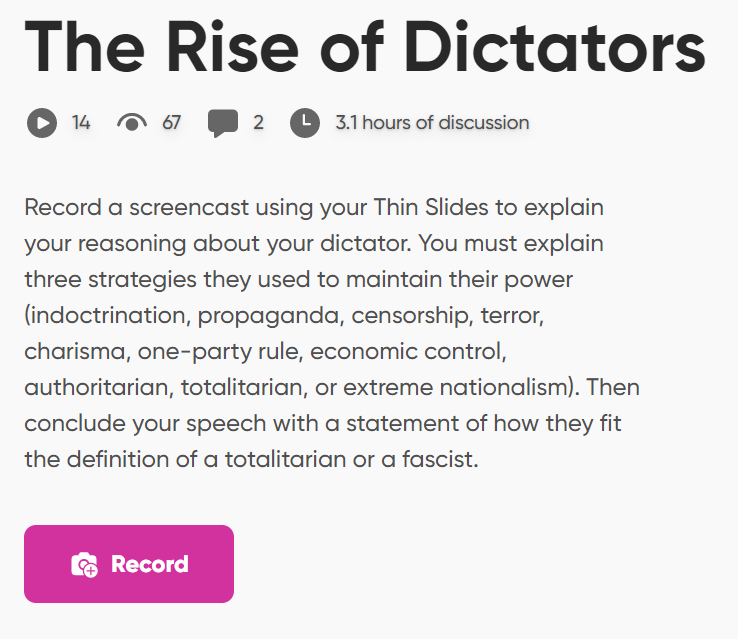
Do your students turn their backs to their audience and read every word off of their slides when it is time to present? If the answer is yes, then Thin Slides are the way to solve this problem.
Thin Slides are a creative EduProtocol that limit students to one image and one word or phrase and then ask them to speak for one minute. Repeated reps with Thin Slides have helped my students be more creative whether they are designing museum exhibits, children’s books, or giving Ignite Talks.
This assignment asked students to select three vocabulary words from a list of nine and use them to create a line of reasoning. Then they closed by making a definitive statement. Thin Slides make it easy to see and hear whether or not your students get it.
Join me, Adam Moler, and our special guests on the third Thursday of every month for The Social Studies Show on Eduprotocols Plus. We talk about implementation issues and why we love being History teachers. It’s always a great time.
Although more than half or 64% of my 11th grade US History students could demonstrate their proficiency in identifying claims, evidence, and reasoning with in-class readings, I was curious as to how many would transfer this skill into a longer form writing assignment. I would like to see daily CER identification/explanation proficiency improve to at least 85% and will be designing more writing activities and reporting the results. Below is a proficient CER practice example that shows how daily practice was conducted.
During non-fiction reading activities using Hellhound on His Trail by Hampton Sides, this student could clearly identify a claim of fact, value, and policy. They selected textual evidence and cited it correctly with a page number. Then, they explained how the evidence supported the type of claim the author made. The consistent 3XCER practice made me wonder if students who successfully used CER in their exit tickets would have any trouble using CER in a subsequent essay. This post pairs two pieces of student work to hypothesize that students who successfully identify claims, evidence, and reasoning for practice will be more likely to write adequate responses that includes at least three claims, correctly cite textual evidence, and thoroughly explain their reasoning.
To assess student analysis or the quality of their explanations, I used the 2021 AP Language rubric from the College Board. I focused on how students supplied evidence to support or strengthen their claims. I used the row above to provide written feedback on student responses.
This student makes multiple supporting claims with textual evidence that are quoted, with cited page numbers, and explained clearly. For instance, they found textual evidence that suggested MLK’s stature was slipping by noting some unsavory information about King’s drinking, gaining weight, and poor sleeping patterns. Next, they mention how King’s movement had been losing support for years and state that an audience of Watts riot survivors had actually booed King at a rally. After, they explain how Malcom X, the Black Panthers, and others disagreed with MLK’s beliefs. With three pieces of textual evidence clearly quoted and cited by page number, the author then goes on to strengthen their line of reasoning that the cracks in King’s reputation repair rather than diminish his legacy over time. This student needs some help in elaborating and extending their analysis skills, but this proficiency with the QUOTE-CITE-EXPLAIN strategy shows they are proficient using the CER strategy.
However, this student who did not complete the exit tickets or log any practice time with CER subsequently failed to use the CER format successfully in this writing assignment. According to the AP Rubric, I would give this student a zero because they provide an opinion without any relevant evidence.
This student addresses the prompt but does not include any quotations that would strengthen their argument. They use vague language that says – “part of me was surprised, and the other half wasn’t,” or “the history books and history story-tellers have glorified his good actions and have thrown his bad ones under.” These points do not use any evidence that would support or weaken an argument. The lack of focus on specific details is exacerbated by repetitive summaries of their opinion. Because they use zero quotes to support their argument that MLK’s reputation was slipping in stature, the teacher can only assume that they did not read the text and/or are unable to provide excerpts that support or refute that King’s reputation was slipping and he was losing control of the Civil Rights Movement. This student needs more practice with CER. Research shows that when teachers stress performance outcomes, students develop performance goals. students who have learning goals are more motivated and engaged and have better reading test scores than students who have performance goals (Kamil, M. L. et al, 2008, p.27). The goal with this activity was for the students to demonstrate proficiency by hitting the learning goal of correctly using the CER writing strategy three times.
This instructional sequence is part of a formative assessment cycle suggested by (Graham, S. et al., 2016, p. 43). While I cannot definitively say that practice with CER leads to proficiency in academic writing, I would need to analyze many more samples with a larger population of students. I can say, however, that this data suggests that students benefit from practice with CER and that students who show proficiency with CER in quickwrites seem to demonstrate proficiency more easily in longer form writing assignments. This work aligns with previous research that recommends integrating learning goals with focused literacy instruction.
References
Graham, S., Graham, S., Bruch, J., Fitzgerald, J., Friedrich, L., Furgeson, J., Greene, K., Kim, J., Lyskawa, J., Olson, C.B., & Smither Wulsin, C. (2016). Teaching secondary students to write effectively (NCEE 2017-4002). Washington, DC: National Center for Education Evaluation and Regional Assistance (NCEE), Institute of Education Sciences, U.S. Department of Education. eric.ed.gov/?id=ED569984
Kamil, M. L., Borman, G. D., Dole, J., Kral, C. C., Salinger, T., and Torgesen, J. (2008). Improving adolescent literacy: Effective classroom and intervention practices: A Practice Guide (NCEE #2008-4027). Washington, DC: National Center for Education Evaluation and Regional Assistance, Institute of Education Sciences, U.S. Department of Education. ies.ed.gov/ncee/wwc/practiceguide/8
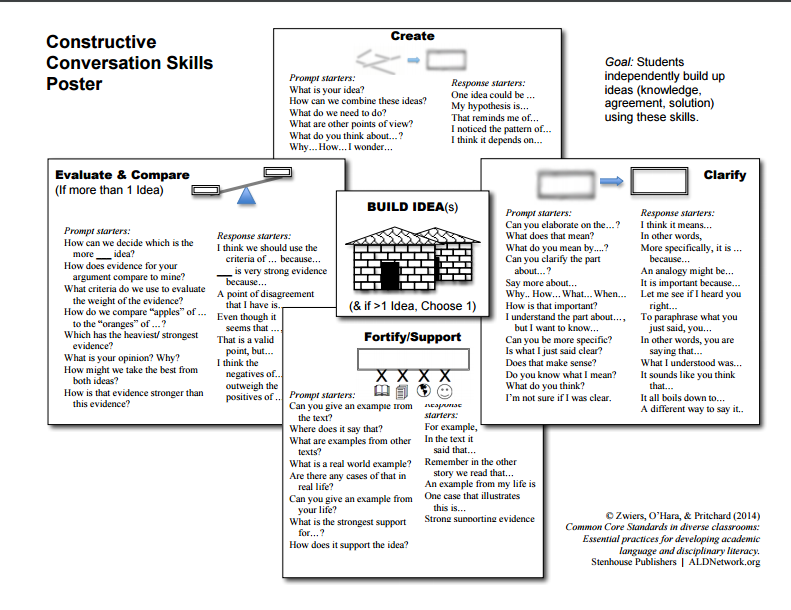
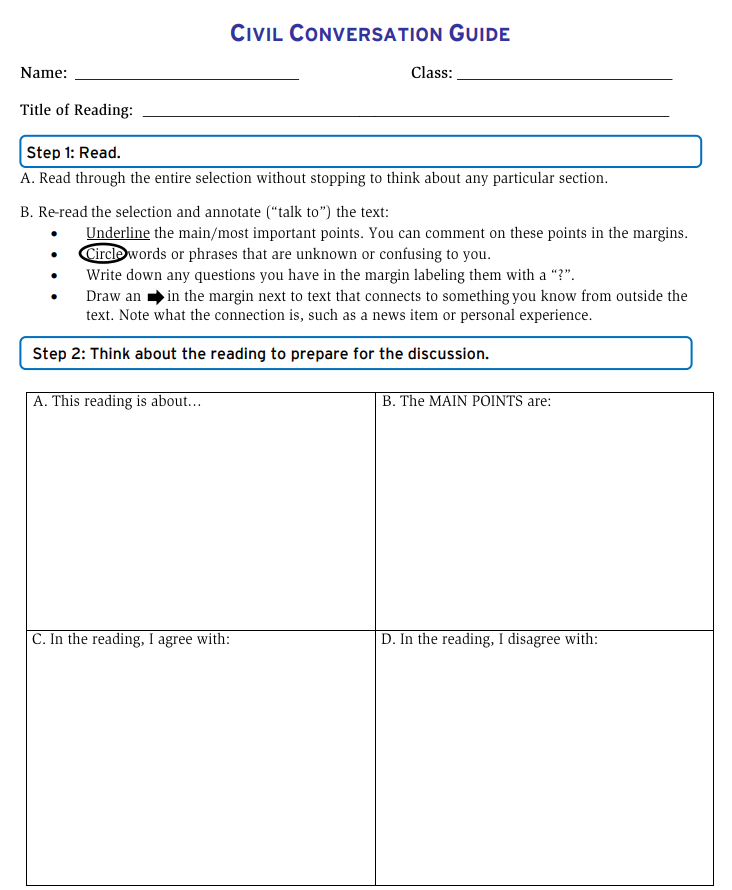
Many teachers have lamented that post-pandemic students do not like to speak in class. Presentations are uninspired. Student podcasts sound robotic and scripted. The in-class speech has become an endangered species. In the hopes of ending this nightmare, I will be presenting the following sequence to re-energize speaking activities in January. We will start with Constructive Conversation Skills, then move to Hexagonal Thinking, next practice The Civil Conversation, and lastly play Socratic Smackdown.
The Constructive Conversation Skills poster or placemat from Zwiers, O’Hara, & Pritchard (2014) can be used as a low stakes, five minute warm-up or cool-down where students discuss the day’s content with a thought partner. I print out the poster and give each student a different colored pen so they can cross out each sentence stem after they practice the four conversational skills. How many practice reps will students need before demonstrating improvement? Walk around the room and monitor their conversations. Offer encouragement.
The Hexagonal Thinking strategy was developed by Betsy Potash and featured on the Cult of Pedagogy blog where there are templates for both paper and digital versions. Here is the three-minute explainer video that I didn’t have time to show. This is another low-stakes activity that will guide your students in discussing academic content. I would recommend trying it with 6-12 terms and names students should know. Give them a short amount of time, maybe five minutes, and see how many hexagons they can connect and explain. To increase rigor you can add more terms and time. I have asked my students to record two-minute Flip videos of these conversations to give them practice explaining their reasoning.
Next the Civil Conversation from the Constitutional Rights Foundation requires students to annotate, question, discuss, track, and reflect on a structured small group discussion. Introverts or observers complete flow or tally maps to track participation. Then they jump in to the next round as active conversationalists. They will have more confidence because they have just watched a session and learned the content. You can provide whole-class feedback after reviewing student reflections and help the class set goals for the next civil conversation.
Lastly the Socratic Smackdown from the Connected Learning Alliance is the most structured of these activities and will require some planning and patience. Think purposefully about grouping and assigning roles. Spend some time selecting your discussion strategies, training your scorers and debriefing with the instant reply and coach cards. You might consider practicing this again with colleagues during some of your planning time before trying it out in your class. This might take several rounds before you are satisfied with the quality of the conversations. Don’t give up.
I look forward to sharing EduProtocol hacks and tools that make speaking instruction inspirational instead of dreadful. Take a deep dive with me at the Los Angeles County Office of Education January 23 & 24, 2023. Sign up here.




















 HistoryRewriter