Working with gifted students can be challenging and time-consuming. Creating tiered assignments that offer varying levels of rigor is not easy. Allowing students to work at their own pace can become a complicated juggling act.
On Thursday, January 16, 2025 at 9 pm ET/6PT Adam and I welcome Kelly Bellar to The Social Studies Show to talk about using EduProtocols with Gifted Students. Kelly is a Texas Social Studies Instructional Specialist who differentiates for gifted learners with EduProtocols.
Kelly will describe how EduProtocol sequences can support open-ended and self-directed assignments that encourage higher-order thinking for gifted students. We will discuss how EduProtocols can help teachers compact the curriculum and allow gifteds to skip material they’ve already mastered.
If you want to challenge your gifted students and not just assign them “extra” work, join us on EduProtocols Plus.
Please join us on April 18, 2024, at 6 PT/9ET on The Social Studies Show when we talk about writing instruction with Josie Wozniak, the host of the ELA EduProtocols show and creator of the 3XPOV & 3XGENRE EduProtocols. Bring some student work examples, and your favorite templates, and be ready to learn a new writing strategy with some friendly teachers. We look forward to seeing you on EduProtocols Plus.
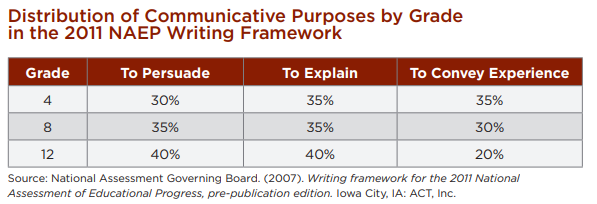
As we head into testing season, many Social Studies teachers start to second guess the amount of instructional time they have devoted to writing instruction. Has it been enough? Has it been too much? What is the appropriate balance between teaching writing skills and Social Studies content? The writing framework for the NAEP offers the following advice:
When students are asked to write about what they are reading, their comprehension of what they have read goes up 24 percentile points (Gabriel, 2023, p. 61). Social Studies teachers typically rotate writing tasks around narrative, explanatory, and persuasive text types, however, students benefit from perspective-taking when they interpret primary and secondary sources. The 3XPOV or 2XPOV EduProtocol gives students practice writing with different points of view and then engages them in a small group discussion over what elements in the writing are most aligned with individual perspectives.
If you missed the first season of the Social Studies Show, all 12 episodes are available at any time for members of EduProtocols Plus. You can listen to the EduProtocols podcast for free.
Adam Moler and I will kick off the second season of The Social Studies Show on Thursday, January 18, 2024 at 6 PT/9 ET. We are excited to work with our EduProtocols Plus members to better understand the role of Archetypes in understanding historical events.
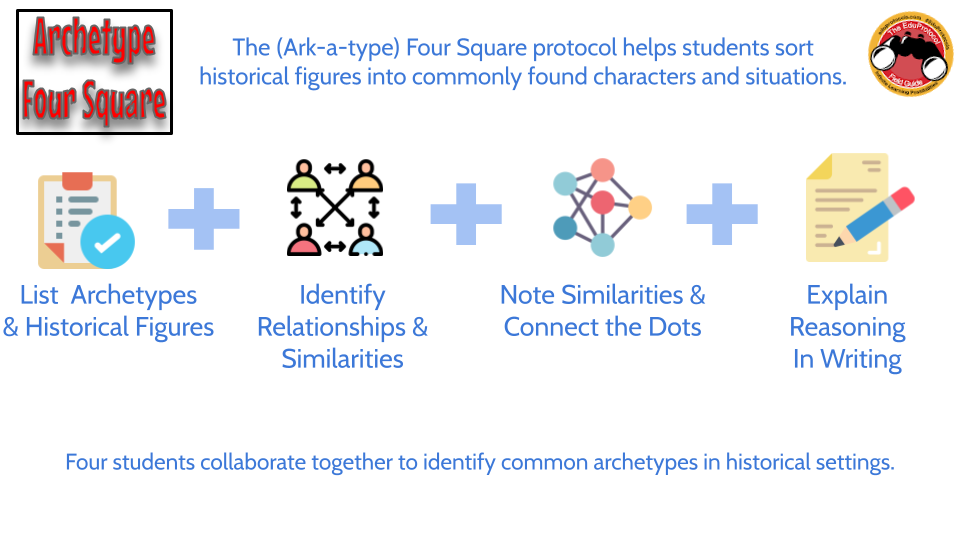
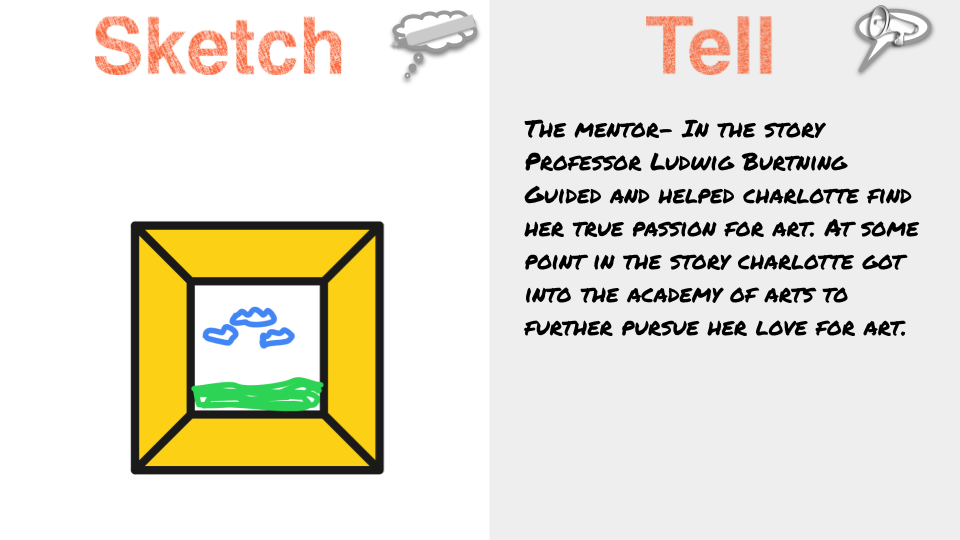
The Archetype Foursquare EduProtocol (Chapter 13) helps students at all levels demonstrate that they can transfer their learning from one subject (English) to another (History). When students start to see that all of their subjects are connected. They become more engaged learners.
Understanding archetypes helped my students compare the Holocaust and the Cambodian Genocide. These exercises have given my students more practice in identifying the commonalities that connect historical figures. Plus, they work equally well in fiction and nonfiction. Combining the archetypes analysis with the Hero’s Journey framework can make for a rigorous and engaging formative assessment.
Recent Environmental Studies scholarship has utilized archetypes in sustainability research to better understand corporate motives and evidence-based policymaking. One of my students doing a project for AP Environmental Science used archetypes when analyzing who was the worst villain or shadow in the history of fracking which was well laid out in Rachel Maddow’s 2019 book Blowout.
Was it George P. Mitchell, Aubrey McClendon, Rex Tillerson, or Vladimir Putin? Students could be equally engaged in rigorous discussion when trying to determine which historical figures played the role of hero, ally, threshold guardian, shapeshifter, trickster, or mentor. Students will need to dive into the text and back up their claims with evidence.
Not sure if your students are advanced enough to use archetypes in your class? Take a look at these elementary school lessons.
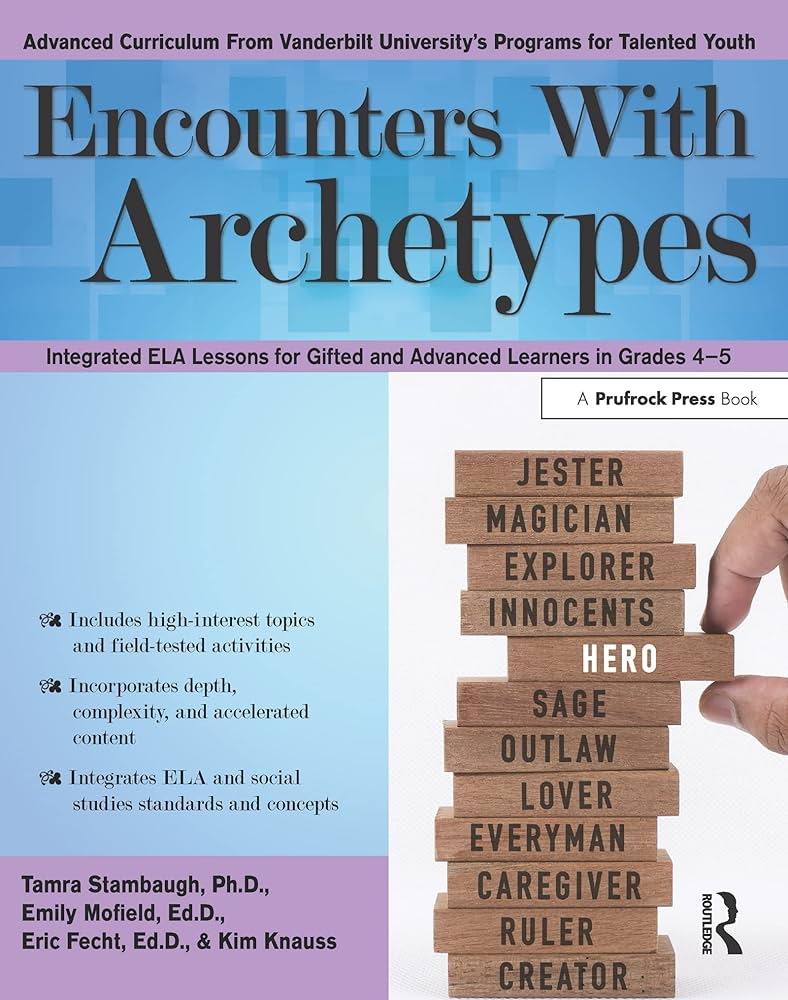
Here is a free book preview that guides teachers on how to integrate interdisciplinary instruction with ELA and Social Studies. We hope you will join the show with examples of how you have used Archetypes in your class.
You can follow #EduProtocols enthusiasts on Twitter/X or join our Facebook group for educators.
Do a search with the hashtag #EduProtocols to view more examples.
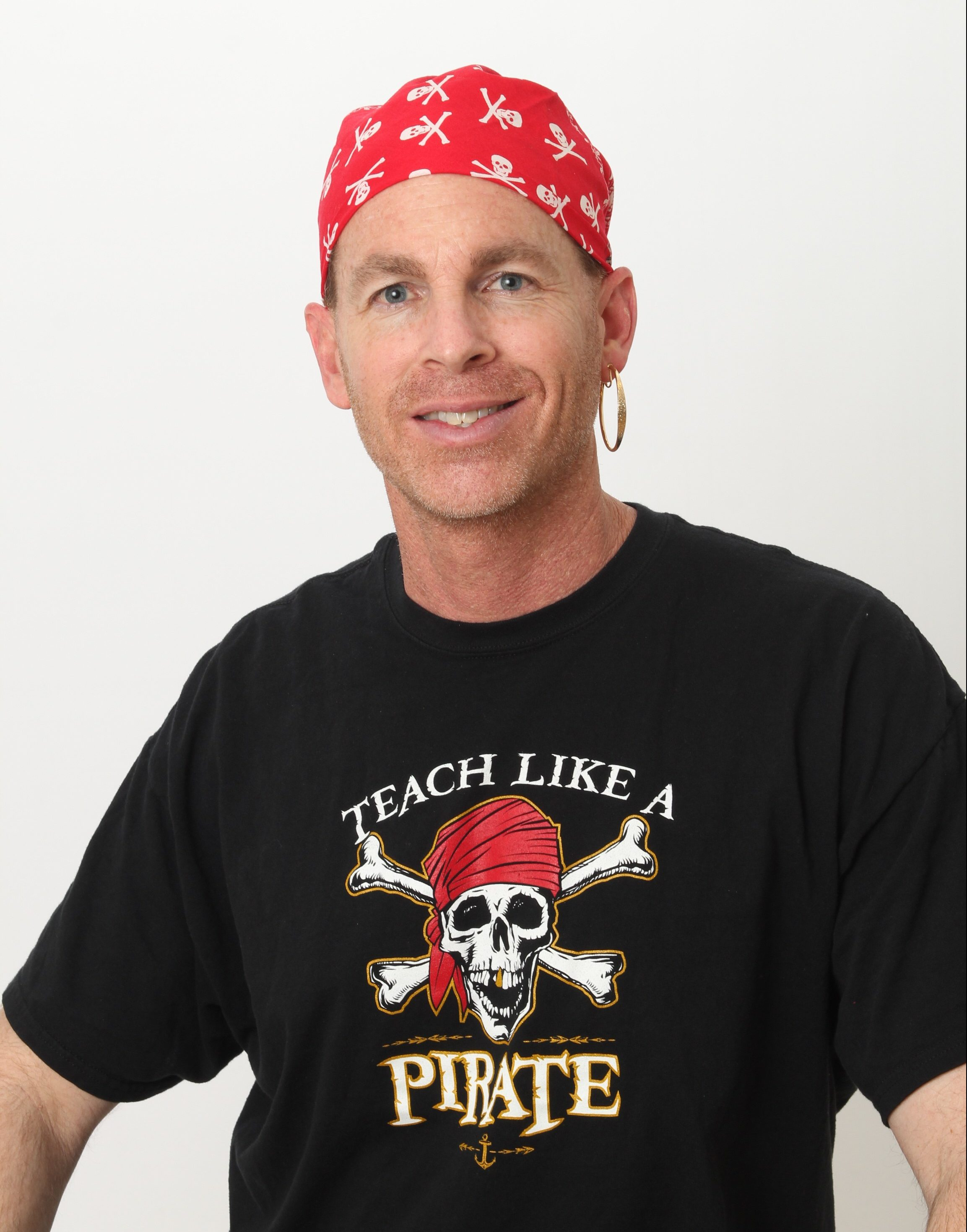
Coming up on November 16, 2023, Adam and Scott welcome Dave Burgess, the best-selling author of Teach Like A Pirate to The Social Studies Show on EduProtocols Plus. They will discuss Dave’s journey from Social Studies teacher to a major force in educational publishing and learn what led Dave to publish the EduProtocols series.
This month’s episode will feature the ParaFLY EduProtocol. Paraphrasing is an advanced literacy skill where students express the meaning of a text in their own words, in order to gain greater clarity. Come meet our big daddy pirate and learn how to simplify paraphrasing with EduProtocols.
Paraphrasing is closely related to summarizing, which has a .79 effect size, or two grade levels of achievement according to John Hattie. We will provide some tips and tricks for smart starting the ParaFLY, as well as provide some examples of student work from both of our classrooms. If you already have a copy of our book The EduProtocol Field Guide: Social Studies Edition, you can read Chapter 6 for a sneak preview. We look forward to seeing you on EduProtocols Plus.
I am by no means an AI expert, but I do like to tinker and try new ed tech tools in my classroom. This post will describe four tools I have been experimenting with recently. I hope to inspire you to come up with new ways to help students engage in deeper learning.
Story File. This video technology uses artificial intelligence to match video responses to student questions. Imagine an Alexa that helps your students interview any historical figure living or dead? Story File is ideal for helping students practice asking interview questions and conducting oral history projects. Try Story File and watch your students improve their speaking and listening skills.
2. TeachFX. Imagine a Fitbit that uses AI to track the student conversations in your classroom. Teachers download the app on their phones, record whole class conversations, and get feedback on who spoke and how long they spoke within minutes. Reflecting on these talk ratios is a powerful reflection point for teachers. Plus, the interactive transcripts can give even your most introverted students a chance to demonstrate what they learned from a Socratic Seminar where they remained silent. TeachFX can be a game-changer for teachers who want to build soft skills like deliberation and conversation in their classrooms.
3. Class Companion. How much would it cost to have a personalized writing coach give your students individual, real-time feedback as they compose drafts? Based on research that shows students can be encouraged to make multiple attempts in safe environments, Class Companion shows how student writers can motivated by fast feedback and the opportunity to improve upon their mistakes.
4. Sherpa. This program uses AI to ask a series of questions about the text uploaded by a teacher or student. The student responds to the prompts via video or audio and the AI flags areas where student answers wander off point. These can be followed up on by the teacher so that misunderstood concepts do not become misconceptions or learning gaps. Two Stanford students started this platform to help students talk through an assigned reading so that teachers could hear how well they really understood it. Here’s a video from one of their founders explaining new features.
Asking students to reflect on the iterative feedback they get from AI tools like these may be an effective way to get them to engage in deeper learning. As Artificial Intelligence causes you to rethink your traditional assignments, how can you use tools like these to get more metacognition and problem-solving from your students?
Go to bit.ly/4AItools for the slides I used to present this material.
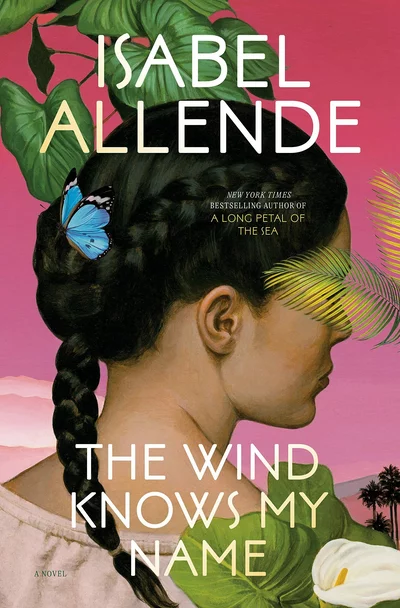
This year I have been reading a variety of new titles for my Intro to Ethnic Studies course. I want the books to be different from a traditional History or ELA class reading so that students understand the purpose of Ethnic studies is supposed to bring students and communities together. Per California’s Ethnic Studies Framework, these stories should address racialized experiences and ethnic differences as real and unique, build greater understanding and communication across ethnic differences; and reveal underlying commonalities that can bring individuals and groups together. To my delight, Isabelle Allende’s latest novel The Wind Knows My Name really fits the bill.
The book blends the story of a young boy who is separated from his family by the Kindertransport of WWII with an El Salvadoran girl who is removed from her mother’s custody at the southern border of the US during the COVID-19 pandemic. She goes from poorly run government facilities to horrible foster care homes in sequences that illustrate how we are struggling to resolve the humanitarian crisis at the border.
Allende deftly weaves historical content throughout the narrative. This gives the History teacher side of me a chance to have students revisit what they have already learned about the Holocaust and current border issues. In my traditional History course, I like having students corroborate facts from historical fiction and non-fiction with the facts in our textbook. Allende provides many passages with rich, historical detail where it would be possible for students to do that.
This book contains a great deal of emotional content that students can use to empathize with the characters in the story. The parallels with what is currently going on at the border are of high interest to my students. This is an ideal novel to frame class discussions on the type of American Democracy that students want to participate in.
I like to use the Pew Research Survey Political Typology Quiz so my students have the academic vocabulary to discuss controversial issues respectfully. In the afterword, Ms. Allende writes about the foundation she established in her late daughter’s name that advocates for the poor all over the world. This book provides an excellent narrative for students to ask to what extent do nations today take care of poor and desperate asylum seekers? If that isn’t the job of an Ethnic Studies teacher, I don’t know what is.
At a recent workshop, I was asked “How do you differentiate this for students with IEPs?” I felt like my answer of easing the rigor by adjusting text complexity and time on task was too generic. In this post, I want to introduce a new differentiation strategy I am calling Reverse Retell in Rhyme.
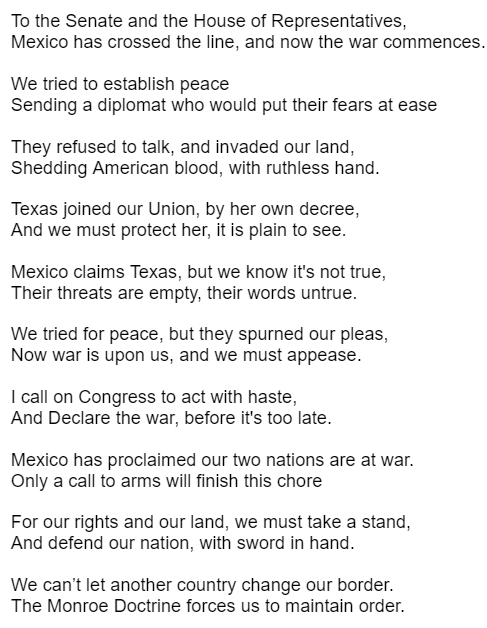
First, select a primary source for students to interpret via the Retell in Rhyme EduProtocol. See Chapter 15 in the Social Studies Edition. Then, ask Google Bard or Chat GPT to retell the main ideas of the document in 10 rhyming couplets so an 8th grader will understand it. You may have to edit and improve the focus of this mentor text before you put it in front of students. I borrowed this excerpt from my friend, Dr. Mark Jarrett’s work with primary sources.
Next, I usually ask my students to work in pairs or small groups to interpret the primary source by retelling it in 10 rhyming couplets. This typically takes one class period. This time, I asked Google Bard for the 10 couplets, but it only gave me 7, so I had to add three of my own. I would usually ask students to come up with a creative and unique title before comparing their work to this mentor text the next day.
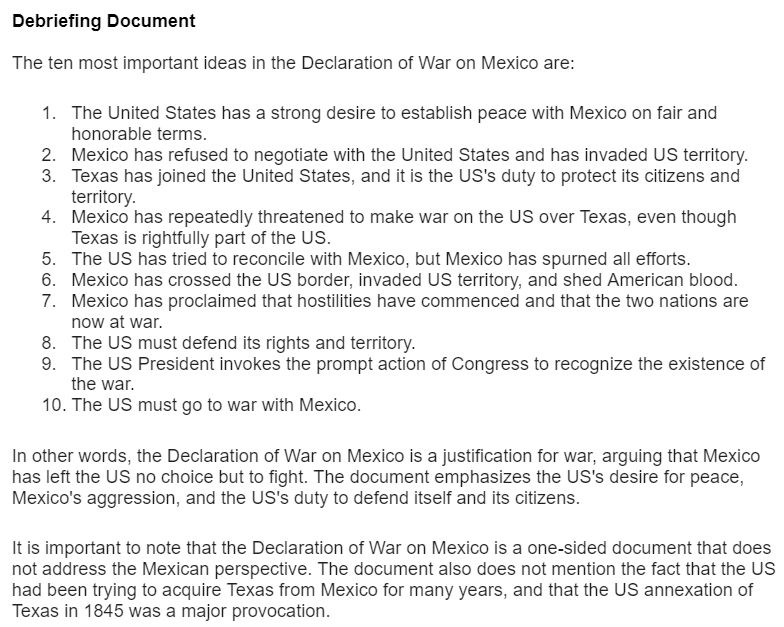
I asked Bard to read the primary source again and tell me the top ten most important ideas. I would give this to students as a debriefing document, so they can see how many of the significant historical details they included in their couplets instead of just picking words that were easy to rhyme.
After students analyzed their own work, I would try to extend their learning by having them triangulate five of the ideas in the Google Bard authored couplets and the debriefing document with the original text in the primary source. This sounds complicated, but here’s what it looks like. I’d like to add a writing extension, but I am worried about overwhelming students. I’m hoping the group activity and discussion are enough to help them understand the academic language in the primary source.
This is one of those ideas that hit me in the middle of the night and I can’t wait to try the Reverse Retell in Rhyme with students. I’d like to know how you have used the Retell in Rhyme EduProtocol in your classes. RTR will be the focus of our October 19, 2023 show. Our special guest will be Camarillo High School history teacher Mike Hernandez. We look forward to seeing you on EduProtocols Plus.
To recap, when I follow the traditional Retell in Rhyme EduProtocol, I use these steps. This lesson helps students determine the central ideas or information in a primary or secondary source. It also builds student confidence in playing with language, improving creativity, and original thinking. Lastly, it is a powerful and fun EduProtocol that gives students practice writing accurate summaries that describe relationships and connections between key historical figures and events.
In order to prep the Reverse Retell in Rhyme differentiation strategy, I used the primary source and had AI to create a mentor text. Then Google Bard helped me create a debriefing document or success chart. Next, I would provide students with copies of all three documents so that they can understand the meaning of the important ideas in the historical document. Now students who might struggle to interpret a primary source, or balk at writing their own original couplets can still participate in the activity.
Coming up on Thursday, September 21 at 6 pm PT, Adam Moler and I will welcome educator Justin Unruh to the Social Studies Show on EduProtocols Plus. He teaches at a Title 1 school in the heart of California’s Central Valley. Justin is an advanced EduProtocols mixologist with a flair for creativity and innovation.
Justin has been sharing his students’ impressive work on Twitter/X and in Kim Voge‘s EduProtocols Facebook community. He will be speaking at Fall CUE during the weekend of Oct 21–22, 2023 in Stockton — don’t miss his session. Like many teachers working with technology, Justin shares our concerns about helping students learn to conduct plagiarism-free, original, academic research in the age of AI.
At first glance, a collaborative spreadsheet may look boring and uninteresting, but by focusing on the initial steps in research, teachers can prevent young learners from disappearing down rabbit holes of bias, misconceptions, and scholarly dead ends.
The Research EduProtocol can help your students manage, plan, and provide evidence of their complex, rigorous, and time-consuming work. Teachers can scaffold the research process to get students ready for the self-directed learning experiences they will encounter with project-based learning in high school or college.
Writing annotated bibliographies, participating in team presentations, and creating reflective portfolios can be isolating and overwhelming. The Research EduProtocol can simplify inquiry and turn it into a social and fun experience. By working together in collaborative teams, your students will be sharing and presenting their research with little to no anxiety.
Adding the Research EduProtocol to an inquiry sequence is not as challenging as you might think. Join us Thursday night to discuss how to help your students document their inquiry journey by clearly disclosing where AI informed and started, but also where their original ideas started and developed.
For a deeper dive on how to use the Research EduProtocol, check out Chapter 16 in our book The EduProtocol Field Guide: Social Studies Edition. If you already have the book, please consider posting a review on Amazon and sharing your students’ work on Twitter using the #EduProtocols hashtag.
The 8 p*ARTS EduProtocol is extremely versatile and can be used to help students learn from each other’s projects. The sample below served as evidence that one of my 10th-grade World History students had listened to another student’s podcast on WWI spies.
The 8 p*ARTS EduProtocol came from elementary ELA lessons designed to help students learn the 8 parts of speech. It is easily adaptable and has been used to help history students analyze art, primary sources, speeches, government policies, individuals, and events. As with most EduProtocols, the teacher is only limited by their own imagination when using the 8p*ARTS. There is even a DBQ version, which I have included, but not used myself.
Here’s an example of a student synthesis that needs more effort and detail before it can be deemed proficient. Details are sparse in the who, when, notice, and wonder columns. Similarly, this response does not compare three people, places, or events in Patton’s life to other historical periods that we have studied. At the very least, I would have liked to have seen Patton compared to fellow WWII Generals like Bradley, Eisenhower, Marshall, and MacArthur.
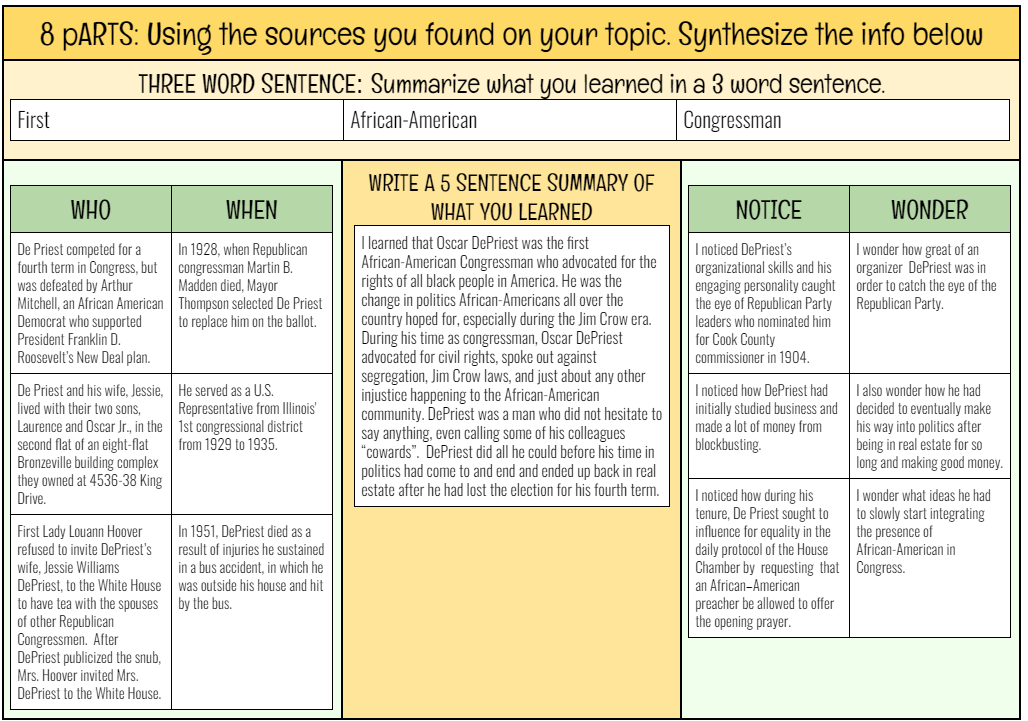
Here’s a stronger example on Oscar DePriest. This student does well with the noticing category, but I could have used more information to understand blockbusting and how DePriest made money from it.
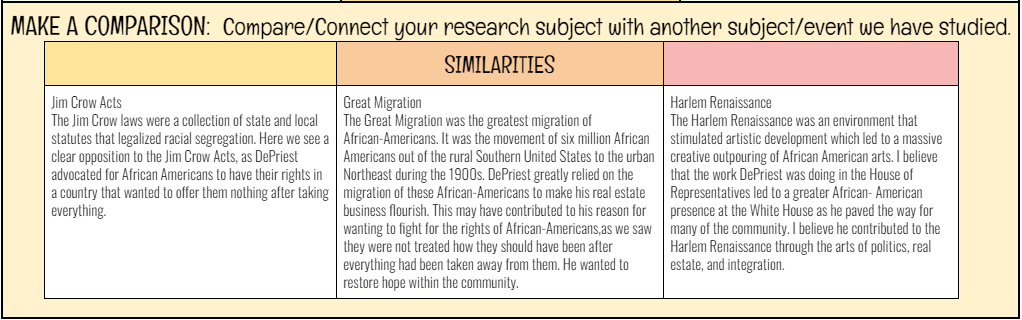
This student really put substantial effort into making comparisons. They were able to use their historical knowledge to link The Jim Crow Era, The Great Migration, and The Harlem Renaissance. They are on their way to an essay.
I know my students need more practice with 8 p*ARTS. I have noticed that using it as a critical friend where students review each other’s projects and report summaries and findings helps me provide an authentic audience for project-based learning. What EduProtocols do you use to hold students accountable for learning content from each other?
I am interested in learning how other History teachers use the 8pARTS EduProtocol to improve student writing. Angela Zorn shared some great ideas on our show last month. To learn how EduProtocols can help you increase the amount of writing your students do while decreasing your prep and grading time, pick up our book The EduProtocol Field Guide: Social Studies Edition. If you already have the book, please consider posting a review on Amazon and sharing your students’ work on Twitter using the #EduProtocols hashtag.
Project Based Learning (PBL) is a teaching method in which students gain knowledge and skills by working for an extended period of time to investigate and respond to an authentic, engaging, and complex question, problem, or challenge. EduProtocols are versatile lesson frames that streamline teacher planning and maximize student creativity, critical thinking, communication and collaboration. Can educators purposefully rack and stack or sequence EduProtocols to simplify PBL for students?
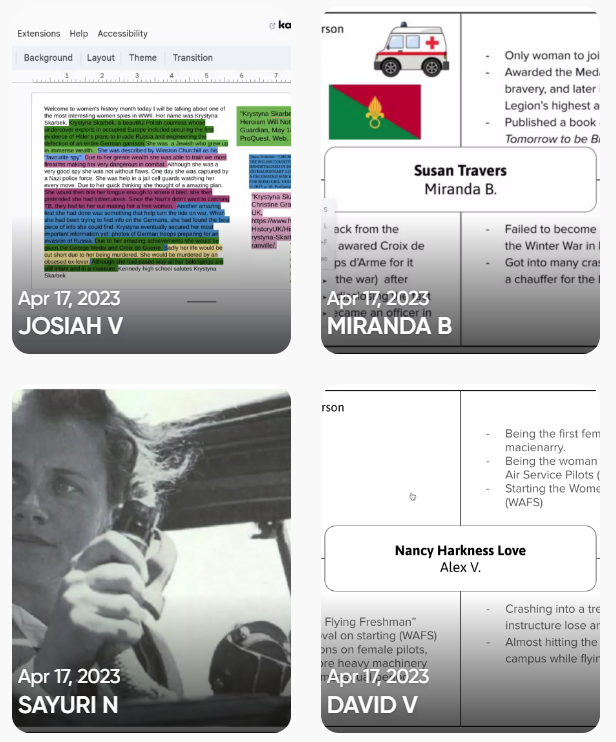
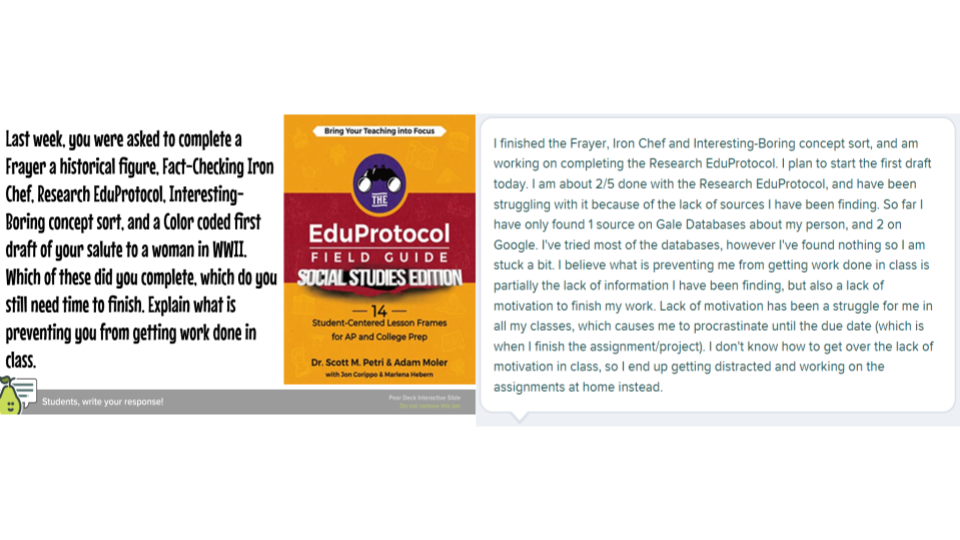
This post will describe a seven-day EduProtocol sequence that resulted in 10th-grade World History students making public service announcements to salute important women who served in World War II for Women’s History month. These projects will be displayed for our high school’s Open House, which is open to prospective 9th graders and the general public.
Day One: Students were asked to read a Children’s Book that had been created by previous classes, then use the Frayer Model to break down this service member’s contributions.
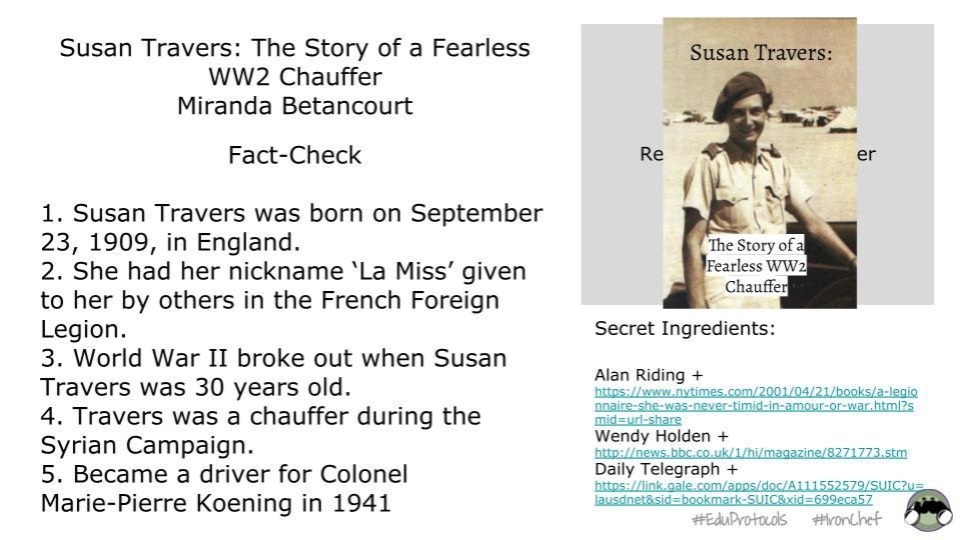
Day Two: We did a fact-checking Iron Chef that taught students the importance of lateral reading and vetting multiple sources when becoming an academic writer.
Day Three: We looked for more sources in the Digital Library so that students could produce 25 facts from five different sources. This was the most challenging activity of the week.
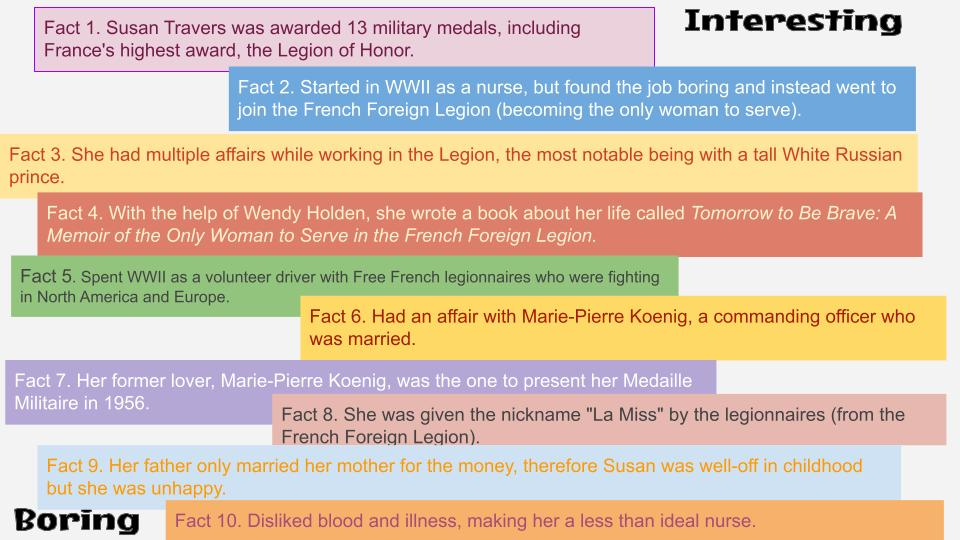
Day Four: Students did a concept sort, consolidating the number of facts from 25 to ten and organizing them on a scale from Interesting to Boring. I have found this helps them come up with an interesting hook to begin their writing. Without it, too many students resort to the stock “So and So was born on this date and died on this date…” approach to historical writing.
Day Five: Students write a first draft of their PSA script and color-code their facts. This shows them the value of using multiple-sources to develop a well-researched fact pattern. Good academic writers go beyond Google & Wikipedia.
Day Six: Students record a two minute Flip video honoring their woman who served in WWII. They set their slides to change every 15-30 seconds so the viewer can see all of the work they put into the project. Here is a link to the work flow if you want to take a closer look at this student’s project.
Day Seven: A personal reflection on what parts of this project were helpful and which parts were hard to finish. Most students explained that finding academic sources and using the digital library were the most difficult. I need to have my awesome librarian come in and show them her tips and tricks for becoming savvy researchers.
Overall, I was thrilled with the quality of the work put into these PSAs. I look forward to sharing them with the school community and will show one per day to all of my classes for Women’s History month next year. Here’s the archive.
If you are interested in learning more about sequencing EduProtocols in order to create more meaningful projects in your Social Studies classroom, consider picking up our book or attending one of our Summer Academies in July.
























 HistoryRewriter