Category Archives: Historical Writing

Improving Historical Writing

This post contains resources from a presentation on improving feedback on student writing for the California Council for the Social Studies 55th annual conference on March 5, 2016.

Leading students through a peer review process is always effective as students very rarely see how they are writing in relation to their peers. Using a criteria chart can help them see what key information is missing in their writing. I take my lecture notes from the French Revolution and organize them by each component from the writing prompt. Here is a collection of research and articles on

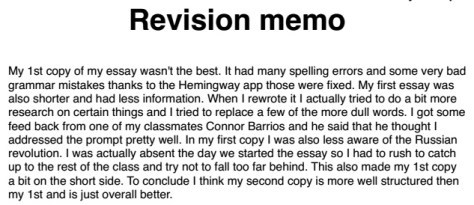
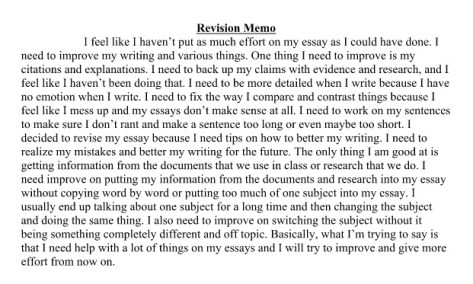
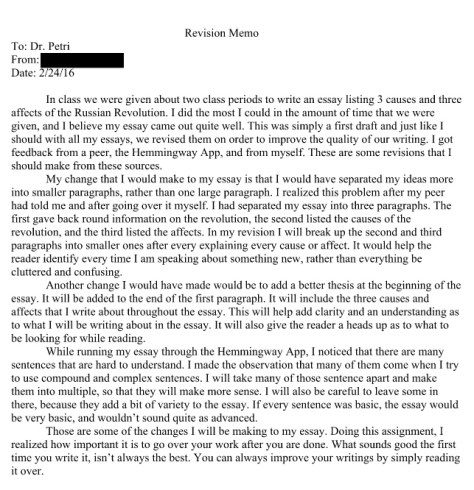
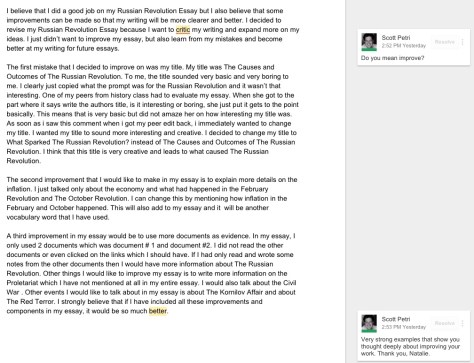
My next step after leading students through some self-reflection and a peer review process is to get them to use a number of free robo-readers. Here is a collection of research and articles on automated essay scoring (AES). The trick is getting students to synthesize the feedback they have received from their peers and the computer and organize it into a revision memo. I have posted some examples of revision memos that my students have turned in.

I have another collection to help teachers provide meaningful feedback. For those of you willing to read educational research, here is an excellent paper by Hattie & Timperley on The Power of Feedback. Thanks for attending my session,  don’t forget our unconference-EdCamp tomorrow morning from 8:00 am – 10:00 am in Emerald Bay 2 & 3.

Engaging ELs & Reluctant Writers

ccs sconf

Ruth Luevanos and I teamed up to give a presentation on Engaging English Learners and Reluctant Writers for the California Council for the Social Studies 55th annual conference in Orange County. Our seminar demonstrates high-interest writing techniques that increase the amount of historical content teachers can cover. Please find resources below for using first person research papers, MEAL paragraphs, rhyming tweet-a-thons, six-word stories, and timeline transitions. All of these techniques help students with writing deficits develop positive attitudes about writing.

Many of my high school students use Twitter in their social lives. Social Media is also called micro-blogging. It’s actually writing. Tweeting helps students learn to summarize and write succinctly. Tired of vocabulary foldables try six-word definitions instead. Want to make sure your students understand a concept create a tweet-a-thon and they will find experts who correct their misconceptions.

Getting students to ask questions and engage in Social Studies activities can sometimes be difficult. I use elements of the flipped classroom and assign video lectures to students. This year, I have used Zaption to check for understanding during the videos and have found using open-ended questions can get students to ask their own questions.

Using the timelines in your textbook can be a great way to teach students how to use transitions.

MEAL and RAFT paragraphs are techniques that focus students on their argument and content. This allows the teacher to address any misconceptions immediately before they have written a five paragraph essay or longer paper.

First Person Research Paper

Worried about assigning research papers because of plagiarism concerns? This approach from Cindy Heckenlaible requires students to write strong historical narratives that showcase their research abilities.

Long used in elementary and middle schools to help students with Learning Disabilities (LD), SRSD is now being used with English Language Learners (ELLs) in some high schools. More than 40 studies have validated SRSD as an instructional model for teaching writing to students with writing deficits. Studies of history classrooms reveal that writing instruction of any kind is uncommon, even among exemplary teachers. Thus, student essays tend to list facts rather than argue claims, leave arguments unexplained, and only draw on evidence sporadically. SRSD Instruction in History can improve student writing.

SCSSA Lunch

If you attend the conference make sure you attend our lunch and honor our awesome Social Studies teachers.


Book Project Examples

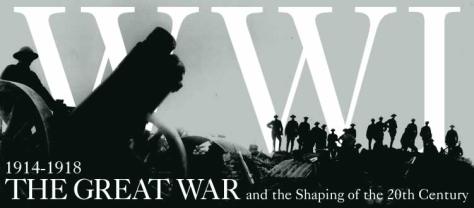
My favorite part of the year is when I sit back and allow my students to present their Independent Book Projects. This year, they spent six weeks reading a novel or non-fiction book about WWI. A popular option was a “book trailer” where students create a teaser that will motivate others to read their book. Other students did traditional models, powerpoints, essays, and one even contributed an epic poem about Johnny Got His Gun. Never underestimate your students’ creativity.

https://prezi.com/cdrpxhwvrjjb/the-return-of-the-soldier/

https://m.youtube.com/watch?v=SQ3LGYfW2oc 


https://animoto.com/play/NAMDG5Vq2H5Kc83XsMhGBg?autostart=1


Revision Memo Feedback

I have been giving my ninth grade students listening tasks recently. After each task, I measure a component of student learning, either the amount of notes they took from the lecture, the number of questions they can write about that content, the number of quiz questions they can answer correctly, the number of words they can write on the subject, the number of facts they include from the podcast, and etc. I have found my students respond well to  goal-setting strategies and look forward to seeing how their performance as an individual and as a whole class compares to their peers. For one task, 153 students listened to this excellent description of Russia’s February 1917 Revolution and scored 6.8 questions correct out of 10 question quiz immediately after. Next, 153 students listened to another lecture on Russia’s October 1917 Revolution, yet answered only half the questions correctly. After several of these tasks and a mini-lesson on how to make parenthetical (in-text) citations, I assigned the following writing assignment to measure their knowledge of the Russian Revolution as well as test their skills in making citations.

Russ Rev

There were a total of five documents to use during this task, two were audio lectures, one was an interactive video lecture, and two were traditional texts. Students were given two class periods to write this essay, as I anticipated adding the citation requirements would slow down their writing speed. On average, students reported writing 383 words, using 2.16 documents, and making 7.97 parenthetical citations.   The next day, students conducted a peer review protocol and advised each other on how they could improve their drafts. One of the elements that jumped out as a raging success was the number of students who took the time to come up with interesting titles. A selection of clever ones follows below:

Positives – Creative Titles

  • You Shall Not Fight
  • The Comings & Goings of the Russian Revolution
  • Peasant Revolution
  • The Bloody Revolution
  • What Sparked The Russian Revolution?
  • Recreation of Russia
  • Russia Has Just Begun
  • Russia In Danger
  • Rise, Revolt, Russia, Results

Negatives – Failure to Meet the Deadline

The final component of this project was designed to give me some insight as to how students would plan a revision. Students were given 6 days to complete the following assignment.

Run your work through at least one of the following robo-readers: Grammarly claims to find and correct ten times more mistakes than a word processor. The Hemmingway App makes writing bold and clear. PaperRater offers feedback by comparing a writer’s work to others at their grade level. Explain how the comments from these programs and the comments from your peers helped improve your writing.

Revision Memo

Remember to document how you are improving the quality of your claims and explanations in a 1-2 page revision memo. Here is an example of a revision memo that you may use to guide your reflections. When you have finished, you will email the revision memo to me.

Unfortunately, only 8% of my students completed this task by the deadline, another 12%  turned in something for partial credit, and 80% turned in nothing. Teaching 9th graders often leads to these moments, when faced with ambiguity, students do not ask for help, they merely do nothing.  What should a teacher do when that many students fail to complete a task?  Try, try again, I say. My next post will offer clarification on what makes a good revision memo.

Revision Memo Examples

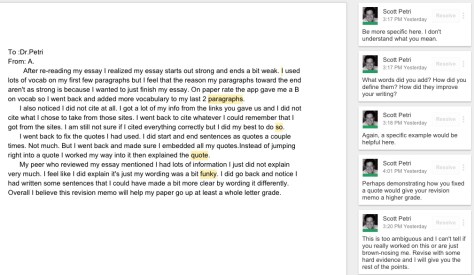
There was great variation among the few revision memos that were turned in on time. The purpose of this post is to demonstrate how I distinguish between a good memo and one that needs improvement.

Well Below Standard

Poor

This did not come close to the specified 1-2 page length requirement. Further, it lacks any concrete details that would suggest this person even wrote an essay in the first place. Be specific. Quote from first draft. Quote from second draft. Explain improvements. Meet page length requirements.

Below Standard

Below Average

This student has not used the appropriate format, nor did they share the memo via Google Docs/Drive, so they could see my comments. Since this essay has no specific quotes, I don’t believe this student wrote a first draft, let alone spent time thinking about how to bring their writing up to grade level standards. More specifics. More quotes. Less of the author’s opinion.

Approaching Standard

Feedback

This one comes closer to the page length requirements. Although they did not use the correct format, the memo is easy to read and contains some specifics about vocabulary, citations, and quotes. Remember, the more details you provide, the more insight you provide as to what excellent writing means to you. If I can only guess at what you mean by “fixing things” or “funky wording” than you have not done your job. I do not think you know how to take the advice of a peer or a robo-reader and improve your writing.

Meets Standard

Good

Yay! Very specific, concrete details here. This student has given himself a To Do list of things to fix. He reflects more on the advice from the Hemmingway App than his peer review. I’d like to see something about both, because that tells me you are really interested in making your writing understandable to a reader. You should always write for a greater audience than just your teacher.

Exceeds Standard

Great

I hope these examples clarify the expectations I have for revision memos. The students who turned one in and got full credit do not have to write a revision memo for the Treaty of Versailles essay. The bad news is for the 80% of my students that didn’t turn in a revision memo is that they now owe me two. Get in the habit of writing down due dates, working diligently every day, and turning assignments in on time. It will make your upper division course work so much easier.

Rarely Assessed Standards

My UCLA Social Studies Methods professor Dr. Emma Hipolito is simply god’s gift to History teachers. I can honestly say that I probably would have quit teaching within my first two years if it weren’t for Emma’s nurturing and kindness. She gave me my first chance to present my work to academics. In short, she helped me find my strengths. Anyone who went through UCLA’s Center X teaching credential program can attest to how dedicated she is to the success of her students. Dr. Hipolito finished her dissertation Social Studies Teachers and The Common Core: A Study of Instructional Practices last year. It is a fantastic read and deserves a wider audience. My biggest takeaway is that Emma has quantified how the teaching of speaking and listening skills is severely neglected in most classrooms.

speaking.jpeg

Hippolito (2015) found a majority of Social Studies teachers struggled to explain how they helped students develop speaking and listening skills. While these teachers regularly reported using small and whole-group discussions, their students were rarely assessed on their participation. Only 15% of teachers surveyed spoke confidently about their speaking & listening instruction.

This mixed methods study surveyed 217 California Social Studies teachers and conducted interviews with 20 High School teachers in order to assess how teachers are shifting their instructional practices in response to the CCSS standards. The survey data resulted in three key findings.

First, teachers – particularly those working in low-income schools − are concerned about the academic preparedness of students to engage in the Common Core. Nearly two-thirds of all teacher participants agreed or strongly agreed that students “are not academically prepared to engage in these types of activities.” However, a statistically significant 85% of the teachers in 101 low-SES schools agreed or strongly agreed with this statement, as compared with 48% of teachers in affluent communities.

A second finding was that high school social studies teachers are implementing some of the practices associated with the CCSS. These include the use of primary sources, the consideration of the origins and purpose of a source as an aspect of reading in history/social studies, and the use of critical thinking question to promote reasoning. However, teachers less frequently focused on critical reading practices that examined perspective, bias, and analysis of multiple sources on a similar topic. Relatedly, the development of speaking and listening skills is an area that is currently neglected in classrooms in California.

A third finding is that many social studies teachers in California report that neither they nor their colleagues are prepared to teach the CCSS. Only 30.8% of all survey respondents reported that they were “very” prepared to teach the Standards to students. Despite over 60% of teachers participating in four or more days of professional development, only 15% reported that the CCSS were “very” integrated into the practices of teachers in their departments.

Three other findings emerged from the interviews: (1) Teachers believe that a CCSS’s skill-based approach means less coverage and more in-depth work with fewer historical topics. (2) Interviewees at low-income schools had more tools and strategies to support literacy development than did teachers at high-SES schools. (3) Educators want more time to plan, more time to work in content-alike groupings, and more instructional resources provided for them in order to implement the CCSS.

I am interested in learning how schools and districts are re-shaping their professional development offerings in response to CCSS. I have yet to find any well-articulated courses on how to teach speaking and listening to adolescents. Have you found any gems I should be familiar with? If so, please add them in the comments section. Congratulations to Dr. Hipolito. I hope you influence a few thousand more Social Studies teachers.
Getting Students To Ask Questions

Qs

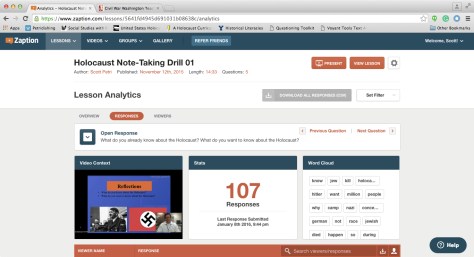
Researchers understand that student questions can improve instruction and increase achievement, however, students rarely ask their own questions in school. When they do, they ask more memory questions involving knowledge recall than all other question types combined. Asking open-ended questions and research questions can be difficult for students because they don’t always have a large enough knowledge base on a subject to see relationships and big picture issues. My classroom experience has shown that if I use small groups to get students to generate their own questions about a topic, many groups rely on one or two participants and the other students are content to be passive observers. Similarly, when I try to have whole-class, student-led discussions only 38% to 60% of my students participate. This year, I have used Zaption so students view a short, instructional video and then are asked questions that demonstrate their understanding of the content. Zaption Tours are also helpful for helping students develop their own questions, driving independent research projects, and tapping into student motivation. Further, Zaption presents this data in tables or discussion board threads for easy teacher analysis. Discussion data also be download into Excel spreadsheets for further analysis.

Open?

Prior to beginning this unit on the WWII, I asked students two open-ended questions: What do you already know about the Holocaust? What do you want to know about the Holocaust? The Zaption Tour was viewed 287 times and 107 students replied to the question. To make it an easier reading experience, I edited spelling mistakes and typos, but did not edit the “heart” of the student question. I tried to eliminate similar questions.  My next steps will be grouping the questions into themes for additional reflection and analysis. At the very least, these questions indicate that students have thought deeply about the Holocaust and are eager to learn more about it.

  1. I want to know if the Holocaust was necessary and if it was good for the people back then.
  2. I would just like to be more knowledgeable about the Holocaust.
  3. What I’d like to know about the Holocaust was?  Who came up with idea?  What kind of movies there are to watch about the Holocaust?
  4. I want to learn if any groups or people tried to rebel over this power and try to support and help Jews.
  5. I would like to know why Jews didn’t fight back or resist because it seem as if the Germans just killed the Jews with ease.
  6. What I want to know is who put a stop to all Hitler’s terror and how did people just let him do that?
  7. What I would like to know is where did Hitler get all his ideas about a master race?
  8. The thing that I want to know about the Holocaust is why did Hitler believe that Germans were superior than any other race?
  9. I would want to learn how did Hitler persuade Germany’s citizens to use the Jews as scapegoats for their country problems?
  10. I think what I want to know about the Holocaust is why Hitler hated the Jews in the first place?
  11. I would like to know why the Nazis targeted the Jews first? Also what made the Nazis hate the Jews so much and how did they make all of Germany hate them as well?
  12. I would like to know how Hitler convinced Germans to let this happen and why the US didn’t intervene earlier?
  13. I want to know what Hitler thought he was going to get out of this genocide?  I want to know why the people in Germany were following Hitler even though they knew it was wrong?
  14. I want to know why Hitler thought he was going to get away with it?
  15. Why did Hitler feel the need to exterminate the Jews when his own mother was Jewish and he wasn’t an Aryan himself?
  16. Hitler hated the Jews… but why?
  17. I want to know why the US didn’t help.
  18. I would like to know who else was involved with the Holocaust other than Adolf Hitler.
  19. I would like to know why the other countries let this happen to innocent Jewish and other people.
  20. What I would like to learn about the Holocaust is how the public felt about it and how Americans reacted to it?
  21. I want to learn what the Jews did and how they acted in the camps.
  22. I would like to know more about what caused the Holocaust to start.
  23. I would like to know more in depth stories of some of the Jews who survived the Holocaust.
  24. I would like to learn about conspiracy theories and the psychology of why Hitler wanted to kill these people. Was it a mental illness, or was he simply racist?
  25. I would like to learn what went on inside the concentration camps.
  26. I want to know the stories about the Holocaust.
  27. Something I would really like to know about the holocaust is why Hitler wanted to get rid of an entire race, I understand that he detested Jews but why would he go for something like this?
  28. I’d like to know the in-depth stories of the Jews who survived the concentration camps.
  29. I know about the beginning, middle, and D-Day. I want to know about the ending of the war.
  30. I would want to know about how the German people reacted to the concentration camps.
  31. I would like to know why Hitler wanted more land
  32. What I want to know is how it really started and how it ended.
  33. What I want to know is how many survivors were there in total?
  34. I would like to know why Hitler hated them so much and how were people able to survive and I want to learn how it affected others besides the Jewish race.
  35. I would like to know why this event in history happened and why no one took any act on it.
  36. I want to learn more about what really caused everything, how it happened, during the process, just everything, people’s feelings, and etc. Even if it takes 15 video lectures and big projects. 🙂
  37. I’d like to know why kill the Jews if they did nothing to you?
  38. I really want to know why Hitler did it? Why does he hate Jews so much and why were people going along with it?
  39. I want to know why Hitler killed this many Jews and what did he accomplish in killing them?
  40. I want to know how some people around the camps felt, if they felt bad or not about the situation, I don’t know. I heard that some Jews would fight back like setting buildings on fire. I’d like to know more stuff like that.
  41. What I would want to know about the Holocaust is how close does the movie “The Boy In The Stripped Pajamas” come to teaching us the truth about the Holocaust?
  42. I would like to know what had started the hatred. Was it an experience Hitler had or what?
  43. I’d like to know more about peoples’ personal experiences and obviously I’d like to know more and more about this topic. This is a topic that I could love to learn a lot about.
  44. I would like to see inside the mind of the man who ran the terrible atrocity of human action, the Holocaust.
  45. What caused Hitler to decide to kill and torture Jewish people?
  46. I know that a lot of people died I want to know who started it and why
  47. What I’d like to know is why many states or countries tried nothing what so ever to help and why they just let 6 million lives be lost?
  48. I would like to know what would go on with the Germans who disagreed with the Nazis? Were there rebellions and anti-Nazi campaigns?
  49. Was the U.S using spies and if yes what would they do and what were some major accomplishments for them.
  50. I would like to learn new things like how did Hitler die, or why would other countries ignore something so important?
  51. I want to know what Hitler thought he was going to get out of this when it was all over. I want to know why he did it. I want to know way beyond what the book says.
  52. I would like to learn more about things that people or students hardly know. That would be helpful.
  53. What I would like to know about the Holocaust is more about people’s reactions to life in the concentration camps and how people managed to get out. Did they recover and have good times later in life?

Independent Reading Assignment

WWI

Over the next month, my students will be working on a WWI Independent Reading Assignment. They will choose their novel or non-fiction book from this GoodReads list. They need to make sure the book is available through the Los Angeles Public Library or the Los Angeles County Library and place a hold as soon as possible and have the book sent to the closest library to their house. Once they get the book, they need to submit a short explanation of why they picked it and when they started reading it. There is a great deal of data on the importance of reading and of being part of a reading community. This is the culture our Ninth Grade Academy is trying to build.

Double Entry Journal

The purpose of double-entry journal (DEJ) is to give students an opportunity to express their thoughts and become more involved with their readings. Students will divide their pages into two with a vertical line down the center. On the left side, they will write the page numbers, the dates they read, and short quotes or events from their book. In the right column, they write personal responses to the quotes on the left. These reflections can include their own opinions, disagreements, interpretations, events in their lives that the quote reminds them of, guesses about the meaning of new words, and connections to the textbook and/or video lectures. DEJs allow students to pick out the parts they think are important, and to ask the questions they have, instead of doing exercises that the teacher made up. Approaching the reading this way will help to improve comprehension and vocabulary. These journals will be assessed on a weekly basis rotating (per 1) January 22, (per 2) January 25 and so on.

double-entry-journal

Independent Project

Each student will be required to demonstrate they have read and understood the book with a project. They will work with the teacher to define the dimensions, develop the project, and create a rubric for grading it. Earlier in the year, students brainstormed how they could customize writing projects. The projects should help students demonstrate knowledge of California History-Social Science standards: 10.5 Students analyze the causes and course of the First World War.
1) Analyze the arguments for entering into war presented by leaders from all sides of the Great War and the role of political and economic rivalries, ethnic and ideological conflicts, domestic discontent and disorder, and propaganda and nationalism in mobilizing civilian population in support of “total war.”
2) Examine the principal theaters of battle, major turning points, and the importance of geographic factors in military decisions and outcomes (e.g., topography, waterways, distance, climate). 3) Explain how the Russian Revolution and the entry of the United States affected the course and outcome of the war. 4) Understand the nature of the war and its human costs (military and civilian) on all sides of the conflict, including how colonial peoples contributed to the war effort.
5) Discuss human rights violations and genocide, including the Ottoman government’s actions against Armenian citizens.

#TeachWriting Coaching Student Writers

Corbin Moore and I taught an online class called Improving Historical Reading and Writing over the summer. We learned that one of the major barriers to non-ELA teachers assigning writing in their classes is simply that they don’t feel comfortable providing feedback on that writing. They are also concerned about increasing their workload. Our experiences as classroom teachers have led us to include more writing in our daily practices. We hope this chat encourages other teachers to do the same.

Q1 With the recent emphasis on increasing writing in all subjects, how has your job as a teacher changed?
Goal-setting strategies are terrific. Here is a longer paper Scott wrote about using goal-setting strategies as formative assessment.
Shorter, more frequent, focused skill-building writing tasks show great promise in increasing positive attitudes toward writing. They can be graded quickly or used for peer review.
Q2 What is your definition of effective feedback?
This John Hattie article demonstrates that feedback has a strong effect on student learning. Unfortunately, this is not always positive.
Turnitin has done some extensive research on feedback and discovered a gap between teacher and student perceptions about what constitutes effective feedback.
Q3 What strategies/tools have you found valuable in providing feedback and/or peer review?
Google Docs
Rubrics/Criteria Charts
Q4 How is coaching student writers different from teaching writing? What are the advantages to coaching versus teaching writing?
Q5  What are the best writing tools, strategies, and frameworks for teaching writing and coaching students through the writing process?
Q6 What would happen if you stopped evaluating writing and switched to coaching?
Q7 How can teaching speaking and listening skills help improve student writing?
Extra Credit

Final Exam Results

In the past, the rigor of a semester-end final exams fluctuated wildly at our school. This has a great deal to do with the District schedule, which does not allow teachers sufficient time to grade exams. As a result, final exams have either become multiple choice exams or less meaningful activities with little to no academic value. This year, our Ninth Grade Academy tried to be more consistent with our finals. My exam was weighted at 15% of a student’s overall grade. The District mandated that all World History students write to the same prompt: compare & contrast capitalism and socialism.

Students were given some background knowledge on the evolution of capitalism and socialism in a handout featuring excerpts from Karl Marx, Frederich Engels, and Adam Smith. I provided a Zaption presentation to the whole class where students could answer questions that were embedded into a 14 minute Capitalism & Socialism Crash Course video number 33. Students were given digital devices and asked to answer questions. After the video, students retained the devices and played an online game of Kahoot, where they were asked to demonstrate their understanding of the differences between capitalism and socialism with 10 different scenarios. Students were also given compare/contrast sentence stems and one hour to answer the prompt. During the writing process, students were asked to underline claims and put parentheses (around any explanations, or evidence that supported the claims).

The purpose of this final exam was to measure student effort. Following some great advice to have students write more and grade less. I charted word length, the number of claims, and the number of explanations and divided them into thirds, assigning each third a progressive amount of points, (i.e. 100, 95, 90, 89, 85, 80, 79, 75, 70). Grading was done class by class, but I have included all 164 of my ninth grade students below to help inform parents as to how their child is faring in regards to their peers.

Slide17Slide18Slide19

This assignment allowed me to give students a rigorous writing task, evaluate their efforts, and help students who had lost points by missing previous deadlines earn enough points to boost their grades.

Slide20

When we return to school after Winter Break, students will have the opportunity to engage in a process of peer review and revise their essays for additional points.