Book Review: Lovely War

This multiple award-winning book sat in my teenage daughter’s room for a couple of years before I got around to it. I remember skimming it in Barnes and Noble and putting it down because it starts off with a romantic triangle between Aphrodite, Ares, and Hephaestus in a New York City hotel suite in 1942. I thought it would be too slow and boring for my 10th-grade World History students. I was wrong. The book has a slow burn.

Author, Julie Berry demands patience from her readers as she weaves together three stories: a love triangle between Greek gods, the romance between YMCA war volunteer, Hazel Windicott and WWI solider, James Alderidge, along with an interracial love story between Harlem Hellfighter, Aubrey Edwards and Belgian singer, Collette Fournier. Tension increases and the stories have plenty of surprises and satisfying endings.

Patience pays off for the readers who stick with the 480-page novel. There is more than enough historical content for students studying WWI. Berry adroitly includes specific details in James’ sniper training, Collette’s recounting of the Rape of Belgium, and of course the treatment of colored troops by the US and France. The author slowly slides race relations into a major theme in the narrative. This subplot is a great way to get teenagers to consider presentism and help them consider how change over time has improved race relations today.
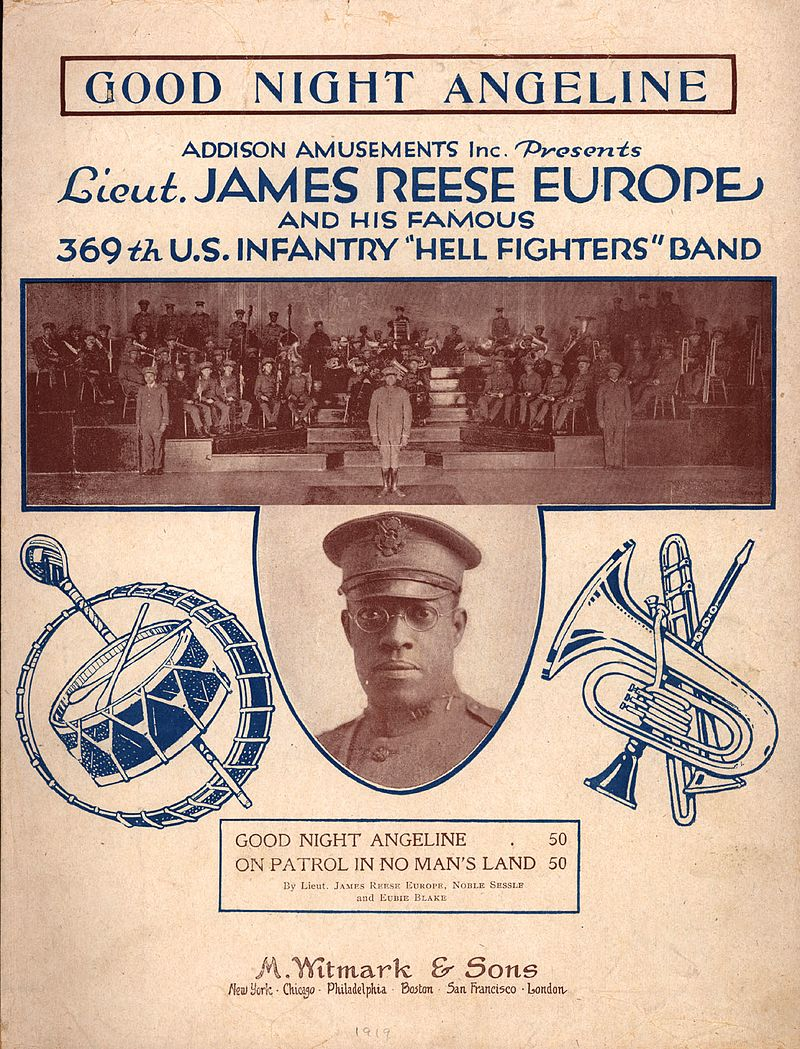
The historical notes at the end of the book give young readers plenty of historical references to check out if they want to learn more about the British Expeditionary Force (BEF) 5th Army, the 369th Infantry, and the unfortunately short-lived life of James Reese Europe. Beautiful music glides in and out of the audiobook, adding some atmosphere and introducing young readers to Jazz. The author also recommends some movies for students to add to their Netflix queue such as Testament of Youth (2014).

While I probably wouldn’t use Lovely War as a whole-class read, I would definitely recommend it to any students who want a deeper dive and enjoy a good love story. I hope it is well-stocked in school libraries.

4 AI Tools for Any Classroom

I am by no means an AI expert, but I do like to tinker and try new ed tech tools in my classroom. This post will describe four tools I have been experimenting with recently. I hope to inspire you to come up with new ways to help students engage in deeper learning.

  1. Story File. This video technology uses artificial intelligence to match video responses to student questions. Imagine an Alexa that helps your students interview any historical figure living or dead? Story File is ideal for helping students practice asking interview questions and conducting oral history projects. Try Story File and watch your students improve their speaking and listening skills.

2. TeachFX. Imagine a Fitbit that uses AI to track the student conversations in your classroom. Teachers download the app on their phones, record whole class conversations, and get feedback on who spoke and how long they spoke within minutes. Reflecting on these talk ratios is a powerful reflection point for teachers. Plus, the interactive transcripts can give even your most introverted students a chance to demonstrate what they learned from a Socratic Seminar where they remained silent. TeachFX can be a game-changer for teachers who want to build soft skills like deliberation and conversation in their classrooms.

3. Class Companion. How much would it cost to have a personalized writing coach give your students individual, real-time feedback as they compose drafts? Based on research that shows students can be encouraged to make multiple attempts in safe environments, Class Companion shows how student writers can motivated by fast feedback and the opportunity to improve upon their mistakes.

4. Sherpa. This program uses AI to ask a series of questions about the text uploaded by a teacher or student. The student responds to the prompts via video or audio and the AI flags areas where student answers wander off point. These can be followed up on by the teacher so that misunderstood concepts do not become misconceptions or learning gaps. Two Stanford students started this platform to help students talk through an assigned reading so that teachers could hear how well they really understood it. Here’s a video from one of their founders explaining new features.

Asking students to reflect on the iterative feedback they get from AI tools like these may be an effective way to get them to engage in deeper learning. As Artificial Intelligence causes you to rethink your traditional assignments, how can you use tools like these to get more metacognition and problem-solving from your students?

Go to bit.ly/4AItools for the slides I used to present this material.

Book Review: The All-American

Continuing to develop my Ethnic Studies-themed book list, this week I read The All-American by Joe Milan Jr. It was a fast-moving story about a young Korean boy who gets into a legal mishap and has his whole world unravel. Bucky Yi is a seventeen-year-old running back in the small town of Tibicut. Shades of Squid Game keep the pages turning. Things can’t get worse, but then they always do.

Without ruining the plot, Bucky becomes a victim of the inept immigration bureaucracies of two different countries. He spends most of the book trying desperately to return to the United States, but along the way he learns to navigate expat life in South Korea, working in a bar, learning the language, tracking down his birth family, navigating the Korean army, and apprehending North Korean spies. Sound like too much? It’s not. Milan’s story is believable and rockets along, making this a rare historical fiction entry that is not targeted at teenage girls. I think my 9th-grade boys would enjoy this tale. Bucky becomes quite ingenious at adapting to an unknown world, but his temper and poor impulse control keep knocking him down each time he makes progress toward his goal.

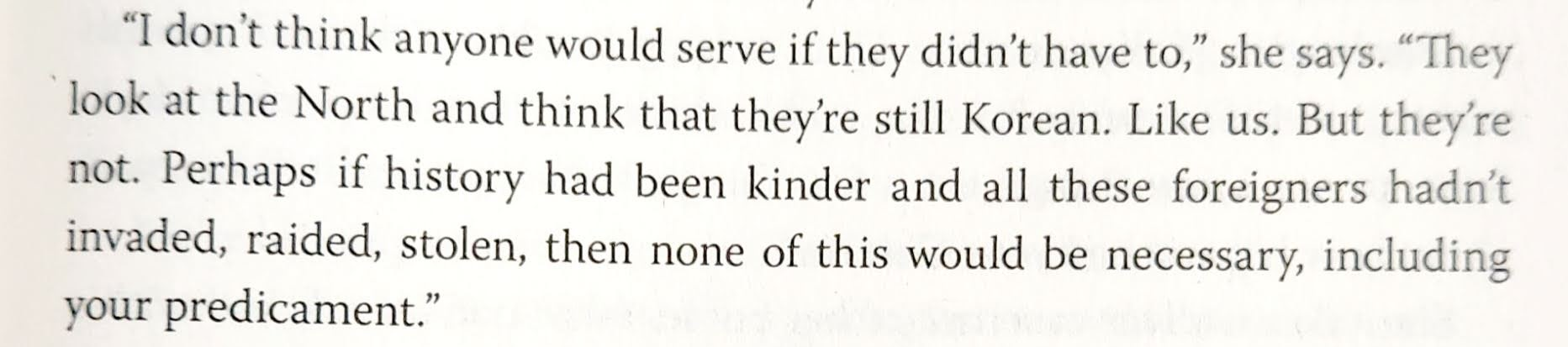
My students are always interested in discussing compulsory military service. Many have strong opinions as to if they would serve or if they would flee. I wish the book dove a little deeper into the history of the Korean peninsula. The historical conflict between North and South Korea could use some contextualization. I would not choose this title to read in my World History class, however, if the purpose of Ethnic Studies is to help students “see” themselves in the curriculum; this book delivers. Bucky is a convincing protagonist for young readers, who like to see themselves riding rollercoasters of unfairness.

As the crisis on the US southern border intensifies, my Ethnic Studies students are more interested in learning about modern immigration issues. The All-American gives them a complicated narrative to sink their teeth into. For inquiry projects, I would ask them to explore essential questions like: Why do migrants leave their home countries? How are migrants seeking asylum received in different countries around the world? How has the public debate about immigration changed during US history? This guide from Learning for Justice has some great ideas.

Lastly, I am always interested in learning how YOU are teaching Ethnic Studies. What books have you chosen to read about North and South Korea? Do you favor a historical approach, literacy-based approach, or thematic approach? What activities have resonated the most with your students? Please leave a comment and thanks for reading.

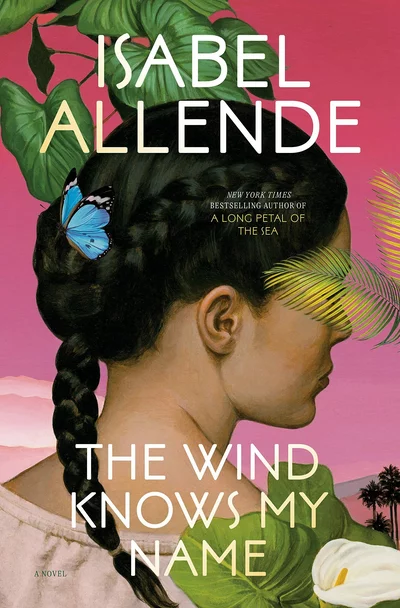
Book Review: The Wind Knows My Name

This year I have been reading a variety of new titles for my Intro to Ethnic Studies course. I want the books to be different from a traditional History or ELA class reading so that students understand the purpose of Ethnic studies is supposed to bring students and communities together. Per California’s Ethnic Studies Framework, these stories should address racialized experiences and ethnic differences as real and unique, build greater understanding and communication across ethnic differences; and reveal underlying commonalities that can bring individuals and groups together. To my delight, Isabelle Allende’s latest novel The Wind Knows My Name really fits the bill.

The book blends the story of a young boy who is separated from his family by the Kindertransport of WWII with an El Salvadoran girl who is removed from her mother’s custody at the southern border of the US during the COVID-19 pandemic. She goes from poorly run government facilities to horrible foster care homes in sequences that illustrate how we are struggling to resolve the humanitarian crisis at the border.

Allende deftly weaves historical content throughout the narrative. This gives the History teacher side of me a chance to have students revisit what they have already learned about the Holocaust and current border issues. In my traditional History course, I like having students corroborate facts from historical fiction and non-fiction with the facts in our textbook. Allende provides many passages with rich, historical detail where it would be possible for students to do that.

This book contains a great deal of emotional content that students can use to empathize with the characters in the story. The parallels with what is currently going on at the border are of high interest to my students. This is an ideal novel to frame class discussions on the type of American Democracy that students want to participate in.

I like to use the Pew Research Survey Political Typology Quiz so my students have the academic vocabulary to discuss controversial issues respectfully. In the afterword, Ms. Allende writes about the foundation she established in her late daughter’s name that advocates for the poor all over the world. This book provides an excellent narrative for students to ask to what extent do nations today take care of poor and desperate asylum seekers? If that isn’t the job of an Ethnic Studies teacher, I don’t know what is.