Measures of Effective Listening

Thirty-two years ago, Donald E. Powers wrote Considerations for Developing Measures of Speaking & Listening. It was published by the College Board, which expresses how important these measures are to a student’s academic success, particularly in their Advanced Placement programs, yet has not validated any standardized tests to measure these skills. This synthesis on some of the research on listening offers advice to teachers enrolled in our MOOC Teaching Speaking & Listening Skills

Research shows that students can listen 2-3 grade levels above what they can read. Listening while reading helps people have successful reading events, where they read with enjoyment and accuracy. Listening while reading has been shown to help with decoding, a fundamental part of reading. The average person talks at a rate of about 125 to 175 words per minute, while we listen and comprehend up to 450 words per minute (Carver, Johnson, & Friedman, 1970).

Listening has been identified as one of the top skills employers seek in entry-level employees as well as those being promoted. Even though most of us spend the majority of our day listening, it is the communication activity that receives the least instruction in school (Coakley & Wolvin, 1997). On average, viewers who just watched and listened to the evening news can only recall 17.2% of the content.

Listening is critical to academic success. Conaway (1982) examined an entire freshman class of over 400 students. They were given a listening test at the beginning of their first semester. After their first year of college, 49% of students scoring low on the listening test were on academic probation, while only 4.42% of those scoring high on the listening test were on academic probation. On the other hand, 68.5% of those scoring high on the listening test were considered Honors Students after the first year, while only 4.17% of those scoring low attained the same success.

Students do not have a clear concept of listening as an active process that they can control. Students find it easier to criticize the speaker as opposed to the speaker’s message (Imhof, 1998). Students report greater listening comprehension when they use the metacognitive strategies of asking pre-questions, interest management, and elaboration strategies (Imhof, 2001). Listening and nonverbal communication training significantly influences multicultural sensitivity (Timm & Schroeder, 2000).

Understanding is the goal of listening. Our friend Erik Palmer suggests before students engage in purposeful listening, their teachers should tell them what to attend to. We need to teach students what to respond to, how to respond, and when to respond. For example, today we are going to listen to five speeches. For each speech, we are only listening for LIFE. After each speaker finishes, clap, then take a minute to evaluate the level of passion they put into their speech. After that write down three suggestions on how they could improve the LIFE in their speech (i.e., instead of emphasizing: you stole my red hat, try stressing, you stole my red hat).

A classroom teacher who reads Powers (1984) College Board study will understand that speaking, listening, reading and writing are all tightly correlated. Empirically measuring oral communication skills requires many hours of assessment on small, controlled populations. It is the opposite of what we experience in public schools where it is not feasible for us to precisely measure each skill. The important takeaway here is that teachers need to prepare their students to actively listen, avoid distractions, and teach listening and speaking with core academic content by training students to evaluate how well various speaking functions are accomplished by their classmates. While there are reliability issues with classroom peer review models, the benefits of “learning by evaluation” far outweigh the negatives.

References

http://www.listen.org/WhitePaper

http://www.skillsyouneed.com/ips/listening-skills.html

http://d1025403.site.myhosting.com/files.listen.org/Facts.htm

http://www.csun.edu/~hcpas003/effective.html

PVLEGS Speech Lesson

World History students have been grouped and assigned an African country at random. Each student’s job is to give a two minute speech focusing on one of the effective speaking traits (Poise, Voice, Life, Eye Contact, Gestures, or Speed) while sharing information about their African country.

Speakers will be allowed to use a confidence monitor, which contains notes, or highlights of their speech. Speaker notes can be Google Docs or handwritten & displayed via doc cam. Note: this is not a teleprompter. The notes do not move.

Purpose: This speech will demonstrate: (P) – poise when describing the history of an African state.

Country: Liberia began in 1822.

Background: Liberia was founded by freed American slaves.

Issues/Problems: Authoritarian rule through the 1980s. Civil War in the 1990s.

Conclusion: I chose to focus on poise because…

Resources:  PVLEGS.com & The CIA World Fact Book
View these videos at home and take their advice.

Poise

https://www.youtube.com/watch?v=hgryBn5QYjE

https://www.youtube.com/watch?v=PEXpNg8j_Fc

https://www.youtube.com/watch?v=vBwEVJGDkkY

Voice

https://www.youtube.com/watch?v=BX58HTFsplk

https://www.youtube.com/watch?v=OInNqqQpXLc

https://www.youtube.com/watch?v=TjocTqrKz-k

Life

https://www.youtube.com/watch?v=lXA-DQ2gNOs

https://www.youtube.com/watch?v=esuuJsl-KBg

https://www.youtube.com/watch?v=b01_1Hhm-CA

Eye Contact

https://www.youtube.com/watch?v=oSZfqCBUpOs

https://www.youtube.com/watch?v=i–CdKh_dHc

https://www.youtube.com/watch?v=44oel0peahU

Gestures

https://www.youtube.com/watch?v=d6wDTRCIV4s

https://www.youtube.com/watch?v=cFLjudWTuGQ

https://www.youtube.com/watch?v=rk_SMBIW1mg

Speed

https://www.youtube.com/watch?v=idh6-E-1pyI

https://www.youtube.com/watch?v=bj9e8w4vNxo

https://www.youtube.com/watch?v=eiRhvlKmSu8

#NationalSpeakingWeek

In honor of National Speaking Week, (May 16-22), I am co-hosting this week’s #TeachWriting chat about the power of speaking assignments. The Twitter chat takes place on Tuesday, May 17, 2016 at 9pm EST/6pm PST. Speaking and listening standards have become the forgotten part of the Common Core. Despite the huge premium employers place on these skills, almost no testing consortia, states, districts, or schools are formally assessing them and too many teachers avoid speaking and listening assignments altogether.

skills

Chat Questions:
:07 Q1 List some of your favorite orators and include links to speech(es)/TED Talks you use in your class.
:14 Q2 What do great speakers do? What are the essential elements for speaking well?
:21 Q3 How impressive are your students in speaking assignments? What are their weaknesses?
:28 Q4 @Erik_Palmer says We assign speaking, but we don’t teach speaking. What should Ts start with first?
:35 Q5 How do you approach discussion-based activities in your class? Include your grade & subject.
:42 Q6 What are your favorite student speaking assignments? Why were they successful?
:49 Q7 What are your favorite tech tools for recording, practicing & sharing speaking projects?
:55 Q8 How do you accommodate the introverts who would rather die than speak in front of their peers?

In June, Erik Palmer, Corbin Moore and I will launch a free MOOC on Teaching Speaking & Listening. The class is open to teachers of all K-12 subjects. Here are a few resources to get you started: Listening & Speaking DemystifiedA framework for teachers including more speaking assignments in their instruction. Effective Speaking  Pop Up DebatesLook what’s Number 1. Here’s the archive of the chat.

Vietnam War Narratives

To build interest in learning about the Vietnam War, my students conducted historical photo tableaus.

After reading The Things They Carried by Tim O’Brien, my students are writing their own short stories set in the Vietnam War era. They are allowed to choose the narrator and location of their narrative. The goals of this project are for students to demonstrate their research skills and abilities in synthesizing multiple sources on the subject to increase their understanding of the Vietnam War.

Burst of Joy

Students who would research the backstory of this picture would learn that there was no happy ending. Students will use the LAUSD Digital Library to find 6 sources (3 websites & 3 books) online encyclopedias count as books.

Deadlines

  1. Select narrator & topic 4-15 (77% of you turned this in on-time. Yay!)
  2. Find 6 sources (3 websites, 3 books) 4-20 (68% of you -110 students, turned this in on time. Thank you!)
  3. Check Note-taking/Annotation Works Cited Page (MLA Format) 4-25 (The volume of hand-written notes from their sources ranged from 0.5 of a page to 13 pages with an average of 3.5 pages per student.)
    Questions to consider when writing historical fiction.
  4. Write 1st draft in class – 4/26-27 (These stories averaged 584 words with 8.13 Historical Details).
  5. Audio Recording – due 5-2 (106 of you made this deadline, 53 did not).
  6. Provide a link to your audio story on this spreadsheet by 5-11-2016 (You had difficulty with this technical challenge only 65 of you completed it.)

All research, notes, revision memos, typed papers and audio stories should be uploaded to your Google Docs/Drive and shared with scottmpetri(at)gmail.com. Each step is worth 50 points, this entire project is 300 points toward your final grade. Make deadlines, not excuses. When we listen to the audio stories in class, students will grade each one using a modified version of this rubric.

Here is one of their audio stories.

Kent State by Victor C.

Writing for Ears

I have been doing some research for a MOOC I will be teaching with Erik Palmer and Corbin Moore this summer. Teaching Speaking & Listening Skills will launch June 20th on the Canvas Network. Like most teachers, I assign speeches and presentations within my instructional program and I am almost always disappointed by how poorly my students listen to each other and how little they gain from their colleagues’ presentations. This is because I rarely give them directions on how I want them to listen and what I want them to listen for.

This post asks questions about how teachers can inspire their students to Write for Ears. Specifically, what writing tasks teach students to listen? TED speaker Julian Treasure has an excellent primer that explains why we are losing our listening.

Even though most of us spend the majority of our day listening, it is the communication activity that receives the least instruction in school (Coakley & Wolvin, 1997). Research suggests that listening while reading helps people have successful reading events, where they read with enjoyment and accuracy. This also helps with decoding, a fundamental part of reading. The average person talks at a rate of about 125 – 175 words per minute, while we listen at up to 450 words per minute (Carver, Johnson, & Friedman, 1970).

Imhof (1998) found students do not have a clear concept of listening as an active process and they often find it easier to criticize the speaker as opposed to the speaker’s message. Conaway (1982) demonstrated how listening skills are crucial to academic success by giving a listening test to a freshman class of over 400 students at the beginning of their first semester of college. After their first year of studies, 49% of students scoring low on the listening test were on academic probation. Conversely, 69% of those scoring high on the listening test were considered Honors students after the first year. Only 4% of those scoring high on the listening test were on academic probation.

Similar findings have been replicated in other studies, on average, viewers who just watched and listened to the evening news can only recall 17.2% of the content. Timm & Schroeder (2000) showed that listening and nonverbal communication training significantly influences multicultural sensitivity. Further, listening has been identified as one of the top skills employers seek. Despite this, schools, districts and assessment consortia have turned a deaf ear to this important skill. What strategies and techniques have you found helpful in improving listening comprehension?

Active Listening

Don’t miss our #TeachWriting chat on April 5, 2016 at 6pm PT. Where we chat about the following issues in increasing the listening comprehension of our students.

08: Q1 What prevents our students from becoming good listeners?

14: Q2 What are common misconceptions students have about listening?

20: Q3 How can you use audio to increase literacy skills in your classroom?

26: Q4 What listening objectives are most frequently used in your class/discipline?
Photo-Card w/ Mead (1978)

  1. to recall significant details;
  2. to comprehend main ideas;
  3. to draw inferences about information;
  4. to make judgments concerning the speaker (e.g.,attitude, intent, bias, credibility);
  5. to make judgments about the information (e.g., type, evidence, logic, arguments)

32: Q5 What types of listening activities can help students improve their writing skills?

38: Q6 What writing assignments do you use with songs & speeches?

45: Q7 What strategies/games can Ts use so that Ss actively listen to their peers’ presentations?

52: Q8 What writing assignments have you created that teach listening skills?

I look forward to hearing how you are teaching your students to listen. Dust off the lessons you have used to help students improve their listening skills with writing and get ready to share. Thanks to www.listen.org for a great collection of listening facts.

Improving Historical Writing

This post contains resources from a presentation on improving feedback on student writing for the California Council for the Social Studies 55th annual conference on March 5, 2016.

Leading students through a peer review process is always effective as students very rarely see how they are writing in relation to their peers. Using a criteria chart can help them see what key information is missing in their writing. I take my lecture notes from the French Revolution and organize them by each component from the writing prompt. Here is a collection of research and articles on

My next step after leading students through some self-reflection and a peer review process is to get them to use a number of free robo-readers. Here is a collection of research and articles on automated essay scoring (AES). The trick is getting students to synthesize the feedback they have received from their peers and the computer and organize it into a revision memo. I have posted some examples of revision memos that my students have turned in.

I have another collection to help teachers provide meaningful feedback. For those of you willing to read educational research, here is an excellent paper by Hattie & Timperley on The Power of Feedback. Thanks for attending my session,  don’t forget our unconference-EdCamp tomorrow morning from 8:00 am – 10:00 am in Emerald Bay 2 & 3.

Engaging ELs & Reluctant Writers

ccs sconf

Ruth Luevanos and I teamed up to give a presentation on Engaging English Learners and Reluctant Writers for the California Council for the Social Studies 55th annual conference in Orange County. Our seminar demonstrates high-interest writing techniques that increase the amount of historical content teachers can cover. Please find resources below for using first person research papers, MEAL paragraphs, rhyming tweet-a-thons, six-word stories, and timeline transitions. All of these techniques help students with writing deficits develop positive attitudes about writing.

Many of my high school students use Twitter in their social lives. Social Media is also called micro-blogging. It’s actually writing. Tweeting helps students learn to summarize and write succinctly. Tired of vocabulary foldables try six-word definitions instead. Want to make sure your students understand a concept create a tweet-a-thon and they will find experts who correct their misconceptions.

Getting students to ask questions and engage in Social Studies activities can sometimes be difficult. I use elements of the flipped classroom and assign video lectures to students. This year, I have used Zaption to check for understanding during the videos and have found using open-ended questions can get students to ask their own questions.

Using the timelines in your textbook can be a great way to teach students how to use transitions.

MEAL and RAFT paragraphs are techniques that focus students on their argument and content. This allows the teacher to address any misconceptions immediately before they have written a five paragraph essay or longer paper.

First Person Research Paper

Worried about assigning research papers because of plagiarism concerns? This approach from Cindy Heckenlaible requires students to write strong historical narratives that showcase their research abilities.

Long used in elementary and middle schools to help students with Learning Disabilities (LD), SRSD is now being used with English Language Learners (ELLs) in some high schools. More than 40 studies have validated SRSD as an instructional model for teaching writing to students with writing deficits. Studies of history classrooms reveal that writing instruction of any kind is uncommon, even among exemplary teachers. Thus, student essays tend to list facts rather than argue claims, leave arguments unexplained, and only draw on evidence sporadically. SRSD Instruction in History can improve student writing.

SCSSA Lunch

If you attend the conference make sure you attend our lunch and honor our awesome Social Studies teachers.


Book Project Examples

My favorite part of the year is when I sit back and allow my students to present their Independent Book Projects. This year, they spent six weeks reading a novel or non-fiction book about WWI. A popular option was a “book trailer” where students create a teaser that will motivate others to read their book. Other students did traditional models, powerpoints, essays, and one even contributed an epic poem about Johnny Got His Gun. Never underestimate your students’ creativity.

https://prezi.com/cdrpxhwvrjjb/the-return-of-the-soldier/

https://m.youtube.com/watch?v=SQ3LGYfW2oc 


https://animoto.com/play/NAMDG5Vq2H5Kc83XsMhGBg?autostart=1


Revision Memo Feedback

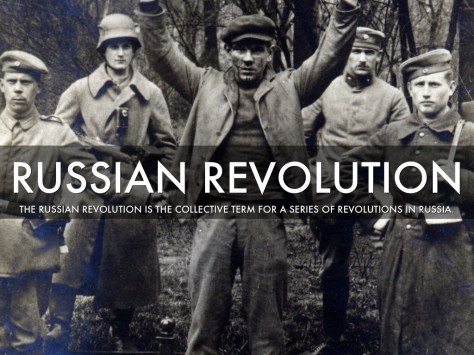
I have been giving my ninth grade students listening tasks recently. After each task, I measure a component of student learning, either the amount of notes they took from the lecture, the number of questions they can write about that content, the number of quiz questions they can answer correctly, the number of words they can write on the subject, the number of facts they include from the podcast, and etc. I have found my students respond well to  goal-setting strategies and look forward to seeing how their performance as an individual and as a whole class compares to their peers. For one task, 153 students listened to this excellent description of Russia’s February 1917 Revolution and scored 6.8 questions correct out of 10 question quiz immediately after. Next, 153 students listened to another lecture on Russia’s October 1917 Revolution, yet answered only half the questions correctly. After several of these tasks and a mini-lesson on how to make parenthetical (in-text) citations, I assigned the following writing assignment to measure their knowledge of the Russian Revolution as well as test their skills in making citations.

Russ Rev

There were a total of five documents to use during this task, two were audio lectures, one was an interactive video lecture, and two were traditional texts. Students were given two class periods to write this essay, as I anticipated adding the citation requirements would slow down their writing speed. On average, students reported writing 383 words, using 2.16 documents, and making 7.97 parenthetical citations.   The next day, students conducted a peer review protocol and advised each other on how they could improve their drafts. One of the elements that jumped out as a raging success was the number of students who took the time to come up with interesting titles. A selection of clever ones follows below:

Positives – Creative Titles

  • You Shall Not Fight
  • The Comings & Goings of the Russian Revolution
  • Peasant Revolution
  • The Bloody Revolution
  • What Sparked The Russian Revolution?
  • Recreation of Russia
  • Russia Has Just Begun
  • Russia In Danger
  • Rise, Revolt, Russia, Results

Negatives – Failure to Meet the Deadline

The final component of this project was designed to give me some insight as to how students would plan a revision. Students were given 6 days to complete the following assignment.

Run your work through at least one of the following robo-readers: Grammarly claims to find and correct ten times more mistakes than a word processor. The Hemmingway App makes writing bold and clear. PaperRater offers feedback by comparing a writer’s work to others at their grade level. Explain how the comments from these programs and the comments from your peers helped improve your writing.

Revision Memo

Remember to document how you are improving the quality of your claims and explanations in a 1-2 page revision memo. Here is an example of a revision memo that you may use to guide your reflections. When you have finished, you will email the revision memo to me.

Unfortunately, only 8% of my students completed this task by the deadline, another 12%  turned in something for partial credit, and 80% turned in nothing. Teaching 9th graders often leads to these moments, when faced with ambiguity, students do not ask for help, they merely do nothing.  What should a teacher do when that many students fail to complete a task?  Try, try again, I say. My next post will offer clarification on what makes a good revision memo.

Helping History Teachers Become Writing Teachers